

























































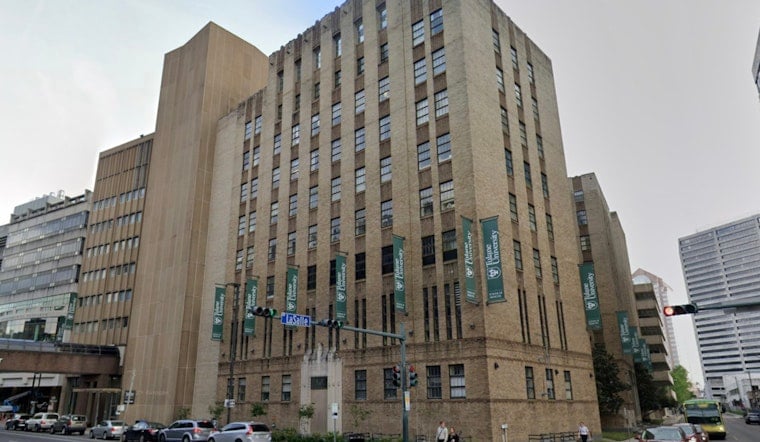
College Track New Orleans will officially begin serving students at a renovated 10,000-square-foot facility at 275 LaSalle St. on September 8, moving the college-access nonprofit out of the Lower 9th Ward and into the heart of Tulane University's downtown redevelopment push. The relocation places more than 620 scholars and alumni directly inside a district Tulane is transforming around the long-vacant Charity Hospital building, swapping a neighborhood facility for proximity to hundreds of researchers and a major public health school.
College Track had operated out of a facility at 2225 Congress Street in the Lower 9th Ward before this move, according to College Track. The nonprofit currently supports its scholars through a network of 20 partner schools across the New Orleans region, and as New Orleans CityBusiness reports, roughly 90 percent of College Track participants are the first in their families to attend college. The program provides ten years of academic, financial and career support beginning in ninth grade, per the outlet's reporting.
A Campus Built Around Bioscience
The new downtown location sits inside Tulane's broader effort to redevelop more than 650,000 square feet of the former Charity Hospital, the outlet notes. That redevelopment is part of a $500 million agreement Tulane signed in June to acquire and lead transformation of the vacant, 1-million-square-foot building, according to WWL-TV. Once complete, the complex is expected to house approximately 700 medical and bioscience researchers alongside the Celia Scott Weatherhead School of Public Health and Tropical Medicine and the Tulane Innovation Institute, according to Tulane University.
Pre-construction work on the Charity Hospital site is set to begin in late summer 2026 following a fall financial closing, with full construction targeted for completion in 2029, per Becker's Hospital Review. That outlet also reports the broader downtown transformation is projected to generate $1.2 billion in economic impact for Louisiana, along with roughly 7,300 construction jobs and 2,400 permanent jobs once finished.
Nearly Two Decades of Local Roots
College Track New Orleans launched in 2008 in partnership with the Urban League of Louisiana, marking the organization's first expansion site outside California, and it produced its first local college graduating class in 2016, according to College Track. The national nonprofit itself traces back to 1997, when it was co-founded in East Palo Alto, California, by Laurene Powell Jobs and Carlos Watson to provide underserved students with a decade of academic, financial and socio-emotional support, as reported by The Washington Post. CityBusiness reports the organization now serves more than 4,100 students nationwide.
Scholars who go through College Track earn bachelor's degrees at 2.5 times the rate of first-generation college students from similar socioeconomic backgrounds, per data cited on GiveNOLA Day. That track record helps explain why Tulane is expanding its partnership with the nonprofit rather than simply leasing it space, giving New Orleans high schoolers a formal foothold inside the university's downtown education, research and innovation district.
Part of a Larger Downtown Bet
The move fits into a pattern of downtown expansion moves Tulane has made this year. The university sold its Canal Street tower while leasing it back to help finance the broader push, and it previously invested in a lab overhaul in the Central Business District covered in Hoodline's report on Tulane's $35 million lab makeover. Those moves followed a 2025 property settlement between Tulane and the New Orleans City Council that cleared the way for the Charity Hospital redevelopment to proceed.
College Track and Tulane describe the relocation as a chance to expand collaboration between the nonprofit's scholars and the university's growing research footprint. With pre-construction underway and full build-out not expected until 2029, the downtown district around 275 LaSalle St. will keep evolving around the students for years after they first walk through its doors next month.





