

























































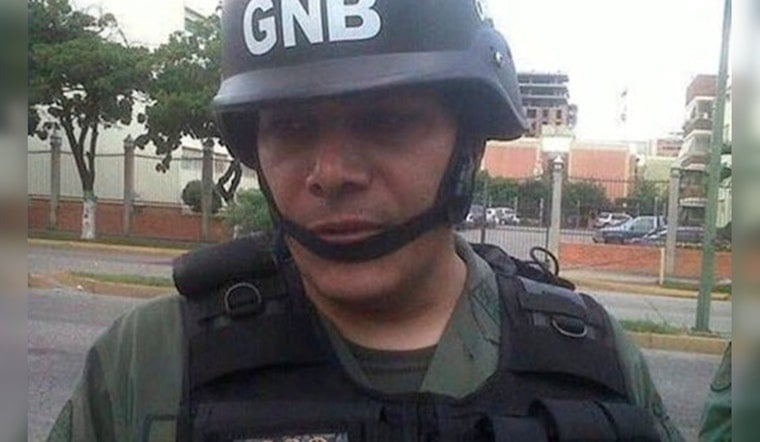
Immigration and Customs Enforcement has deported a former Venezuelan National Guard lieutenant colonel who lived quietly in South Florida for years, even as five accusers pursue a federal lawsuit accusing him of torturing political dissenters back home. Rafael José Quero Silva was returned to Venezuela after a judge ordered his removal, ending a saga that began when exiles recognized him not from the streets of Barquisimeto but from a Telemundo soap opera set in Miami.
The Trump administration confirmed the deportation of Quero Silva, who had commanded Detachment 47 of Venezuela's Bolivarian National Guard, a military force tasked with internal security, according to the Miami Herald. Five Venezuelan plaintiffs accuse him of torturing them or directing subordinates to torture them during the crackdown that followed Venezuela's contested 2013 election, according to EL PAÍS, which reports that Quero Silva oversaw the unit accused of violently suppressing anti-government demonstrations that erupted after Nicolás Maduro narrowly won the presidency following Hugo Chávez's death.
ICE arrested Quero Silva in February 2025, and he was held at the Krome North Service Processing Center in Miami-Dade County, a facility with capacity for roughly 450 adult male detainees. He applied for asylum, but a federal immigration judge found him ineligible in November 2025 because of his National Guard membership, per the Herald's reporting. He had entered the country through Miami International Airport in 2016 on a visa and later overstayed it.
A Soap Opera Cameo Blew His Cover
Quero Silva's undoing in South Florida traces back to 2018, when Venezuelan exiles recognized him as an extra playing a police officer in the Telemundo telenovela Mi Familia Perfecta. The report notes that the exile community's recognition of him through everyday life, including the soap-opera appearance, illustrates how South Florida's Venezuelan and Cuban diaspora functions as an informal watchdog network, spotting former regime figures and alerting law enforcement and human rights groups.
That pattern has repeated elsewhere in South Florida. ICE arrested 57-year-old Daniel Morejon Garcia in April 2025 for failing to disclose that he had been a Cuban government official and Communist Party member, and Voz.us reports he was deported to Cuba in May 2025 over allegations tied to the violent repression of July 2021 protesters, after exiles who recognized him alerted federal authorities. ICE has also detained Adys Lastres Morera, sister of the official in charge of GAESA, part of what the Herald describes as a broader federal crackdown on South Florida residents tied to the Cuban or Venezuelan governments or accused of human rights violations.
Accusers Describe Beatings, Shootings and Forced Confessions
The lawsuit, filed in Miami federal court in December 2025 under case number 1:25-cv-26140 with international human rights firm Guernica 37 and local co-counsel McDermott Will & Schulte, according to PacerMonitor records, marks the first civil case brought in the United States against a Maduro regime military officer for human rights abuses. The plaintiffs allege Quero Silva oversaw their torture at National Guard headquarters in Barquisimeto, Venezuela.
According to the lawsuit, one plaintiff was shot in the abdomen by officials under Quero Silva's command, an injury that left psychological scars and nerve damage. A female plaintiff was arrested at her home in Atlanta by Quero Silva and other officers after she sheltered protesters, then imprisoned for four months across different facilities, convicted on what the suit describes as falsified charges, deprived of her medications, forced to stay awake, and molested by female guards under the pretext of a drug search.
Quero Silva has pushed back through his attorney, who told the Herald that Quero Silva never persecuted anyone or authorized abuse. In a motion to dismiss, Quero Silva claimed the plaintiffs failed to properly serve him at Krome, that their claims were time-limited, and that they had not pursued remedies in Venezuela's own courts. He separately asked the court to stay the case until his release from immigration custody. U.S. District Judge Michael Moore is presiding over the case, brought under the Torture Victim Protection Act.
Deportation Raises Fears the Case Could Stall
The Torture Victim Protection Act, enacted in 1992 as an extension of the 1789 Alien Tort Statute, lets foreign and U.S. victims of torture or extrajudicial killings sue perpetrators in federal court, provided the defendant is served within U.S. jurisdiction and acted under foreign official authority, according to White & Case LLP. A July 2026 Supreme Court ruling in Cisco Systems v. Doe narrowed aiding-and-abetting claims under the statute but preserved direct civil liability for individuals who personally torture victims or order abuses abroad, per Jenner & Block LLP.
Human rights advocates and the Venezuelan exile organization Funpaz warned in mid-August that deporting Quero Silva back to Venezuela, where the Maduro regime remains in power, would effectively shield him from accountability while endangering surviving victims and witnesses, according to El Tiempo. Plaintiffs had sought to pause the immigration removal or otherwise preserve U.S. jurisdiction so Quero Silva could face a civil trial, but the deportation proceeded regardless. Whether the case can continue toward default proceedings or asset recovery now that Quero Silva has been physically removed from the country remains an open question.
Federal Officials Defend the Removal
Homeland Security Investigations, the FBI in Miami, and the Human Rights Violators and War Crimes Center were all involved in Quero Silva's detention and deportation, the Herald reported. The HRVWCC, created in 2008 and led by ICE Homeland Security Investigations, is described by U.S. Immigration and Customs Enforcement as the sole federal interagency entity focused on identifying, investigating and removing individuals accused of foreign human rights abuses, combining resources from ICE, the FBI, the Justice Department and the State Department.
ICE official Matthew Elliston said the United States should not become a safe haven for people involved in persecution, torture or serious human rights abuses, and added that ICE officers continue to remove human rights violators to their home countries. The removal fits a wider political push in South Florida, where U.S. Representative Carlos Gimenez submitted a list to the Department of Homeland Security in April 2025 naming over 100 alleged Cuban regime operatives living in the region and urging federal law enforcement to investigate and deport them.
The Herald's report is the primary account of Quero Silva's case and identifies him as the latest target in a broader federal crackdown on South Florida residents tied to the Cuban or Venezuelan governments. For the five plaintiffs who say they endured beatings, imprisonment and psychological trauma at his hands, the case now hinges on whether a U.S. court can still deliver a judgment against a man the government has already sent beyond its reach.





