

























































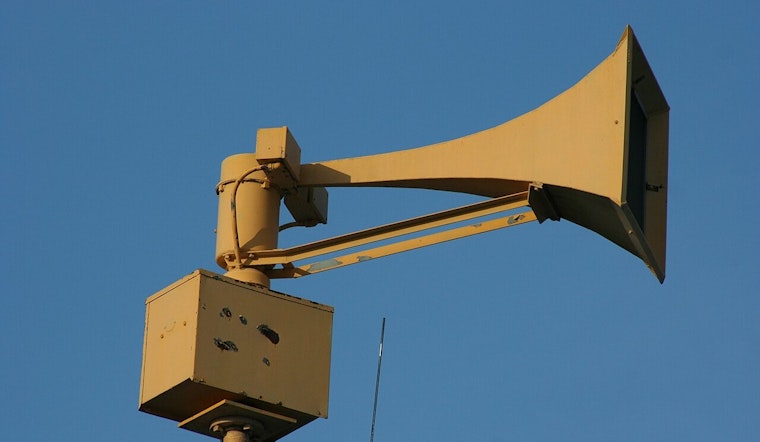
Tornado sirens wailed across multiple DuPage County suburbs just before 10 a.m. Friday despite clear skies and no active severe weather warning, marking the second false activation in the county in only three days. Police departments and villages including Villa Park, Oak Brook, Wheaton and Addison quickly confirmed the alarm was a mistake, not a genuine tornado threat.
According to NBC Chicago, the siren reports began just before 10 a.m., and the alert in Glen Ellyn lasted about 30 seconds before going silent. The Village of Oak Brook said a severe weather warning sent through DU-COMM at approximately 9:55 a.m. was issued in error and was a false alarm, advising residents to remain weather-aware but confirming there was no real threat. DuPage Public Safety Communications, which manages the alert system known as DU-COMM, said a tornado siren was activated but was not part of severe weather or a scheduled test.
DU-COMM released an update at 10:10 a.m. and apologized for the confusion, while telling NBC Chicago it was investigating the cause of the activation. The agency did not provide an immediate response when contacted again by the outlet. Oak Brook also apologized for confusion caused by its earlier notification to residents.
A Second Misfire in Three Days
Friday's error came just three days after an even stranger overnight mishap. As CBS News Chicago reported, a DU-COMM employee accidentally activated all DuPage County tornado sirens at 3 a.m. on August 18 during what was supposed to be a silent system test — one designed to check the technology's functionality without actually setting off the physical sirens. DU-COMM said the tests are meant to assess technology functionality without activating the sirens, meaning both August incidents point to breakdowns during routine system checks rather than any real weather threat.
The back-to-back errors are drawing scrutiny to DU-COMM's automated tornado siren system, which the county launched in May 2025. The system, built to pull directly from National Weather Service warnings, is designed to activate sirens without human dispatcher intervention, targeting only precise geographic zones when they overlap with an active weather warning. Dupage County officials had described the automated system as a significant advancement in public safety technology when it debuted.
Why the Sirens Sounded So Alarming
Friday's false alarm landed on a day when nerves were already primed for severe weather. The National Weather Service had placed the Chicago area under a Level 2 “Slight Risk” for severe thunderstorms Friday afternoon and evening, forecasting potential damaging winds and hail, according to NBC Chicago. That active forecast likely amplified public anxiety when the sirens sounded unexpectedly under otherwise clear morning skies.
DU-COMM is no small operation. Established in 1975 under the Illinois Intergovernmental Cooperation Act, the agency serves as the intergovernmental 9-1-1 dispatch hub for 45 police, fire and EMS departments across DuPage County, processing over one million calls annually, according to DU-COMM. The county's dispatch structure took shape after a major consolidation that merged 18 local public safety answering points down to just two centers, DU-COMM and the Addison Consolidated Dispatch Center, per Octave.
How Sirens Are Supposed to Work
Statewide, outdoor warning sirens are typically only tested on the first Tuesday of every month at 10 a.m., per Illinois Extension — a schedule meant to help the public distinguish routine checks from genuine emergencies. Illinois emergency management agencies also design the sirens strictly as outdoor alerting tools that never sound an “all-clear” when a threat passes, according to Ready Illinois, which instructs residents to rely on weather radios or mobile alerts for updates once indoors.
DuPage isn't alone in shifting toward polygon-based siren activation. Neighboring dispatch agencies, including the Northwest Central Dispatch System in Cook County, use similar National Weather Service polygon boundaries to limit siren activations to communities directly in a storm's path, according to the Village of Schaumburg. The approach is meant to replace older, blanket countywide soundings that alarmed residents far outside a storm's actual reach — the very kind of unnecessary alarm DuPage has now triggered twice in less than a week.
Illinois sees an average of roughly 50 tornadoes a year, with activity typically peaking between April and June, according to the West Chicago Voice. That seasonal pattern underscores why officials consider a reliable automated system important — and why repeated false alarms during a summer with active storm outlooks are raising fresh questions about whether the cause is a software glitch in the new system or a repeated human error during testing. DU-COMM had not identified the cause of Friday's activation as of its latest update.





