

























































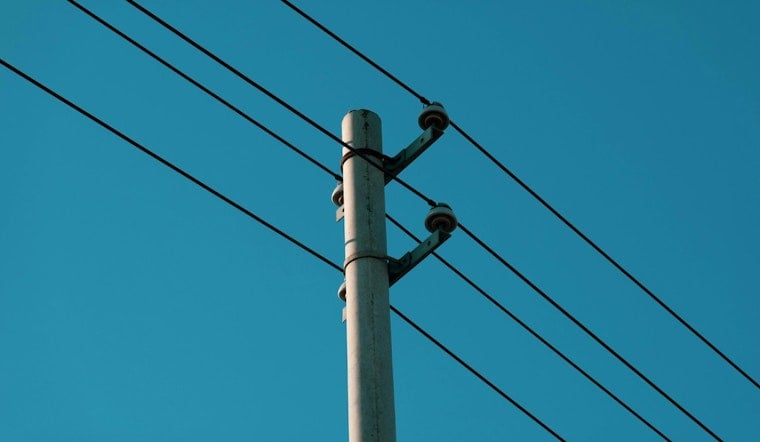
A pole fire near U.S. Highway 40 in Schererville knocked out power to roughly 9,000 NIPSCO customers Thursday afternoon, sending crews scrambling across Munster, Dyer, Schererville, St. John and Highland just as many residents were finally getting their lights back on. NIPSCO said it was notified of the fire around 1:45 p.m., and people were asked to avoid the area and use caution around downed power lines.
The new blackout hit Dyer especially hard, with roughly 75% of the town losing power again, according to CBS News. Dyer Town Manager David Hein said many residents whose service had only just been restored in the previous day were plunged back into darkness. Hein said residents were frustrated about having to restart their generators, and the fresh outage threatened to push back Dyer's power-restoration timeline, which had been expected to bring the town fully back online by midnight Thursday. Before the new outage, about 1,200 Dyer residents remained without power, per Hein.
What Caused the Fire
The station's report notes that sleeves on some power lines appear to have failed, causing them to fall — a determination made per utility contractors and echoed by a local fire chief. Robert Patterson, identified as fire chief in the same account, said the failed sleeves caused the lines to drop, sparking the fire that triggered the outage.
Thursday's failure was not an isolated glitch. It's the latest crack to appear in a grid still reeling from the historic August 11 derecho, which brought wind gusts up to 99 mph and triggered the largest power outage in NIPSCO's history — knocking out electricity to more than 301,000 customers, about 60% of the utility's entire electric base. As NIPSCO has worked to re-energize storm-damaged circuits, underlying stress on the system, including line sleeve failures, snapped wires and equipment fires, has caused repeated blackouts in areas where power had only recently come back.
A Pattern of Secondary Failures
The Schererville pole fire marked the second major secondary blackout to hit the region in a single week. It followed an equipment fire on Railroad Avenue in East Chicago days earlier, which re-darkened more than 5,000 customers who had just regained electricity. Witnesses there reported flickering lights and a loud explosion before the equipment caught fire.
By 4 p.m. Thursday, NIPSCO reported it had restored power to 306,500 total customer outages tallied since August 11, but 68,000 storm-related outages and another 12,000 non-storm outages remained active across northern Indiana. Given the strain, NIPSCO extended its official emergency response mode — under which non-emergency electrical work is paused and service disconnections for non-payment are suspended — through Friday, August 28.
Housing an Army of Line Crews
To manage the scale of the repair effort, NIPSCO built a temporary base camp in the parking lot of Southlake Mall in Merrillville to house the hundreds of out-of-town linemen, contractors and mutual assistance crews brought in from neighboring utilities and affiliated gas companies. The scramble to keep pace with new failures has also disrupted daily life well beyond the power lines themselves.
In St. John Township, the Lake Central School Corporation was forced to delay the first day of school from August 11 to Thursday because of the ongoing outages across Dyer, Schererville and St. John, and it has requested a state waiver for six missed instructional days. Before Thursday's new outage, Dyer's municipal wastewater treatment plant had already been running continuously at full capacity on a backup generator during the multi-day blackout, prompting Hein to warn that the town's secondary generator plans might not support full wastewater capacity.
State Relief and Rising Costs
Indiana Governor Mike Braun issued a statewide disaster declaration after the initial storm outbreak and deployed the Indiana National Guard to help Northwest Indiana municipalities with debris clearing and emergency response. Separately, the Indiana Department of Homeland Security has enabled eligible residents to request up to $5,000 from the state's Individual Assistance Disaster Relief Fund, with applications available through Indiana 211.
The repeated failures come as NIPSCO customers are already absorbing phased base rate increases approved through early 2026, tied to a $769.5 million utility investment in power line and grid infrastructure upgrades. NIPSCO serves roughly 500,000 electric customers across 32 northern Indiana counties, a footprint that has now weathered a historic derecho, a wave of secondary equipment failures, and a grid officials admit remains fragile weeks after the storm first hit.




