

























































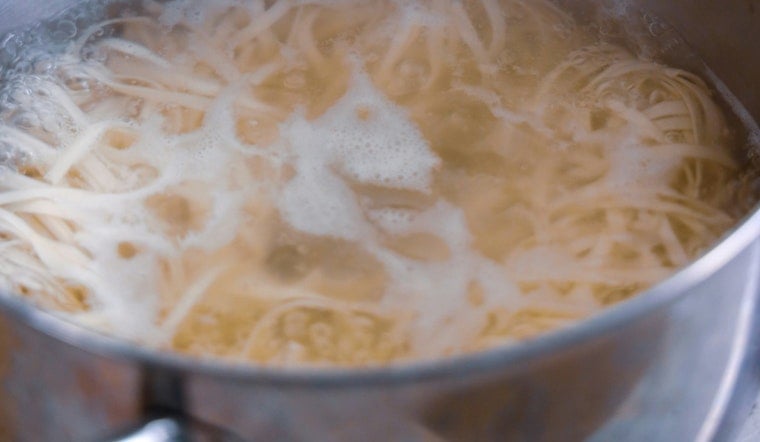
Cafeteria workers across Franklin Special School District are stirring less and cooking more, thanks to automated braising pans now installed in every one of the district's eight school kitchens. The district says it is the first in Tennessee to put Firex automated electric tilting braising pans in all of its school kitchens, part of a broader push to move away from heat-and-serve cafeteria food and toward meals made from scratch.
The equipment rollout is the latest step in what WZTV reports has been a yearslong effort by Franklin Special School District to bring fresh ingredients and scratch cooking into its cafeterias. According to Robbin Cross, the district's food and culinary services supervisor, the district has secured more than $1 million in grants over the past five years to fund the transition, and the new automated pans were paid for entirely through that grant funding.
Each Firex unit is valued at about $20,000, per the WZTV report, and the machines can prepare large batches of sauces, soups, pasta dishes and other foods while stirring automatically during cooking. The pans, manufactured in Italy by Firex — a brand acquired by Middleby Corporation in 2018 — feature built-in two-arm directional mixers, touchscreen recipe programming and three-zone wall heating that can boost food yield by more than 30%, according to Chef's Deal.
Testing Homemade Sauces and Soaked Beans
In cafeteria kitchens, professional chefs are working alongside district cafeteria employees to learn the new equipment and develop recipes that can be prepared efficiently for hundreds of students at a time, the station's report notes. The district is currently testing spaghetti with homemade sauce, creamy chicken alfredo, and dried beans that are soaked overnight and seasoned with fresh ingredients rather than relying on pre-made products.
Last year, the district expanded its menu to include scratch-made spice blends, pizza sauce, spaghetti sauce and macaroni and cheese, according to the same report. District leaders say the new equipment will also let the district add fresh, scratch-cooked soups to its menus going forward. The goal, per district leaders, is not to replace cafeteria employees with technology but to give them more time and better tools to prepare fresh meals — with the automated pans handling labor-intensive stirring so staff can focus on other meal-preparation tasks.
A Multi-Year Push Backed by National Grants
The district's scratch-cooking effort traces back to 2019, when Franklin Special School District's work with the Chef Ann Foundation's Get Schools Cooking program began. In January 2020, the foundation selected the district as one of five nationwide for its fourth Get Schools Cooking cohort, a three-year program valued at up to $267,000 that assesses a district's food, finance, facilities, human resources and marketing operations, according to the Chef Ann Foundation. At the time, roughly 40% of the district's 3,200 students qualified for federal free and reduced-price meals, with average daily lunch participation near 58%.
In August 2023, the district was awarded a $130,000 Healthy Meals Incentives grant from Action for Healthy Kids to upgrade kitchen equipment, strengthen staff culinary skills and purchase a refrigerated van for delivering locally grown ingredients, according to Franklin Special School District. That grant was part of a nearly $30 million national investment the USDA Food and Nutrition Service allocated in 2023 through Action for Healthy Kids to 264 school districts across 44 states, targeting small and rural districts making the shift to scratch cooking, according to the Rural Health Association of Tennessee.
Local Farm Partnerships and Leadership Recognition
Beginning in January 2024, the district partnered with Clarksville-based farm Tennessee Grass Fed under the USDA Local Foods for Schools Cooperative Agreement Program to serve locally raised grass-fed beef burgers every Monday and local pork sausage at breakfast across all schools. The partnership also secured a 15% discount code for school families and employees to order grass-fed meat directly from the farm for home delivery, the district said.
Cross, who has led the district's food services department for seven years, received the Tennessee Award of Excellence in Nutrition from Tennessee Coordinated School Health in February 2024. As part of its broader sustainability push, the district also replaced single-use carton milk with bulk milk dispensers in lunchrooms to cut packaging waste and serve colder milk.
Franklin Special School District was established by a special legislative act in 1949 as Tennessee's first special school district and operates independently as a public K-8 system managing eight schools for roughly 3,200 students. That structure, district officials say, has helped the relatively small system roll out uniform equipment and training across all of its kitchens more quickly than larger county systems might manage.





