

























































A new play born from a 2018 visit to the Whitney Plantation museum is about to take the stage in the French Quarter. Ganking Mr. Guidry, written by New Orleans playwright Harold Ellis Clark, is set in 1878 during Louisiana's sugarcane harvesting season and follows five workers employed by a man named Mr. Guidry as they stand up against something they determine is wrong. The world premiere runs for five performances across four days, Thursday through Sunday, from August 13 to August 16.
Clark discussed the origins of the play on the Moving New Orleans Forward podcast, as reported by WGNO. He said his visit to the Whitney Plantation, whose exhibit focuses on the 1811 Louisiana Slave Revolt, left a deep impression that eventually became the seed of the script. The uprising, which took place along the German Coast on January 8, 1811, involved between 200 and 500 enslaved people led by Charles Deslondes and is considered the largest slave insurrection in U.S. history, according to New Orleans Historical. The march toward New Orleans ended in a violent military defeat, and many participants were beheaded in executions meant to deter future rebellions.
A Title Rooted in Slang, a Story Rooted in Trauma
The play's title borrows a term familiar to gamers: ganking means taking something from someone, or having something taken from you. That framing runs through the story, which deals with generational trauma as enslaved individuals tried to fight for their freedom. WGNO's report frames the five workers' struggle against Mr. Guidry as a fictionalized echo of that larger fight, set decades after the historical revolt that inspired it.
Clark folded in another, less expected historical thread while writing the script. According to Le Petit Theatre, the playwright incorporated fictionalized elements surrounding Isaiah Dorman, a Black U.S. Army interpreter who spoke Lakota and was the only Black man killed alongside General George A. Custer at the 1876 Battle of Little Bighorn. Dorman had lived among the Lakota and married into the Hunkpapa Sioux tribe before his military service, giving Clark a second historical figure to weave into a story that otherwise centers on the sugarcane fields of post-Reconstruction Louisiana.
Years of Rewrites Before Opening Night
The script did not arrive quickly. Clark completed his initial rough draft in late 2018 and continued rewriting it through late 2024, then made further revisions after a 2025 staged reading at Dillard University's Cook Theater, per New Orleans Magazine. Veteran director John Grimsley was brought on to both direct the production and design its set, leading a five-person cast that includes Al Aubry, Martin “BATS” Bradford, Kenneth Brown Jr., Nicole Collins, and Rahim Glaspy. The world premiere is produced by HEC Communications LLC.
Clark's road to playwriting was not a direct one. He spent nearly two decades writing unpublished novels and screenplays before turning to the stage in 2010, and he still works full-time as vice president of communications, external affairs, and fund development for DePaul Community Health Centers, according to New Orleans Data News Weekly. The magazine notes that Clark made the leap into playwriting after local actor Lance Nichols praised his talent for writing dialogue.
This is not Clark's first recognized work. He previously received the 2023 Sherri Marina Memorial Grant for his play Back in the Day, which premiered at Dillard University in 2023 and had already been named a finalist for the 2020 Trustus Playwrights' Festival in South Carolina, per Biz New Orleans. That earlier play was set in present-day Algiers, Louisiana, where Clark was raised. Ganking Mr. Guidry, meanwhile, was financed in part through the 2026 Carol Sutton Memorial Grant along with support from the Whitney Plantation, a grant launched in 2021 by Ambush Magazine reviewer Brian Sands to honor the late New Orleans actress and fund new plays starring Black leads.
Why Le Petit Theatre Took On the Project
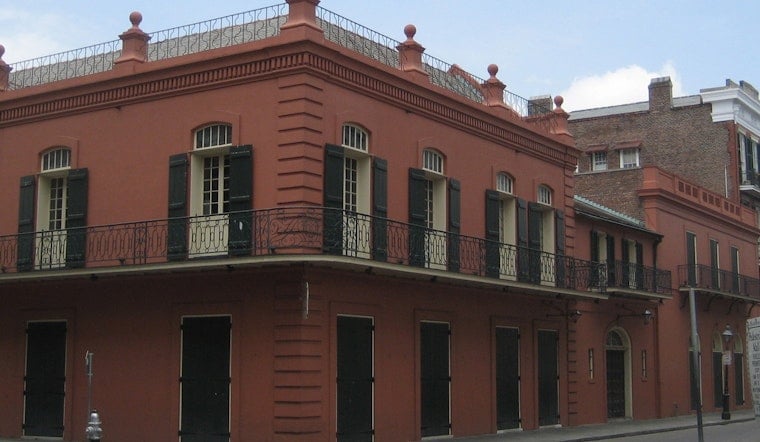
Le Petit Theatre Artistic Director A.J. Allegra publicly endorsed the production, saying that staging original works like Clark's allows the theater to revisit forgotten portions of regional history, as reported by Ambush Magazine. Allegra praised Clark's historical research and storytelling abilities in making that case. The venue itself carries considerable history of its own: founded in 1916 as the Drawing Room Players, Le Petit Théâtre du Vieux Carré moved to its current facility at 616 St. Peter Street in 1922, making it one of the nation's oldest continuously operating community theater institutions. It began, fittingly, with amateur performers staging plays in private living rooms before growing into the French Quarter fixture it is today.
Tickets for the limited run start around $65 per show, according to Nightout. The Saturday, August 15 date includes both an afternoon matinee and an evening performance, giving audiences two chances that day to see the five-show run before it closes Sunday.





