

























































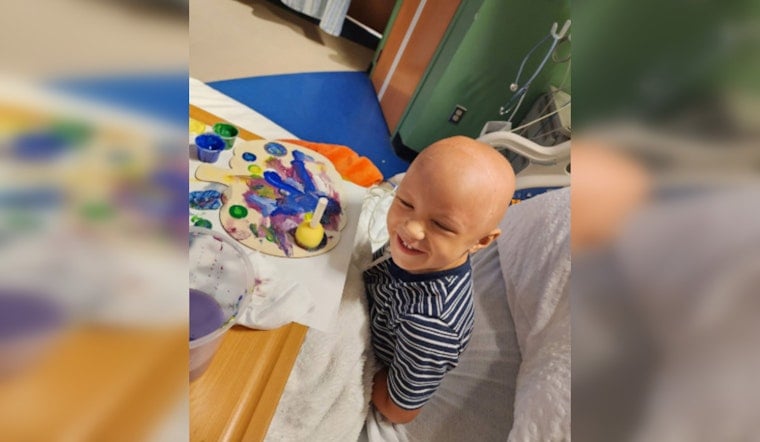
Elijah Rowden is 5 years old, loves monster trucks and dinosaurs, and is known for making the people around him laugh. He is also fighting one of the rarest and most aggressive cancers a child can face, and his family says his tumor has just come back after treatment they hoped had worked.
Elijah was diagnosed with brain cancer when he was 3 years old, according to NBC 5 Chicago. Doctors found the diagnosis after a CT scan showed a large mass on his frontal lobe, and he was later diagnosed with embryonal tumor with multilayered rosettes, or ETMR — an extremely rare and aggressive brain cancer. Elijah underwent a craniotomy to remove the mass and was transferred to UChicago Medicine Comer Children's Hospital in Hyde Park for his care.
ETMR is a World Health Organization Grade 4 malignancy that almost exclusively strikes infants and toddlers under age 4, and it carries a median survival of roughly 12 months after diagnosis, according to Nationwide Children's Hospital. The tumor is notoriously resistant to standard therapies and prone to recurrence, which is exactly what Elijah's family says has now happened: his tumor returned during his last MRI, and doctors have deemed his condition incurable.
A Rare Cancer Built to Resist Treatment
Most ETMR tumors share a specific genetic signature — amplification of the C19MC microRNA cluster on chromosome 19 along with high expression of the LIN28A protein — alterations that drive the tumor's aggressive growth and its resistance to chemotherapy, per the Center for Discovery and Innovation. Researchers are studying both markers as potential targets for future treatments, but for now, families like Elijah's are left navigating a disease with few good options once it returns.
Brain and central nervous system tumors have surpassed leukemia as the leading cause of cancer-related death among children and teenagers in the United States, according to the National Cancer Institute. While overall five-year survival for childhood brain tumors averages around 75%, rare subtypes like ETMR carry far worse odds. Comer Children's, a 172-bed hospital that houses the South Side's only Level 1 pediatric trauma center, runs a 30-bed pediatric intensive care unit and multidisciplinary teams built specifically for cases like Elijah's, per UChicago Medicine.
Searching for a Trial, and Praying for Time
Elijah's mother, Hope Rowden, said the family has been searching for clinical trials and second opinions since learning the tumor had returned, per NBC 5 Chicago's report. Specialized trials run through organizations like the Pediatric Neuro-Oncology Consortium are currently testing early focal radiotherapy and liquid biomarker monitoring in ETMR patients, according to a study listed on ClinicalTrials.gov, reflecting the reality that standard chemotherapy alone offers poor long-term survival once the disease relapses.
Elijah's father, Zack, told the outlet that cancer is terrible and unfair to children. He said he believes in his son and hopes people will help Elijah, pray for him, and help him heal. The family described Elijah as a boy who loves monster trucks, dinosaurs, and making people laugh — details relatives are holding onto as they push for more time and more options.
The $90,000 Question Facing the Family
Additional treatment for Elijah is expected to cost more than $90,000 out of pocket, on top of expenses the family is already absorbing for travel, parking, gas, meals, childcare, medication, and medical supplies, according to NBC 5 Chicago. An online fundraiser has been created to help cover those costs as the family continues seeking trial options.
The financial strain is not unique to Elijah's family. A national survey by the National Children's Cancer Society found that 95% of families report a financial burden tied to a child's cancer diagnosis, and one in four families lose more than 40% of their annual household income due to treatment-related work disruptions. Separate research from the P.U.N.T. Pediatric Cancer Collaborative found that 30% to 50% of families have one parent leave the workforce entirely during treatment, with non-medical costs like travel and temporary housing pushing an estimated 15% of families below the federal poverty line.
That financial toxicity persists even as brain tumors kill more children than any other cancer, advocates say, because federal research dollars have not kept pace. Historical estimates cited by the Pediatric Brain Tumor Foundation show that less than 4% of National Cancer Institute funding for cancer research overall goes toward childhood cancers, leaving many pediatric brain tumor treatments reliant on adult drugs developed decades ago. Comer Children's also partners with Advocate Children's Hospital through the Chicagoland Children's Health Alliance, a regional network meant to connect families more quickly with pediatric neurosurgeons and oncologists.
For now, Elijah's family is asking for something simpler than a cure: prayers, support, and help giving their son room to just be a kid again, even as they chase down every trial and second opinion they can find.





