

























































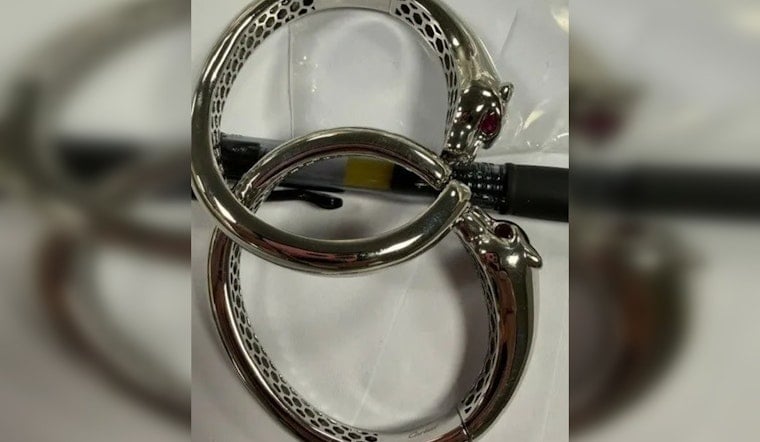
A parcel packed with 875 pieces of counterfeit jewelry and five knockoff designer handbags never made it to its destination in Georgia after U.S. Customs and Border Protection officers pulled it from the flow of international packages moving through Indianapolis. Officers intercepted the shipment on August 18, valued at more than $3.7 million if the goods had been genuine, and the agency publicly announced the seizure a week later.
The parcel had originated in Hong Kong and was working its way through the express consignment pipeline when officers flagged it for inspection, according to WIBC 93.1 FM. Inside were bracelets, earrings, and necklaces bearing unauthorized trademarks of Versace, Louis Vuitton, Van Cleef & Arpels, Chanel, Tiffany & Co., Cartier, and Gucci. CBP Centers of Excellence and Expertise specialists, the agency's authentication experts, confirmed the items were inauthentic before the seizure was finalized.
A Pattern Emerging at the Same Facility
This was not an isolated stop. Just three weeks earlier, on July 30, CBP officers at that same Indianapolis express consignment facility seized 96 counterfeit luxury watches, including fake Rolex, Audemars Piguet, and Swatch models, carrying a combined MSRP of $4.5 million had they been real, according to a report from WTHR. That parcel had also shipped from Hong Kong, this time bound for a residential address in Ohio, before officers selected it for inspection.
Two multimillion-dollar interceptions in a matter of weeks, both moving through the same loading docks, point to why Indianapolis has become such a consistent chokepoint for this kind of trafficking. Indianapolis International Airport hosts FedEx Express's second-largest global air cargo hub, per Supply Chain Dive, giving CBP officers a front-row seat to millions of international packages a year as automated manifests get flagged for review. Mainland China and Hong Kong together account for roughly 90% of all counterfeit intellectual property seizures at U.S. ports of entry, per CBP enforcement data, which helps explain why both Indianapolis parcels traced back to Hong Kong.
More Than a Knockoff Problem
Indianapolis Port Director Brett Mueller said CBP officers and import specialists are experts in identifying counterfeit goods, and that the agency remains committed to stopping counterfeit smuggling. The stakes go well beyond trademark infringement. CBP notes that knockoff items are often manufactured in unregulated environments using substandard materials, and profits from counterfeit sales frequently fund transnational organized crime networks.
Independent and government laboratory testing on seized counterfeit jewelry has found toxic heavy metal contamination in some pieces, with cadmium and lead levels reaching 200,000 parts per million, according to U.S. Immigration and Customs Enforcement — more than 2,000 times the federal safety limit of 90 ppm. Foreign counterfeiters frequently substitute these toxic metals for gold or silver, creating risks of contact dermatitis and broader systemic toxic exposure for anyone who ends up wearing the pieces.
How the Verification and Legal Process Works
To confirm shipments like this one are fake, CBP routes suspect imports to one of ten industry-specific Centers of Excellence and Expertise, virtual authentication hubs that standardize decisions across every U.S. port of entry rather than leaving it to individual inspectors. Under the Trade Facilitation and Trade Enforcement Act of 2015, the agency also has statutory authority to share unredacted photos and product details directly with trademark holders like the luxury brands named in this seizure, speeding up the verification process.
Federal law under 18 U.S.C. § 2320 treats trafficking in counterfeit goods as a serious felony, carrying penalties of up to 10 years in prison and $2 million in fines for individual first-time offenders, and up to 20 years and $5 million for repeat offenders or corporate entities, should investigators establish a pattern of intentional commercial trafficking. CBP, which has more than 70,000 employees, operates a broader intellectual property rights enforcement program built around exactly these kinds of interdictions, and runs an educational initiative called the Truth Behind Counterfeits campaign to warn consumers about the risks of buying knockoffs.
A National Surge in Fake Goods
The Indianapolis seizures fit into a much larger national trend. Federal agents seized nearly 79 million counterfeit items nationwide in fiscal year 2025 with an estimated total value of over $7.3 billion, a dramatic jump from the roughly 25 million counterfeit items recorded across more than 20,000 intellectual property seizures in fiscal year 2022, as Hoodline previously reported. Indianapolis officers have separately noted a sharp rise in international e-commerce contraband moving through local express cargo facilities, with certain illicit shipment seizures doubling year over year, reflecting how overseas sellers increasingly use low-value international express mail to ship knockoffs straight to residential addresses across the country.
CBP is encouraging consumers who suspect illegal trade or counterfeit sales to report violations through the agency's online portal or by calling 1-800-BE-ALERT.





