

























































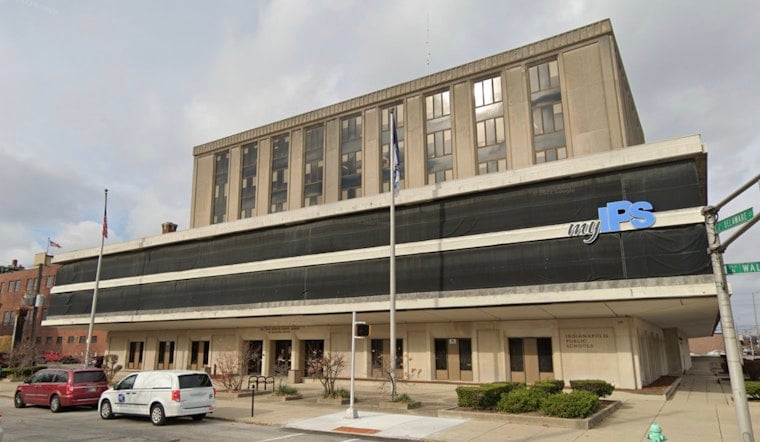
Indianapolis Public Schools teachers can once again hand out a true zero on report cards, after the district's Board of Commissioners voted unanimously to scrap its six-year-old “no-zero” grading policy. Under the new rules, a student who makes no attempt at an assignment — even after receiving multiple chances and support from a teacher — can now receive a 0% instead of the automatic 50% minimum that had been in place since 2020.
The change, first detailed by Chalkbeat Indiana and reported locally by IndyStar, updates the district's grading policy for students in first through 12th grade. IPS had approved the original no-zero policy in July 2020, during a stretch when the COVID-19 pandemic pushed students into virtual learning and caused many to miss assignments for reasons including quarantine. The 50% floor was meant to keep those struggling remote learners from falling into an academic hole they couldn't climb out of, since earning at least 50% on an assignment makes it more likely a student will pass the class overall.
Teachers Get Discretion, But a Floor Remains for Effort
The reversal doesn't eliminate grading floors entirely. Students who make a good-faith effort will still earn at least 50% credit, according to the policy IndyStar described. The real shift is for students who don't try at all: teachers can now assign a zero, but only after giving those students multiple opportunities and support first. How that support looks — and when a zero becomes appropriate — is left to teachers, who determine the process based on student circumstances and grade level.
IPS Chief Learning Officer Lela Simmons, who guided the change, said zeros make it incredibly hard for students to recover in their grades, according to the district's account of the policy shift. Simmons described the updated approach as a happy medium between the old all-or-nothing systems, saying the aim is to continue giving students opportunities to improve and try again while still holding a firm line for those who disengage entirely.
Six Years of Complaints From Teachers and Parents
Simmons said the policy change was largely driven by teacher feedback. IPS staff and parents had criticized the no-zero policy for years, arguing it was difficult to implement fairly and made it harder for teachers to identify which students actually needed extra support. Teachers also told the district that the no-zero approach failed to prepare students for the realities of college, where such grading floors typically don't exist.
Those complaints echo a national research debate. A 2024 study from the Thomas B. Fordham Institute found that top-down lenient grading policies, including 50% minimum floors and outright bans on zero scores, tend to obscure real academic struggles and lower classroom expectations overall. The friction isn't unique to Indianapolis, either — Hoodline reported parents erupting over similar grading fights in Los Angeles, where policies barring zero grades have faced intense resistance even as more than half of U.S. teachers now work in schools using at least one such “equitable grading” practice.
South Carolina Went Further With a Statewide Ban
Indianapolis isn't reversing course in a vacuum. South Carolina became the first state in the nation to statutorily ban K-12 grade floors when House Bill 5073 took effect July 1, 2026, a move Hoodline covered as Greenville County schools scrapped their own 50% floor under threat of losing state classroom funding for noncompliant districts. IPS's policy reversal is a local, board-level decision rather than a state mandate, but it lands in a similar political climate of rising skepticism toward minimum-grade policies nationwide.
Grading Reset Comes Amid State Pressure and District Cuts
The timing also coincides with new state accountability pressure on Indiana schools. The Indiana State Board of Education unanimously approved a statewide A–F accountability model in March 2026, which will issue letter grades to all public schools by late 2026 for the first time since 2018, according to WFYI. Under IPS's standard grading scale, an A is 90% or higher, a B is between 80% and 89%, and an F is 59% or lower — meaning how zeros and floors are handled can meaningfully sway which letter grade a school ultimately earns.
IPS is also navigating serious financial strain. Superintendent Aleesia Johnson announced $17 million in central office budget cuts in May 2026, part of a total of 87 staff position reductions tied to a 6% drop in enrollment that left the district with 19,774 students, per WFYI's reporting. Indiana lawmakers have separately created a new mayor-appointed entity, the Indianapolis Public Education Corporation, to oversee IPS finances and property tax distribution, and that body voted in June to place a 37.2-cent property tax referendum on the November 2026 ballot to raise $90 million a year — nearly half of which, by state law, must be shared with local charter schools.
Part of a Broader Pattern Under Simmons
The grading reversal follows a pattern for Simmons, who in 2024 guided the school board to adopt a streamlined universal dress code intended to keep minor infractions from pulling students out of class, according to Mirror Indy. Hoodline previously covered that effort in a piece on IPS's dress code rollout. Both moves reflect the same balancing act: trying to preserve empathy for struggling students without letting policy get in the way of accountability or instructional time.
Debates over grading floors have flared nationally before. A Florida middle school teacher was terminated in 2018 after publicly refusing to give 50% credit for unsubmitted homework under her district's no-zero policy, a controversy that drew national attention at the time. IPS's unanimous board vote suggests district leaders are hoping to avoid that kind of flashpoint by building in teacher discretion from the start, rather than mandating a single rigid rule for every classroom.





