

























































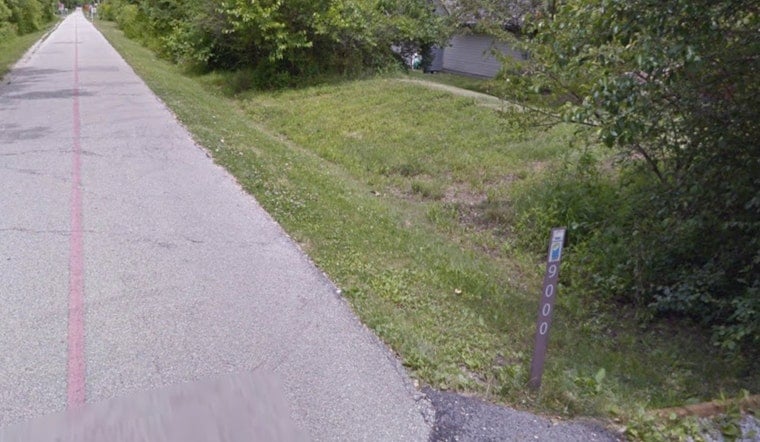
Joseph and Leslie Price have spent 34 years watching a defunct railbed behind their north-side home transform into what has become Indianapolis's premier rail trail. Now the City of Indianapolis is suing them to take ownership of a swath of land that extends past their tree line and into their backyard.
The lawsuit, first reported by IndyStar, centers on a stretch of the Monon Trail where the Prices say the tree line separating their property from the path has functioned as a privacy fence for decades. The couple owns a home adjacent to the trail on Indianapolis's north side, and their dispute is the latest flashpoint in a fight over how much private land the city can claim as it widens the popular corridor.
A Legal Quirk Forces the City's Hand
The root of the conflict traces back to 1989, when Indianapolis acquired rights to the former Monon Railroad corridor from operator CSX, according to the research record on the matter. City leaders assumed for decades that purchase covered all the rights-of-way needed for public trail use. But a 2012 Indiana Supreme Court ruling upended that assumption, establishing that abandoned railroad easements revert to adjacent property owners rather than staying with trail developers, as detailed by The Indiana Lawyer.
That ruling means the city now has to buy underlying land titles from homeowners along the trail rather than relying on old railroad rights. The stakes are significant: the Monon Trail runs 28.5 miles across Marion and Hamilton counties, linking downtown Indianapolis through Carmel and Westfield to Sheridan at the Boone County line, per the Encyclopedia of Indianapolis. It draws more than 1.3 million visitors a year and has generated over $1 billion in adjacent economic development since its first section opened in 1999.
Homeowners Say the City Is Asking for Too Much
The Indianapolis Department of Public Works has framed its acquisitions as a way to clear up clouded titles along the corridor, but many homeowners see it differently. In May 2025, roughly two dozen homeowners in the Forest Hills and Canterbury neighborhoods publicly protested the city's demand for a 33-foot strip on either side of the path, arguing that only 8 to 10 feet of physical widening was actually needed, according to reporting cited by The Indiana Lawyer. That same tension appears to underlie the Prices' case, where the disputed land reaches well past their tree line.
The city's broader widening initiative, stretching from 10th Street to 96th Street, carries an estimated total cost of $13.5 million, according to the Indianapolis Business Journal. During an earlier phase of the project between 14th and 56th streets, the Department of Public Works purchased 51 of 81 required parcels for roughly $119,000 total after finding few landowners willing to simply donate property rights, the Business Journal reported.
What Happens Next in Court
Indiana law lays out a specific process before a city can sue to take private land. Under Indiana Code 32-24-1, a municipality must base its purchase offer on independent professional appraisals and formally present that offer to property owners before filing suit, according to Sever Walker Padgitt. If a landowner rejects that offer, as appears to be the case here, the court must appoint three disinterested county freeholders to independently determine fair market value and assess any damage to the remaining parcel, per Lipinski Law.
That process gives the Prices a path to contest both the price and the scope of what the city is taking, mirroring disputes that have played out elsewhere along Indianapolis's rail-trail network. Earlier this month, property owners in a separate eminent domain fight over the Nickel Plate Trail settlement, a project designed to connect with the Monon Trail at 42nd Street, secured a $415,000 settlement. It's a recent local benchmark for what landowners might expect to recover when they push back against the city's initial offers.
For now, the Price case joins a growing list of north-side property disputes tied to the Monon's expansion, as the city works to reconcile a decades-old railroad purchase with a legal landscape that shifted well after the trail became one of Indianapolis's most heavily used public spaces.





