

























































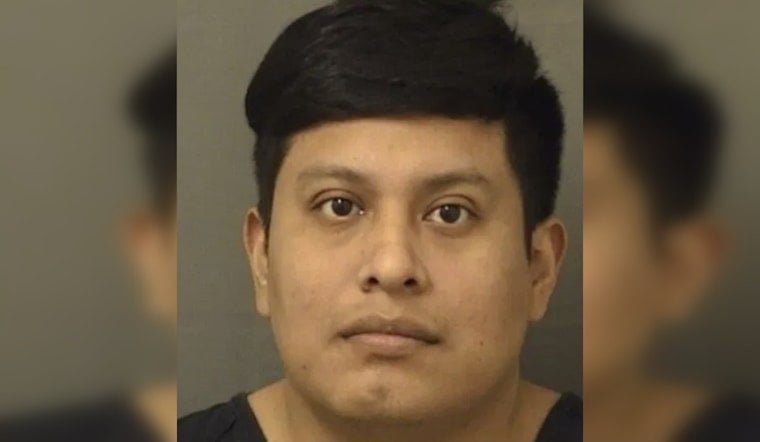
A Boynton Beach man will spend the next 10 years in a Florida state prison not because he caused a deadly crash on Hypoluxo Road, but because he drove away from it and spent the next five hours at a nightclub instead of calling for help. Simon Andres-Miguel was sentenced this week for leaving the scene after striking 51-year-old pedestrian Craig Kersh, who died from his injuries weeks after the August 2024 collision in Lantana.
According to the WPBF, Andres-Miguel struck Kersh as the pedestrian was crossing Hypoluxo Road, then left the scene and spent the next five hours at a nightclub rather than reporting the crash, per authorities. A Palm Beach County jury convicted him during a trial, and he will now serve a decade behind bars. The Palm Beach County State Attorney's Office says Palm Beach County Sheriff's Office investigators determined Andres-Miguel was not at fault for causing the initial crash — the charges stemmed entirely from his failure to stop, render aid, or identify himself as Florida law requires.
A Delayed Death Turned the Case Into a Homicide Investigation
Kersh survived the initial impact and was treated at St. Mary's Medical Center in West Palm Beach for nearly four weeks before he died of his injuries on September 22, 2024, according to the Boca Raton Tribune. That nearly month-long gap between the crash and Kersh's death is what transformed the incident from a hit-and-run investigation into a fatal traffic homicide case. A Palm Beach County jury convicted Andres-Miguel on July 15, 2026, and the state attorney announced the sentencing on Tuesday: 10 years in state prison followed by two years of probation, per the Palm Beach County State Attorney's Office. Assistant State Attorneys Francine Edwards and Matthew Kimball of the Traffic Homicide Unit prosecuted the case.
Prosecutors Zeroed In on What Happened After the Crash
In a sentencing memorandum, Assistant State Attorney Matthew Kimball argued that Florida Statute § 316.027 does not punish a driver for the circumstances that caused a crash — it punishes a driver for failing to try to save a human life by abandoning an injured person. Prosecutors highlighted that instead of calling emergency services, Andres-Miguel drove to Lake Worth and spent five hours at a nightclub. That framing helped justify a sentence more than double the state's mandatory floor.
Under Florida Statute § 316.027(2)(c), leaving the scene of a crash involving death is a first-degree felony carrying up to 30 years in prison, a $10,000 fine, and a mandatory driver's license revocation of at least three years, according to the Sammis Law Firm. That statute applies regardless of who caused the collision or whether the driver was impaired. The law traces back to the Aaron Cohen Life Protection Act, enacted in July 2014 to set a mandatory minimum of four years for fatal hit-and-run offenses, according to the Florida Department of Highway Safety and Motor Vehicles. It was named for a Miami cyclist killed by a driver who fled and ultimately received less than a year in prison because police couldn't test for DUI at the scene — a loophole lawmakers designed the mandatory minimum to close.
A Statewide Pattern of Drivers Who Don't Stop
Andres-Miguel's case fits into a much larger statewide problem. The Florida Department of Highway Safety and Motor Vehicles recorded 104,273 hit-and-run crashes across the state in 2023, resulting in 271 deaths and 871 serious injuries — meaning roughly a quarter of all Florida collisions that year involved a driver who fled. Pedestrians and bicyclists made up 76 percent of those hit-and-run fatalities, and more than 81 percent occurred in low-light conditions at dawn, dusk, or night, mirroring the evening pedestrian crash that killed Kersh.
Palm Beach County itself ranks fifth among Florida counties for hit-and-run accidents, averaging nearly 6,000 such collisions a year, according to county traffic data reported by Searcy Law. Florida as a whole ranked fourth nationwide in pedestrian fatality rate in 2023, at 3.41 deaths per 100,000 residents — well above the national average of 2.18 — per an analysis of federal highway safety data published by USA Today. Those figures underscore why state prosecutors continue pushing for lengthy sentences in cases where drivers choose to disappear rather than stay and help.





