

























































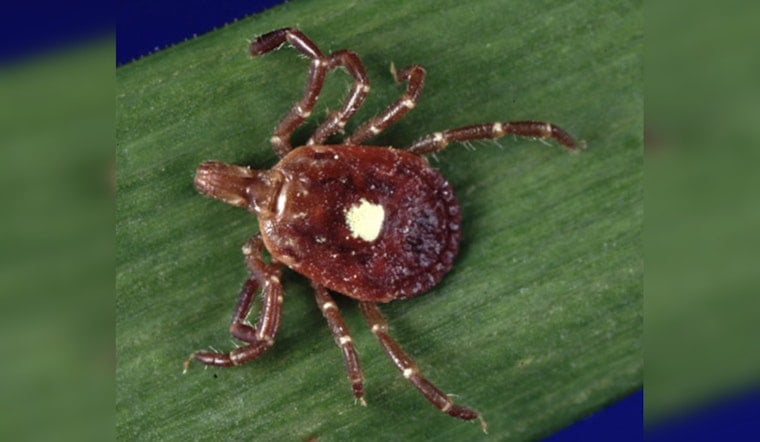
A tick bite on Martha's Vineyard has quietly turned into a public health crisis, with one island hospital logging just two positive tests for a red-meat allergy called alpha-gal syndrome in 2020 and 742 of them by 2023. Another 416 cases followed through June 2024, according to hospital figures reported by Nantucket Magazine, marking one of the most dramatic documented spikes of the tick-borne condition anywhere in the country.
The syndrome is triggered by a sugar molecule called alpha-gal, short for galactose-α-1,3-galactose, carried by the Lone Star tick, according to reporting from CBS News. A bite from that tick can sensitize the immune system to react to red meat, and CBS News reports the condition can turn everyday foods and products into hazards, affecting reactions to beef, pork, veal, lamb, venison and rabbit, as well as dairy products, medicine capsules, and even Doritos and marshmallows. It does not make people allergic to seafood or poultry, per the same report, and reactions can range from a rash to full anaphylactic shock, in which airways close.
Adriana Stimola, who lives on Martha's Vineyard, experienced a rash, swelling in her hands and gastric distress after eating a hamburger, CBS News reports. Her husband and children also developed alpha-gal syndrome, and she told the network that the condition changed her relationship with shared meals. Not everyone who develops alpha-gal antibodies goes on to develop a meat allergy, and for those who do, the condition can improve over time — people with alpha-gal syndrome may slowly reintroduce meat products if they avoid additional tick bites, according to the same reporting.
A Deer Population Fueling the Boom
Experts point to the island's deer as the engine behind the surge. White-tailed deer serve as the primary breeding ground for both Lone Star ticks and deer ticks, and CBS News reports that a single deer can feed 1,500 ticks in a season and, over time, help produce as many as 3 million ticks — with one female tick capable of laying 2,000 eggs. Sam Telford, a professor of infectious disease and global health at Tufts University, told the network that Martha's Vineyard has a very large, out-of-control deer population and that he supports reducing deer numbers to historical levels.
That thinking has already shaped local policy. Advocacy groups on the island pushed in June to reduce the Vineyard's deer herd by 70% by expanding the use of state-issued Deer Damage Permits, which let property owners hunt deer outside normal season to curb tick reproduction, according to the MV Times. Massachusetts officials issued 12 such permits on the Vineyard this year, the paper reported. Telford told CBS News that communities across the region are now considering similar deer reduction efforts to fight back against tick populations.
Not Just a Vineyard Problem
The Vineyard's numbers stand out even against its closest neighbor. Nantucket recorded only 26 positive alpha-gal cases over the same period covered by the Vineyard hospital data, and researchers found Lone Star tick density there running at roughly one-tenth of Martha's Vineyard's levels, per Nantucket Magazine. CBS News reports that Lone Star ticks are surging especially in the Northeast and that ticks broadly are spreading into new parts of the country, alongside diseases they carry including Lyme disease, babesiosis, ehrlichiosis and Rocky Mountain spotted fever.
National data backs up the local alarm. CDC surveillance released in April found that weekly emergency room visits for tick bites hit their highest seasonal levels since 2017 across nearly all U.S. regions, with the Northeast seeing the highest rates overall, according to the CDC. CBS News notes that tick-bite emergency-room visits are now the highest in nearly a decade and that alpha-gal syndrome has affected people well beyond New England, including across the South and Midwest.
Seropositivity Versus Illness
A CDC study published in July analyzed 3,000 residual blood donor samples collected between 2024 and 2025 across 10 states and found that 24% of adults in five high-risk states — Arkansas, Kentucky, Missouri, Tennessee and Virginia — tested positive for alpha-gal IgE antibodies, a marker of exposure that does not necessarily mean someone has a clinical meat allergy. Separately, a study of 3,000 U.S. military recruits published in the Journal of Allergy and Clinical Immunology: In Practice found overall antibody prevalence of 6.0%, with state-level sensitization reaching 39% in Arkansas, 35% in Oklahoma and 29% in Missouri.
Nationally, the CDC has estimated that up to 450,000 Americans may have developed alpha-gal syndrome between 2010 and 2022, with more than 110,000 suspected cases formally identified in that span; because the condition is not nationally reportable, those figures rely on commercial laboratory antibody testing. A separate CDC review of commercial lab data found 3,746 suspected cases in Suffolk County, New York between 2017 and 2022 — about 4% of all suspected cases nationwide and the highest county total in the country, even though several rural Southern counties had higher rates per capita.
Doctors Still Catching Up
Diagnosis remains a major hurdle. A CDC survey of 1,500 U.S. healthcare providers found that 42% of clinicians surveyed had never heard of alpha-gal syndrome, and 35% said they felt not too confident in their ability to diagnose or manage patients with it. That gap helps explain why patients often endure long delays before getting answers, and why awareness has changed only gradually — a shift Telford described to CBS News.
On Martha's Vineyard, Aubrey Stimola Ryan treats tick-bite patients both at Martha's Vineyard Hospital and in her own clinic, per CBS News. She advises checking for ticks twice a day, spraying skin and clothes, and putting clothes in a dryer on high heat for 10 minutes after coming indoors. Tom Mather, a professor of public health entomology at the University of Rhode Island known as the tick guy, advises tucking pants into socks and checking waistbands, groin areas and bra straps for ticks; he has also noted that permethrin-treated socks can kill ticks before they attach. Mather's team has documented larval ticks clustered on the underside of leaves in Rhode Island in what CBS News describes as tick larval bombs — clusters of larvae that can blanket surfaces; a survey conducted in Aquinnah, Massachusetts in May found white flags used to sample vegetation covered with Lone Star ticks.
Adapting Daily Life
Some islanders have restructured their routines entirely around the threat. Ben Deforest, who owns Red Cat Kitchen, now avoids the woods, water and fields of Martha's Vineyard and stays on asphalt and concrete instead, according to CBS News. His restaurant has adapted its menu accordingly, offering an alpha-gal-friendly option without red meat that includes dishes like halibut, parsley and bull's blood made from beets.
Beyond the dinner table, the condition carries risks that extend into hospitals and pharmacies. Mammalian-derived ingredients such as gelatin capsule shells, glycerin and porcine-derived heparin appear in more than 60% of prescription and over-the-counter drugs listed in federal databases, according to the Institute for Safe Medication Practices, meaning routine medications and even blood thinners can trigger delayed or perioperative reactions in highly sensitive patients. On the treatment side, the FDA approved an intentional genomic alteration in so-called GalSafe pigs back in December 2020, engineered to eliminate detectable alpha-gal sugar from their cells; the approval, granted to Virginia-based Revivicor Inc., cleared the animals for human food consumption and potential biomedical uses, allowing up to 1,000 genetically modified pigs to be produced per year.
Not every tick bite causes disease, and ticks themselves come in larva, nymph and adult stages, each carrying its own risk of transmission, per CBS News reporting from correspondent David Pogue, who has covered the network's Sunday Morning program since 2002. But as Lone Star ticks continue expanding their range, the Vineyard's numbers offer a stark preview of what health officials elsewhere may soon be tracking in their own emergency rooms and clinics.





