

























































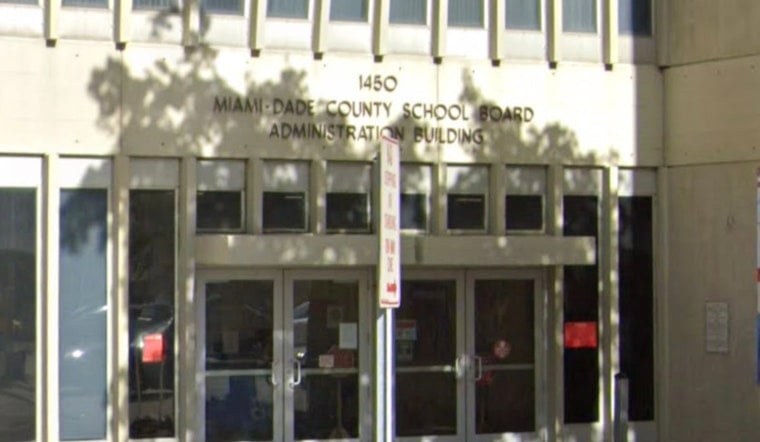
The Miami-Dade School Board voted to gather a committee that will spend the coming months studying whether artificial turf belongs on district athletic fields, after parents, students and environmental advocates pushed back against the district's recent preference for synthetic grass. The panel's recommendations are now due to the board in December, following an amended resolution introduced by board member Joe Geller.
Geller's original resolution, introduced in August, would have paused new artificial turf installations across feasible areas of the district while the review took place. Board members ultimately stripped that pause to secure broader approval, according to WLRN, leaving the advisory panel and review as the resolution's sole focus. As reported by the Miami Herald, Geller said the board needs evidence before deciding on artificial turf, and that the review should weigh health, environmental and lifetime-cost factors.
The advisory panel will include health experts, environmentalists, students and parent-teacher-association representatives, per the Herald's reporting. Recommendations were originally scheduled to reach the board in October, but the amended resolution pushed that timeline to December.
A Petition, a Panel President, and a Push for Native Landscaping
Michele Drucker led an open letter campaign, signed by about 100 parents, teachers and students, urging the district to stop using artificial grass. Drucker, who serves as president of Florida Green Schools, told WLRN she wants the district to adopt “Florida-Friendly” landscaping instead — native plants and natural drainage systems that absorb stormwater without shedding microplastics. She has acknowledged that artificial turf may initially have lower maintenance needs, per the Herald, but argued that the plastic surfaces eventually degrade after that initial low-upkeep period.
Marcel Borges, a 16-year-old student at Coral Reef High School, told the Herald he has sustained carpet burns while slide-tackling on artificial turf parks, and said pebbles from the surface can become stuck in wounds and cause severe pain. Coral Reef High School does have a real-grass field, but it sits old and unmaintained, and the school does not use it, according to the Herald's reporting.
Heat Numbers Driving the Debate
The temperature gap between the two surfaces is central to the fight. University of Florida turfgrass scientist Dr. Marco Schiavon, working out of the Fort Lauderdale Research and Education Center, found that artificial turf in South Florida summer heat can reach up to 174°F — hotter than adjacent asphalt parking lots — while natural grass stays near 102°F thanks to evapotranspiration, according to UF/IFAS. The Herald separately reported field measurements at Little Haiti Soccer Park where natural turf registered 97 degrees at noon while artificial turf on the same site hit up to 114 degrees. Studies cited by the Herald have shown artificial grass can become dozens of degrees hotter than real grass, and can reach temperatures capable of burning skin.
Miami-Dade Public Schools has decided in recent years to prefer artificial turf over natural turf, and Traz Powell Stadium recently received a fresh artificial-turf surface. Raul Perez, the district's chief facilities design and construction officer, reported that no injuries had been reported from turf being too hot, per Miami-Dade Public Schools. School board member Mari Tere Rojas said district principals prefer artificial turf, and noted that real turf fields in South Florida require irrigation, fertilizer and pesticides, while heavy rainfall and high usage can rapidly deteriorate natural grass. Rojas also said natural grass can create muddy or uneven conditions that may increase injury risk — a point environmental advocates dispute in the broader debate, arguing that degraded plastic presents a worse environmental issue than muddy grass, and that plastic grass absorbs less floodwater than real grass during Florida's heavy storms.
Injury Data Adds Fuel From the Pro Ranks
Beyond heat, injury statistics from professional football are shaping how parents and students view the fields their kids play on. National Football League Players Association injury surveillance data found that pro football players experienced a 28% higher rate of non-contact lower-extremity injuries on artificial turf than on natural grass, including 32% more knee injuries and 69% more foot and ankle injuries, according to the NFLPA. A 2023 systematic review of 53 peer-reviewed studies in the American Journal of Sports Medicine, highlighted by Forbes, found consistently higher foot and ankle injury rates on artificial turf across multiple sports — and noted that studies reporting lower injury rates on synthetic turf disproportionately received funding from the turf industry itself.
State Law Limits What Cities Can Ban
Florida House Bill 683, which took effect in July 2025, prohibits local governments from banning synthetic turf installations on single-family residential properties of one acre or less, shifting minimum turf guidelines to the Florida Department of Environmental Protection. That statewide preemption limits municipal authority over turf on private lots, making school boards like Miami-Dade's one of the few remaining venues for this policy fight. Nearby Coral Gables still requires permits for artificial turf and restricts installations mostly to rear yards hidden from street view, according to the Miami New Times.
Miami-Dade County itself has a history of investing in synthetic surfaces, having authorized a $3 million agreement with FieldTurf Inc. in 2019 to install artificial fields at Gwen Cherry Park and Goulds Park as Super Bowl LIV legacy projects co-funded by the NFL Foundation. The region's momentum toward synthetic turf continued this year, as Hoodline reported on a Coconut Creek gator sighting that also noted neighboring Broward County Public Schools added artificial turf fields to six high schools in 2026, bringing its total completed synthetic fields to nine.
What Happens Next
The committee reviewing Miami-Dade's turf policy currently has no allocated funding, and it remains unresolved whether the district will secure money for sustainable natural grass maintenance or instead follow Broward County's lead in expanding synthetic fields further. That question sits alongside a national trend: the Los Angeles Unified School District board voted unanimously in November 2025 to ban new artificial turf installations at early education centers, elementary and middle schools, while commissioning a separate study on high school fields — a process Hoodline has previously covered in depth. Miami-Dade's own committee will now work through the fall toward its December presentation, with health, environmental and cost evidence expected to shape whichever direction the district ultimately takes.





