

























































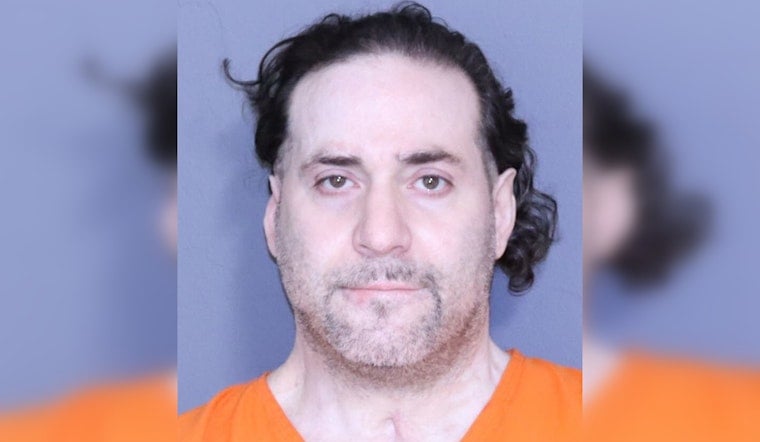
A Miami judge sentenced Marcus Sanchez to life in prison this week for shooting Jenny Miguel twice in the head and chest, then setting her rental home ablaze to try to cover up the killing. Sanchez, who pleaded guilty to murder and arson connected to Miguel's August 2024 death, told the courtroom he had been hearing voices and became paranoid before he pulled the trigger. Judge Christine Hernandez said life imprisonment was the only sentence the facts of the case warranted.
According to NBC 6 South Florida, Sanchez told the judge he and Miguel had been using drugs before he became paranoid, and that he eventually decided to burn everything down. Investigators say Sanchez spent several days with Miguel's body in the home before he ever called police, and that he attempted to clean up the crime scene before setting the fire. He said in court that he could not undo the pain he had caused, and he apologized to Miguel's family during the hearing.
Miguel's family was not moved. Her daughter told Sanchez she wanted him to die and would never forgive him, according to the same report. Prosecutors and Miguel's family had asked the judge for the maximum punishment, and Hernandez delivered it: Sanchez will spend the rest of his life behind bars. Sanchez had hoped for a 25-year sentence, according to the outlet's report, but the judge rejected that request outright.
How Investigators Built the Case
The physical evidence against Sanchez had been mounting for months before he ever entered his plea. Hoodline's earlier reporting detailed how City of Miami Department of Fire-Rescue crews responded on August 18, 2024, to a house fire at 3056 SW 13th Street, where they found Miguel's body in the rear of the residence amid heavy smoke and flames. Surveillance footage from a nearby Chevron gas station captured Sanchez purchasing gasoline and filling a red five-gallon fuel container before the fire, giving investigators physical evidence of premeditation.
An accelerant-detection canine deployed by the State Fire Marshal identified accelerants on Sanchez's shoes, tying him directly to the arson scene. Sanchez was hospitalized for severe burn injuries following the fire, and it was only after his release from hospital treatment that the 43-year-old was arrested in January 2025, five months after the killing, on charges of second-degree murder with a weapon and two counts of first-degree arson. The Medical Examiner had already ruled Miguel's death a homicide by that point.
A Longtime City Employee Remembered
Miguel worked as a payroll clerk for the City of Miami Police Department, a job she held for more than 15 years, according to NBC 6 South Florida's reporting. Official city compensation records reviewed separately classified her as a Staff Services Assistant supporting payroll operations for the department. That decade-and-a-half tenure explains why Miami police officers filled the courtroom during Sanchez's sentencing, showing up in solidarity with her family.
Miguel's sister, Patricia Miguel, told the court that Jenny had much life left to live. She remembered her sister as a woman who still had much of her life ahead of her. Miguel's family said afterward that no sentence could bring back the mother, sister and longtime police department employee they lost.
Legal Framework Behind the Life Sentence
Under Florida Statute § 782.04(2), second-degree murder is a first-degree felony punishable by up to life imprisonment, with a statutory minimum of 16 and three-quarter years, according to The Florida Senate. First-degree arson involving a dwelling, under Florida Statute § 806.01, carries penalties of up to 30 years or life in prison, among the harshest property-crime punishments on the books in Florida. Those statutes gave Hernandez the discretion to impose the maximum term prosecutors and Miguel's family had requested.
A Pattern Local Officials Are Tracking
Miami-Dade County records a domestic violence offense rate exceeding 230 to 300 offenses per 100,000 residents annually, according to the Florida Department of Health's FLHealthCHARTS data. Statewide, certified domestic violence centers provided 603,577 nights of emergency shelter to 12,543 survivors during the 2023-2024 fiscal year, completing more than 224,000 safety plans in that span, per the Florida Partnership to End Domestic Violence. The Eleventh Judicial Circuit of Florida has established a Miami-Dade County Domestic Violence Fatality Review Team specifically to examine intimate partner homicides and identify prevention strategies, noting that such killings account for roughly one-third of all female murders nationally.




