

























































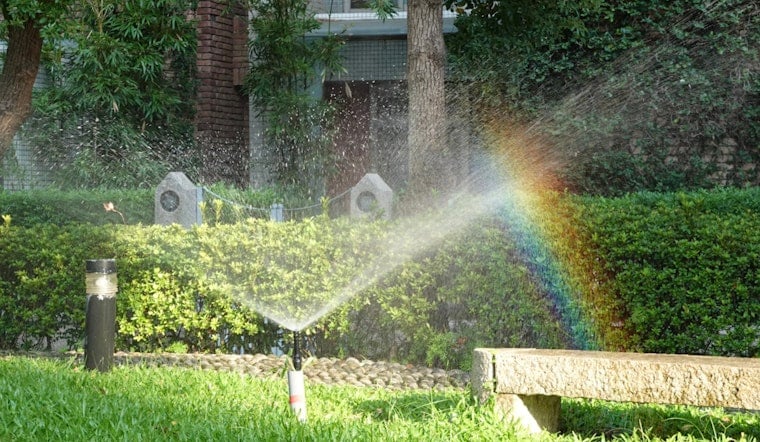
The Minco City Council approved temporary restrictions on nonessential outdoor water use on Thursday, telling residents in this small Grady County town of roughly 1,500 to 1,600 people to stop watering lawns, washing driveways and sidewalks, filling swimming pools, and washing vehicles until further notice. City officials say the problem isn't a lack of water in the ground — it's getting that water where it needs to go fast enough during peak demand.
According to News 9, Minco's wells have water, but a pipeline is limiting how much of it can be delivered to the treatment plant during especially high demand. The city's water system has struggled to keep pace during heavy-use periods, and Resolution 2026-08 asks residents to cut back voluntarily on nonessential outdoor use so the town can maintain reliable water service for homes, businesses, and fire protection. The city has not said how long the restrictions will remain in place.
A Bottleneck, Not a Shortage
The distinction matters for a town whose identity is tied to its land: Minco calls itself “The Land of Milk and Honey” and has held an annual Honey Festival celebrating its agricultural and honey-producing heritage for more than three decades, according to the City of Minco. The current squeeze isn't about drought or dry wells — it's about pipe capacity struggling to move enough water fast enough when everyone turns on a hose at once. Minco sits in Grady County about 35 miles southwest of Oklahoma City along the historic Chisholm Trail, per Data USA.
Minco's predicament is playing out against a broader regional heat wave. Nearby Tuttle imposed Stage 2 mandatory water restrictions earlier this month after severe summer heat drew its water tower storage down to 70% capacity, Hoodline previously reported. Grady County utilities are being tested from multiple directions this summer, and Minco's aging distribution lines appear to be the weak link locally.
The School District's Workaround
The restrictions have already forced Minco Public Schools to find its own solution to keep the high school football field alive. Superintendent Kevin Sims said the district cannot use city water to water its fields, so community members stepped in to help connect the Minco Bulldogs football field sprinkler system to water tanks, with volunteers now hauling water to the field daily.
“Without this, we would be playing on a horribly dead field in a couple of weeks,” Sims wrote, according to the same News 9 report. Sims, who was named Oklahoma Association of School Administrators Region 14 Superintendent of the Year in April, has led a district that recently invested local energy tax revenue into new school buildings and athletic upgrades, including the football field's sprinkler system — an investment Hoodline detailed in its earlier coverage of the district. The volunteer water-hauling effort underscores both the strain the pipeline issue has put on public property and the kind of community cohesion that has become a hallmark of this small town's response.
Working Both Short- and Long-Term Fixes
City officials say they are pursuing an emergency backup water source while also working on longer-term infrastructure solutions, though the article does not specify which backup source is under consideration. Minco's municipal water, sewer, and distribution infrastructure falls under the city's Public Works and Utilities Department, led by Water Superintendent Bill Braunig, a role distinct from the school district's leadership under Sims.
Some of that long-term work was already underway before the restrictions took effect. The Oklahoma Water Resources Board approved an $800,000 loan with 100% principal forgiveness for the Minco Municipal Authority in February through the Drinking Water State Revolving Fund, money earmarked for replacing aging water distribution lines. That fund, co-administered by the state water board and the Oklahoma Department of Environmental Quality, has awarded roughly $2.4 billion in water system loans statewide to help preserve system pressure and safety.
Regionally, there has also been movement toward inter-agency cooperation. In late July, Grady County Rural Water District No. 6 placed an item on its board agenda to discuss and consider approving the permanent sale of water to Minco, a step that could give the city another supply option beyond its own wells and pipeline. Under Oklahoma Department of Environmental Quality rules governing public water operations, municipal systems must maintain adequate operating pressure and supply capacity to safeguard public health and preserve fire suppression reserves — the same standard driving Minco's decision to ask residents to cut back now rather than risk a bigger failure later.





