

























































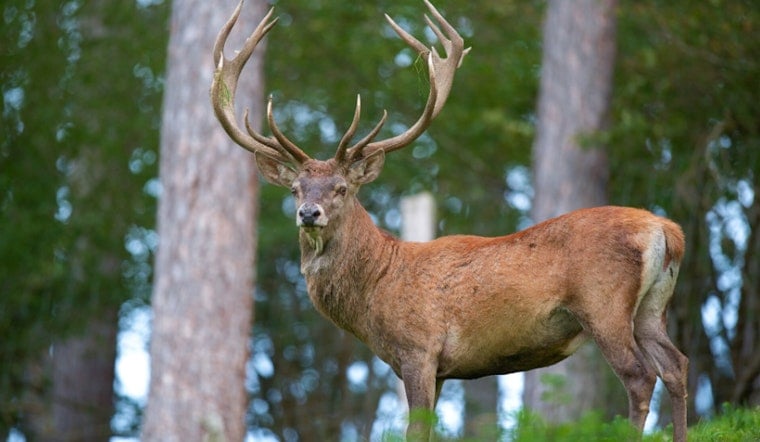
Missouri deer hunters are about to see a dramatically different rulebook this fall, as the state abandons a controversial sharpshooter-led culling program in favor of hunter-driven harvest to fight the relentless spread of chronic wasting disease. The Missouri Department of Conservation has announced a slate of changes to the 2026 deer hunting season, from simplified season structures to the elimination of antler point restrictions in the final counties where they remained, all aimed at slowing a fatal, incurable illness that has now touched most of the state.
The shift follows a pause on post-season targeted deer removals that MDC announced in late December, according to First Alert 4. That program had used sharpshooters working with bait and spotlights in CWD hotspots, a tactic that drew mounting pushback from hunters and landowners who objected to state agents culling deer near private property, as MeatEater reported. With that tool shelved, the department is now working with hunters, landowners and other partners to build what it calls a localized approach that leans on regular-season harvest instead of state-run removals.
What Chronic Wasting Disease Means for Missouri's Herd
Chronic wasting disease is a deadly prion illness affecting deer and other cervids, similar to mad cow disease in cattle and scrapie in sheep, per the seed reporting. There is no cure and no vaccine. MDC has reported that most Missouri counties have now either recorded a CWD case or sit within 10 miles of one, and the department has warned that unmanaged spread could decimate the state's deer population if left unchecked.
State officials have confirmed 815 CWD-positive cases across 46 counties since the disease was first detected in a wild Missouri deer in 2012, according to the Chronic Wasting Disease Alliance. Early detections were concentrated in northern Missouri before the disease expanded southward. While the statewide infection rate remains under 1 percent, localized hotspots have seen prevalence climb sharply, including Jefferson County, where the rate reached 3.5 percent in 2026, according to reporting cited by KSDK. Once an area's infection rate reaches 5 percent, according to the seed reporting, controlling the spread becomes extremely difficult.
Season Changes Hunters Will Notice This Fall
The most visible change for families is a scheduling shift: the early youth portion moves one week earlier, to October 24 and 25, specifically to avoid conflicting with Halloween. MDC has also eliminated the separate CWD portion of the deer season entirely, a move intended to simplify the season structure overall.
Antler point restrictions, long used as a management tool, have been removed from the final 18 counties where they still applied. MDC says lifting those restrictions is meant to help prevent the disease from spreading across longer distances as deer move and disperse. Nonresident hunters now face a limit of one antlered buck, while nonresident landowner permit holders are capped at two antlered bucks.
Testing Requirements Shift to a Rotating Schedule
Mandatory CWD sampling will now occur November 14 and 15 in a rotating set of counties, including St. Charles, Lincoln and Warren counties this cycle. Rather than maintaining fixed CWD management zones, MDC has moved most of the state onto a four-year county rotation for mandatory testing, a system the department says allows for continued monitoring and early detection without the fixed zones it previously deemed unnecessarily complicated given how the disease has actually spread.
The department has also continued its long-standing prohibition on feeding deer and putting out mineral licks, since feeding artificially congregates animals in ways that make CWD easier to transmit. Meanwhile, the minimum acreage requirement for CWD management permits has been raised to at least 20 contiguous acres within a CWD core area, up from the previous 5-acre threshold. All of this fits into an updated 10-year white-tailed deer management plan that MDC says is designed to curb CWD's spread while also reducing deer-human conflict.
The Money and the Herd Behind the Policy
The changes carry real economic weight. Missouri's white-tailed deer herd is estimated at 1.5 million to 1.7 million animals, and hunters harvested 276,262 deer during the 2024-2025 season, a 15 percent drop from the prior year's record haul, according to the Missouri Department of Conservation. Nearly 500,000 hunters take millions of field trips across the state each year, generating more than $1.5 billion in economic activity and supporting over 13,000 jobs tied to gear retailers, lodging and rural businesses.
The state is also spending heavily to track the disease. In Fiscal Year 2025, MDC spent $6.28 million on CWD testing and herd management, offset by $4.71 million in federal reimbursements through the Wildlife Restoration Program, covering roughly 75 percent of those costs. The Centers for Disease Control and Prevention recommends that hunters in CWD-endemic areas test harvested deer and avoid eating meat from any animal that tests positive or appears sick, since the prions that cause the disease are not destroyed by normal cooking temperatures.
Out-of-State Pressure and a History of Near-Collapse
The number of nonresident hunters traveling to Missouri has more than doubled over the past two decades, a trend that pushed wildlife officials toward the new one-buck nonresident limit this year. It is a notable reversal for a herd that has survived far worse: Missouri's deer population collapsed to an estimated low of just 400 animals in the mid-1920s due to unregulated hunting, before decades of conservation work rebuilt it to a peak of 1.6 million by 2005.
Deer remain a fixture of everyday risk on Missouri roads as well as in the woods. Drivers recorded 2,951 deer-vehicle collisions in 2024, resulting in four deaths and 420 injuries statewide, with a vehicle striking a deer roughly every three hours, as Hoodline previously reported. Whether hunter-led harvest alone can hold hotspots like Jefferson County in check without the sharpshooter program remains an open question for wildlife managers heading into the fall season.





