

























































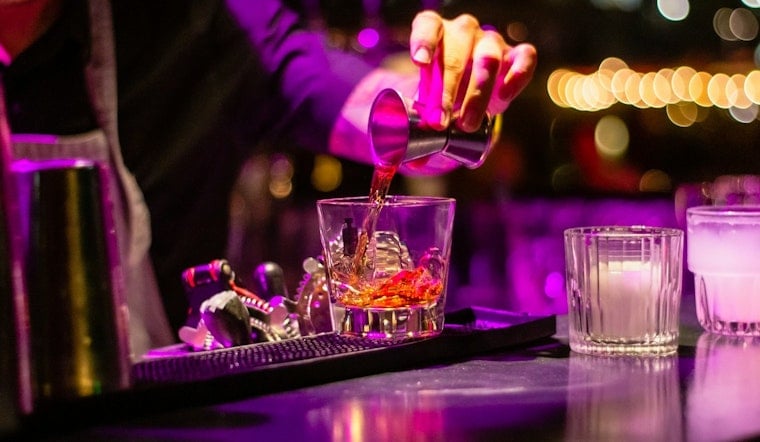
Naperville’s Liquor Commission voted Thursday unanimously to recommend scrapping the city’s long-standing ban on happy hour drink specials, a move that would let local bars and restaurants finally compete with neighboring towns that already offer discounted drinks during set hours. The recommendation now heads to the Naperville City Council, which will make the final call at a future meeting.
The vote, which took place on August 6, would align Naperville with Illinois’s statewide happy hour rules, according to the Chicago Tribune. Those state guidelines cap discounted drink promotions at four hours a day and 15 hours a week, ban volume specials like two-for-one deals, and require discounts to end by 10 p.m. Naperville’s proposed local version would go even further, cutting off discounted drinks at 7 p.m.
Restaurant industry advocates pushed hard for the change. Monica Conners, who represents Dine Naperville and serves as president of the Naperville Development Partnership, told the Tribune that competition is especially fierce for restaurants sitting near the borders of other communities that already permit happy hour. Kevin Reed, vice president of operations for Biaggi’s Ristorante Italiano and Ancho & Agave, said Naperville restaurants are at a competitive disadvantage against neighboring towns that allow the discounts.
The Financial Case for Change
The numbers restaurant operators are citing are significant. Ancho & Agave and Biaggi’s in Naperville, which already offer happy hour food discounts, could see revenue increase by as much as 13% if they were allowed to also discount drinks, per the Tribune’s reporting. John Zydowicz, general manager for Davanti Enoteca, noted that his restaurant already serves plenty of customers between 4 p.m. and 6 p.m. who are over age 40 — a built-in happy hour crowd currently limited to food deals only.
Mayor Steve Chirico backed the recommendation to adopt the state’s happy hour guidelines. That marks a notable shift from where the city stood in 2017, when Chirico said Naperville was grappling with how to control alcohol-related incidents. At that time, the Liquor Commission voted to keep the ban in place after no bar or restaurant representatives showed up to the public hearing to argue for lifting it, according to Patch. That 2017 review had been prompted by an informal inquiry from the owner of Old Town Pour House.
Why Naperville Banned Happy Hour in the First Place
Naperville’s reluctance to allow discounted drinks traces back to two tragedies from the early 2010s. In 2012, an elementary school teacher was stabbed to death during a disturbance inside a club on Chicago Avenue — a case later identified as the killing of 24-year-old Shaun Wild at Frankie’s Blue Room, for which attacker Daniel Olaska was sentenced to 43 years in prison in May 2015, according to CBS Chicago. Wild was fatally stabbed in the heart while trying to defend a friend during the fight.
Two years later, Naperville was shaken again when a drunken-driving crash sent two young men to their deaths in a water-filled Naperville Park District quarry. The driver, who had a blood-alcohol level of 0.142, crashed into the 40-foot-deep quarry at Centennial Park after leaving a local bar in July 2014 and was later indicted on nine felony counts of aggravated DUI, per the Associated Press. In the wake of those incidents, the city implemented restrictions including a ban on entering or re-entering a bar or restaurant, or buying shots, during the hour before closing.
What's Changed Since Then
Illinois itself had banned happy hour promotions statewide from 1989 until 2015, when then-Governor Bruce Rauner signed legislation allowing the discounts to return with restrictions attached. That law, known as the Culinary and Hospitality Modernization Act, ended a 26-year prohibition that lawmakers had originally enacted to curb binge drinking and alcohol-related traffic accidents, according to the Illinois Restaurant Association. Crucially, the 2015 law preserved home-rule authority, which is what allowed Naperville to keep its own ban in place for another nine years even as the rest of the state moved on.
Supporters of lifting the ban now point to changes on the ground since those earlier tragedies. Restaurant identification technology has improved, making it easier for staff to check IDs, and ride-hailing services like Uber and Lyft have become far more popular, giving patrons safer ways to get home after a happy hour drink. The 2015 state law also came bundled with mandatory server training, requiring alcohol servers statewide to complete Beverage Alcohol Sellers and Servers Education and Training.
Public health data from around the time Illinois reinstated happy hours showed 22% of Illinois adults engaged in binge drinking, a figure that placed the state among the higher tiers nationally for excessive alcohol consumption, according to St. Louis Trial Lawyers. That backdrop helps explain why Naperville officials moved so cautiously for so long before revisiting the ban.
With the Liquor Commission’s unanimous recommendation now on the table, the decision moves to the Naperville City Council, which must weigh the economic pressures facing local restaurants against the city’s long-standing public safety priorities. No date for that council vote has been announced.





