

























































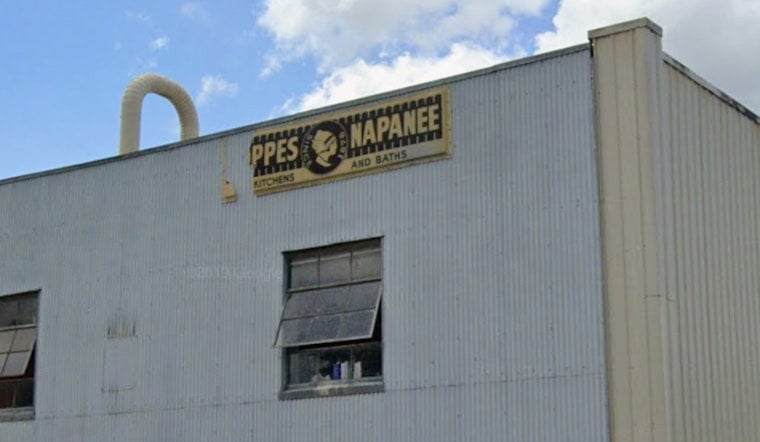
A three-story replica of a 1921 kitchen cabinet now towers over the small town of Nappanee, Indiana, standing 30 feet tall with stairs leading up to a loft for visitors to climb. The giant structure, built from 15,000 bricks to mirror the look of a 19th-century factory, has been dubbed the world's largest Hoosier cabinet, and it overlooks Coppes Commons, the site of the original Coppes Napanee factory where the cabinets were once mass-produced.
The replica is modeled after the company's 1921 Dutch Kitchenette, which opened to the public as part of Coppes Napanee's 150th anniversary celebration, according to ClickOnDetroit, which credited the Associated Press reporting of Obed Lamy and John Raby. Nappanee sits in Elkhart County, roughly 150 miles north of Indianapolis, in a region known both as a major hub for recreational vehicle manufacturing and wood products and as home to the nation's third-largest Amish settlement, the outlet reports.
Hoosier cabinets like the one being celebrated were freestanding kitchen workstations and storage units that served as all-in-one kitchens in early 20th-century American homes, consolidating shelves, a work table and a corner cupboard into a single piece of furniture. They stored flour, sugar, spices, loaves of bread and other pantry staples, and many came equipped with built-in flour sifters, per the same account. The cabinets even shipped with small cookbooks containing recipes for meats, soups, breads and desserts.
A Design That Changed the American Kitchen
The cabinets centralized food preparation and sped it up considerably, and advertising at the time leaned hard into that promise, claiming the furniture would strengthen marriages and even make women more beautiful. They earned the affectionate nickname “kitchen pianos” for their imposing, furniture-like presence in the home, the article notes.
Part of what made the specific Dutch Kitchenette model so significant was a scientific efficiency study commissioned by then-Commerce Secretary Herbert Hoover, according to InkFreeNews. Efficiency engineer Harrington Emerson led the research, which concluded that owning the cabinet saved housewives 1,592 steps per day during meal preparation. The publicity that followed was enormous: consumer demand surged, and Coppes Nappanee shipped 50,000 units in a single year at the height of the craze.
Mary Figueroa, curator of history at the Indiana State Museum and Historic Sites, which holds four Hoosier cabinets in its own collection, said the giant replica serves a clear purpose. “It cannot be missed,” Figueroa said of the towering cabinet, according to ClickOnDetroit, noting that Hoosier cabinets once had roughly 5,000 dealers across the country. The cabinet's name itself was coined after the Hoosier Manufacturing Co., the Indiana company that became most closely associated with the style.
From Factory Floor to Roadside Tourist Stop
Coppes Napanee traces its roots back to 1876, when it began as a local sawmill founded by the Coppes brothers and Daniel Zook before expanding into box making and furniture manufacturing, eventually pivoting to kitchen cabinets in 1914, according to Coppes Commons. The company is now one of just two still in existence that originally manufactured Hoosier cabinets, and it continues producing custom cabinets in Nappanee today.
The factory complex fell into disrepair before local businessman Thomas Mast bought it in 2007 and began rehabilitating it, opening the first Coppes Commons shop in 2008. The site has since been converted into an indoor marketplace, artisan hub and museum, now housing more than 15 retail shops and eateries alongside the company's active cabinet operation.
Wesley Mast, owner and president of Coppes Napanee, said the new giant cabinet gives the site a fresh identity. “It brings another level of attention and branding,” Mast said, per ClickOnDetroit, adding that it makes Coppes Commons more of a destination for visitors passing through the region.
A National Craze That Faded After the War
Hoosier cabinets were popular from the 1890s through the 1930s, but the style waned after World War II, when built-in wall-to-wall cabinetry became the norm in new home construction. At their peak, though, the cabinets were everywhere: between the 1890s and World War II, American manufacturers produced an estimated four million Hoosier-style cabinets, and roughly one in every ten U.S. homes owned one by 1921, according to the City of New Castle, Indiana.
New Castle was itself a major player in the industry — the Hoosier Manufacturing Co. based there produced nearly 700 cabinets a day at its peak in the 1920s, selling more than two million units by 1920 and making it the country's largest kitchen cabinet manufacturer. The freestanding cabinet concept actually predates that boom, having been introduced in 1898 by the G.I. Sellers furniture company in Elwood, Indiana, before dozens of regional competitors adopted the design, according to Kountry Kraft.
The competition was fierce and heavily concentrated in Indiana, where hardwood timber supplies and rail networks made the state a natural manufacturing center. Historical archives cataloged by the Hoosier Cabinet Museum at Coppes Commons identify more than 120 distinct companies that manufactured Hoosier-style cabinets during the early 20th century, most of them clustered in or near the state to take advantage of local lumber and metal component suppliers.
Heritage Now Comes With a Coffee Bar
Coppes Napanee isn't just preserving the past — it's selling an updated version of it. In conjunction with its 150th anniversary this year, the company reintroduced handcrafted Hoosier cabinets built for modern homes, including a Model C coffee bar unit priced between $10,000 and $15,000 that comes equipped with plumbing knockouts for built-in espresso machines. The new models pair traditional hardwood frames and tambour doors with contemporary appliance integrations, blending the brand's century-and-a-half history with the tastes of today's luxury buyers.



