

























































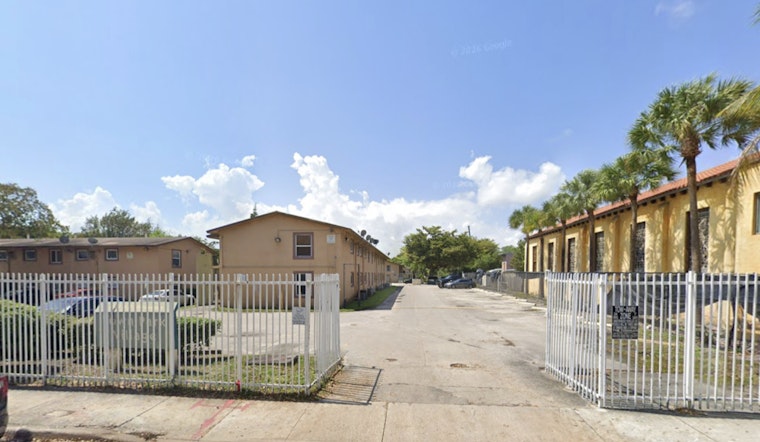
Senior residents in four units at Town Park Village No. 1 in Overtown went without running water for more than a week after an exterior pipe outside Building 10 burst on August 1, leaving them to haul water or go without for basic needs. Service was not restored until roughly 11 days later, and only about two hours after CBS News Miami began asking questions about the outage.
The residents said they felt forgotten and neglected as the days dragged on with no fix in sight, according to CBS News Miami. Conditions only changed after the station stepped in, the outlet reported, raising fresh questions about how the complex's management handled an outage that left elderly residents without one of the most basic utilities for over a week.
Management Suggested Relocating, Not Repairing
Property management emailed affected residents on August 4 advising them to contact their own insurance carriers if they felt unsafe and suggesting they relocate while major pipe repairs were completed, the station's report states. Residents said they had no alternative shelter and no relocation insurance coverage to fall back on. Management later emailed that repair materials would not arrive until August 11, according to the same account, meaning residents were told to wait more than a week for parts before the fix even began.
Miami-Dade's Water and Sewer Department confirmed through a records review on August 12 that no public water main breaks or infrastructure projects affected the area. That finding established that the outage stemmed entirely from private plumbing on the property grounds, not from any city utility failure, and that public water lines serving the surrounding neighborhood remained operational throughout the ordeal.
A Pattern of Delayed Repairs
This is not the first maintenance dispute to surface at the aging cooperative. In July, CBS News Miami reported that a 70-year-old resident had gone more than a year without working air conditioning, with management citing the resident's unpaid rent — reportedly totaling thousands of dollars — as the reason repairs had stalled.
Florida law is unambiguous about what landlords owe tenants in situations like these. Under Florida Statute § 83.51, landlords of multi-family residential properties must provide functioning running water, hot water, and heat at all times during a tenancy. Miami-Dade County Code similarly requires property owners to maintain plumbing systems in safe, working condition and provide continuous hot water and sanitary facilities, with county code enforcement officers empowered to inspect violations and issue civil citations.
An Aging Co-op With a Troubled Rehab History
Town Park Village No. 1, built in the early 1970s at 1680 NW 4th Avenue, is a 147-unit, 19-building cooperative that stands as one of Florida's pioneering HUD-assisted low-income homeownership developments, according to WLRN. Its cooperative structure grants resident shareholders partial ownership in the property rather than a standard landlord-tenant arrangement.
In March 2021, the Southeast Overtown/Park West Community Redevelopment Agency awarded an $18 million grant for a full-gut rehabilitation of the complex, specifically citing the urgent need to replace aging, hazardous water and sewer lines, per the Florida Redevelopment Association. But by May 2024, WLRN's reporting found that money had nearly dried up with minimal work completed, and the co-op board had put the nearly 7-acre property up for sale to developers for $38 million, stoking resident fears of displacement amid rising real estate values in a rapidly changing neighborhood.
Other Overtown Housing Efforts Offer a Contrast
The water outage lands amid a broader wave of affordable housing activity in Overtown. In revitalized 44-unit debut, Miami-Dade officials celebrated the January opening of 16 Corner, a $1.4 million project that transformed unsafe structures into affordable units without displacing long-term residents, targeting households earning 50 percent of the area median income. Other recent projects, including a 36-story tower with 616 apartments elsewhere in the neighborhood, show developer interest is surging even as older cooperatives like Town Park Village No. 1 struggle to maintain basic infrastructure for the seniors who already live there.



