

























































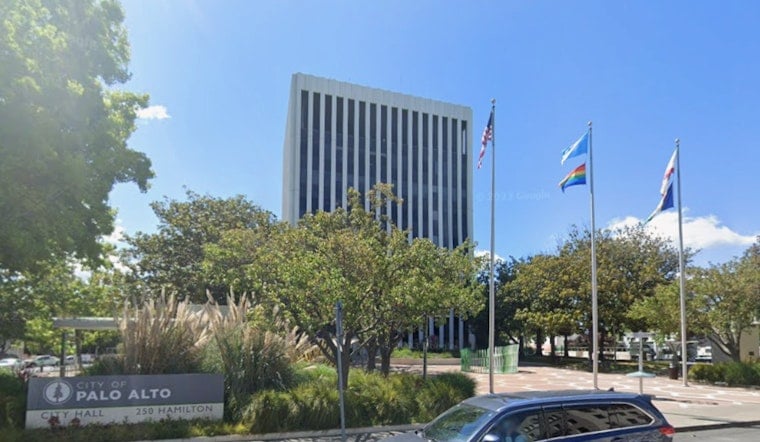
More than 100 people packed Palo Alto City Hall this week to demand the city rip out its network of Flock Safety license plate cameras, with one protester, Dan Merget, showing up in a cardboard-and-tape headpiece shaped like a surveillance camera to drive the point home. The demonstration landed as the Palo Alto City Council weighs whether to end its contract with the embattled vendor, with public pressure mounting by the day.
The rally, organized by a coalition called Safety Over Surveillance, drew supporters opposed to the 30 Flock cameras installed around the city, according to Palo Alto Online. Merget, who opposes having the cameras in Palo Alto at all, told the outlet that big brother surveillance scares him. The coalition, made up of 14 local organizations, has urged the city to abandon Flock Safety altogether rather than negotiate new terms.
Safety Over Surveillance has cited data security and mass surveillance concerns in its campaign, and on the group's website, it states that collected personal data can be accessed by people in power without a warrant, and that Palo Alto pays Flock to create what it calls a vast AI-driven mass-surveillance database of residents' and visitors' movements. Palo Alto's existing contract covers 30 automated plate readers at an estimated total cost of $165,900 across three fiscal years through this year, according to the City of Palo Alto. City policy states the cameras capture only rear plates and do not use facial recognition, with captured data automatically purged after 30 days unless flagged for an investigation.
Council Members Signal Growing Doubts About Flock
Several council members used the meeting to voice skepticism that the city should keep working with Flock. Councilmember Tim Mackenzie said the camera installation erodes public trust and places everyday people under automatic suspicion, adding that public trust is foundational to policing, per the same account from Palo Alto Online. Councilmember Vicki Veenker said she thinks Palo Alto is unlikely to retain Flock, while other council members indicated they wanted to terminate the contract outright.
Not everyone on the dais was ready to move that fast. Councilmember Pat Burt disagreed that the council was ready to end the Flock agreement, instead backing another round of discussion covering options such as data-sharing limits and outright contract termination. The council ultimately focused Sunday's session on approving the scope of an independent audit of the city's automated license plate readers, directing the OIR Group and city staff to study alternative vendors and to return findings sooner than the standard 90-day audit period.
What The Audit Will and Won't Cover
Per Palo Alto Online's reporting, the police department has said Palo Alto's ALPR cameras have not been searched for reproductive-rights or immigration-enforcement purposes, and the upcoming audit will focus on local policies and how the technology is actually used. Still, out-of-state law enforcement agencies have searched Palo Alto's cameras without the police department's knowledge, according to the outlet's previous reporting — an issue the council is now grappling with as it considers whether covering the cameras during the audit period makes sense.
Councilmember Keith Reckdahl raised a pointed caution during the meeting: switching vendors may not actually resolve the underlying data-sharing concerns. He argued that a locally hosted server could limit how much information Palo Alto police share with neighboring cities' departments. Councilmember Julie Lythcott-Haims said the city may need to find a better gate for the Flock problem, while councilmember Ed Lauing voiced distrust specifically of Flock Safety CEO Garrett Langley. One resident, Henry Etzkowitz, suggested holding a contest to destroy the cameras with a sledgehammer — though the cardboard camera headpieces worn by protesters like Merget were, notably, inoperable props rather than the real thing.
Neighboring Cities Have Taken Three Different Paths
Palo Alto's dilemma mirrors a fractured regional response. Mountain View severed ties with Flock earlier this year after Police Chief Mike Canfield recommended shutting down the city's camera network entirely, following an audit that found unauthorized national lookup settings had let federal agencies and out-of-state police reach into local data, according to KTVU FOX 2. Canfield said he had lost confidence in the vendor after learning the unauthorized access included queries from agencies such as the Bureau of Alcohol, Tobacco, Firearms and Explosives and Air Force bases.
The Santa Clara County Board of Supervisors went further in February, voting 3-2 to bar the Sheriff's Office from contracting with Flock in cities including Saratoga, Cupertino, and Los Altos Hills, as KQED reported. Supervisors said they were troubled that federal immigration enforcement agencies appeared to be accessing local camera records in violation of county sanctuary policies. East Palo Alto, by contrast, chose to keep its Flock agreement, restructuring the deal from a three-year term into one-year renewable contracts to avoid early termination penalties, while police there testified the cameras remain essential for recovering stolen vehicles and investigating violent crimes, per SFGATE.
San José took a third route, voting unanimously in March to keep its Flock network while imposing a 30-day retention cap and banning camera placement near reproductive health clinics and houses of worship, KQED reported separately. San José police credited the cameras with assisting homicide, kidnapping, and sexual assault investigations. Stanford University, meanwhile, switched from Flock to Genetec CloudRunner, a system that transfers camera data to Stanford for local storage without third-party access — an option Palo Alto councilmembers are now weighing alongside Motorola as potential alternatives.
State Law and a Pending Bill Loom Over the Debate
The stakes extend beyond Palo Alto's borders. Under California's Senate Bill 34, enacted in 2015, public agencies and police departments operating license plate readers are legally barred from sharing that data with out-of-state or federal agencies. A June audit by the San Francisco Police Department found that federal and out-of-state agencies had made 299 improper queries into SFPD's Flock network over roughly a year through a regional intelligence hub, prompting the department to disable external access.
State lawmakers are now pushing for further restrictions. Senate Bill 1013, advanced this month, would mandate a maximum 30-day retention limit for license plate data nationwide and prohibit default access to national databases starting in January 2027, per LegiScan. More than 39 police departments and law enforcement unions have opposed the bill, arguing that retention limits would hamper complex criminal investigations. Flock Safety itself moved to reduce its standard default data retention from 30 days to seven days on August 13 and will require police clients to enable misuse-detection tools by January 2027, though civil liberties advocates maintain that shorter retention windows do not fix the underlying risk of warrantless mass surveillance.
The Palo Alto rally also fit into a wider week of coordinated action: a coalition of 20 Bay Area immigrant rights and community organizations launched a multi-day wave of protests this month, demanding that local governments switch off license plate cameras entirely rather than settle for policy tweaks. Palo Alto's own earlier coverage of the regional fight, including its reporting on Mountain View's audit shock, has tracked how the once-routine surveillance tool became one of the most contested local government decisions in Silicon Valley this year.





