

























































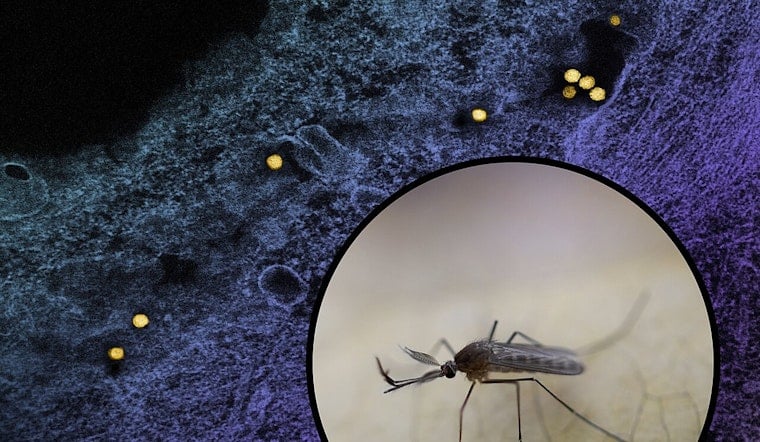
A resident of Piatt County, near Champaign, has become Illinois' first confirmed human case of West Nile virus in 2026, state health officials announced. The diagnosis comes as mosquito-borne illness activity has already turned up in mosquito batches, horses or birds across 50 Illinois counties this year, and it puts a local face on a virus that has stalked the state for more than two decades.
The Illinois Department of Public Health announced that the Piatt County resident tested positive for West Nile virus, according to the Chicago Tribune. The state also has three other probable human cases in northern Illinois, though none of those have been confirmed. Local mosquito trapping and standing-water mitigation across Piatt County fall to the DeWitt-Piatt Bi-County Health Department, the agency that leads vector surveillance in the region.
A Virus With a Long Illinois Track Record
West Nile virus reached mosquito batches, horses or birds in 50 Illinois counties this year, the Tribune's reporting shows, and last year the virus turned up in 73 of the state's 102 counties. Illinois recorded 150 human cases and 10 deaths in 2025, with the state's first fatality that year coming from a suburban Cook County resident in their 60s who died in mid-September, according to the Illinois Department of Public Health. Just the week before this story published, West Nile risk was described as increasing in suburban Cook County, per the Cook County Department of Public Health.
Illinois has seen far worse. In 2002, the state suffered the worst West Nile outbreak in U.S. history to that point, with 884 human cases and 64 deaths recorded across nearly all of its 102 counties, according to the Illinois Department of Public Health. That outbreak cemented Illinois as one of the country's most closely watched states for the virus, a reputation that continues to shape how aggressively officials test mosquitoes, sick horses and symptomatic humans today.
How the Virus Spreads and What Symptoms Look Like
People contract West Nile virus from infected mosquito bites, and mosquitoes need standing water to reproduce, which is why storm drains, catch basins and other stagnant pools become breeding grounds. The primary vector in Illinois is Culex pipiens, the northern house mosquito, a species that breeds in exactly those conditions and bites most heavily from dusk to dawn, according to the University of Illinois.
Most people infected with West Nile virus have no symptoms or only mild ones, which can include fever, headache, rash and body aches, and symptoms can develop three to 15 days after infection. Roughly 80% of infected people show no symptoms at all, and fewer than 1% develop severe neuroinvasive illness such as encephalitis or meningitis — but that small group faces an estimated 10% mortality rate and often permanent neurological damage, according to the Mayo Clinic News Network. Severe symptoms include high fever, stiff neck, confusion, muscle weakness and brain inflammation, and that inflammation can lead to lasting neurological damage or death.
State Health Officials Urge Precautions
Illinois Department of Public Health Director Sameer Vohra said in a statement that residents should take steps to protect themselves and their loved ones from mosquito bites and illness. The department recommends that Illinois residents avoid mosquito bites, keep screens on open doors and windows, use EPA-registered mosquito repellents — especially those containing DEET — and dump stagnant water that has stood for a week or more. Those steps echo the state's broader “Three R's” framework — Reduce, Repel and Report — which also urges residents to report unmanaged stagnant water to local health agencies, per Capitol City Now.
The state health department also continues testing mosquito batches for West Nile and other mosquito-borne illnesses, along with sick horses and humans showing West Nile-like symptoms. Beyond mosquito bites, the virus can also spread through infected blood transfusions and organ transplants, a pathway the CDC has tracked through 15 organ transplant-associated infection clusters recorded between 2002 and 2024, according to the American Medical Association.
Piatt County's Case Fits a National Pattern
The Piatt County diagnosis arrives amid a broader surge in West Nile activity nationwide. U.S. West Nile virus activity started unusually early in 2026, with the CDC logging 48 human cases across 12 states by June 30 — the highest early-season case count recorded nationally since 2004, with 79% of those cases involving neuroinvasive illness, per HPN Online. That follows a 2025 season in which health officials logged 1,981 West Nile cases nationwide, including 1,359 severe neuroinvasive illnesses, as climate-driven factors lengthened the active transmission window across 46 states, according to a report from BEACON. Nationwide deaths from the virus surged 32% in 2025 compared with typical seasonal baselines, alongside a 41% increase in severe neuroinvasive disease cases, the American Medical Association found.
Illinois' 2026 season has already generated coverage well beyond Piatt County. Hoodline reported in June that Chicago had confirmed its first infected mosquitoes of the year, and by mid-August the city moved to spray insecticide on the Far South Side after mosquito pools there tested positive. West Nile-positive mosquitoes also prompted a spraying response in St. Charles in Kane County over the summer. With the virus now confirmed in a human case downstate and probable cases circulating up north, Illinois health officials are pressing residents statewide to take the same basic precautions: clear standing water, seal screens and use repellent during peak dusk-to-dawn biting hours.




