

























































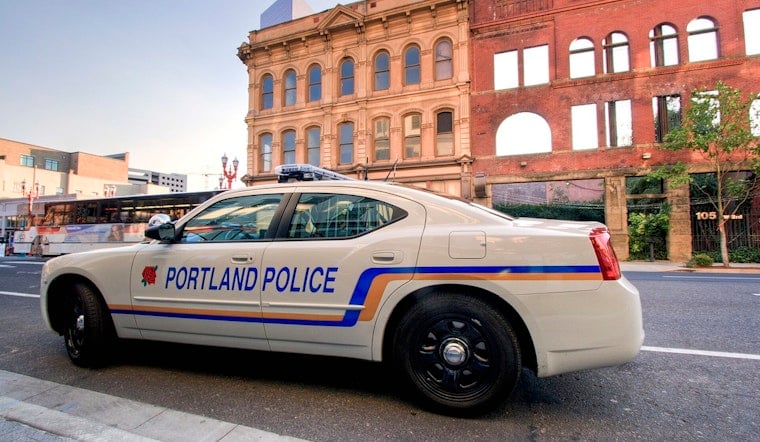
Federal and local law enforcement officials announced Tuesday that a three-year crackdown on fentanyl trafficking in downtown Portland has led to more than 100 arrests, the seizure of more than 100 kilograms of fentanyl, and federal charges against more than 100 defendants. Officials said the seized fentanyl was worth an estimated $1.3 million and contained enough of the drug to kill 50 million people.
The joint operation, which paired an FBI special agent and an Assistant U.S. Attorney with Portland Police Bureau's Bike Squad and Central Precinct's Neighborhood Response Team, began in 2023 to target open-air drug markets downtown, according to KPTV. The initiative later expanded to include county sheriff's offices as dealers moved outside the downtown core, per the U.S. Attorney's Office, District of Oregon, distributed via FlashAlert. In addition to the fentanyl haul, law enforcement seized more than 40 guns during the campaign.
Why Federal Charges Instead of Local Ones
U.S. Attorney Scott Bradford said the reason federal authorities got involved in 2023 traces back to a familiar and frustrating cycle: local and state court systems lacked the capacity to hold street-level dealers, so suspects were released hours after arrest and went right back to dealing. Bradford put it bluntly at the announcement, saying fentanyl dealers were arrested in the morning, released in the afternoon, and back on the streets in the evening dealing poison. Federal charges carry mandatory minimum sentences, and federal custody prevents the same-day release that had undercut earlier enforcement efforts.
Bradford, an 18-year Department of Justice veteran who previously led white-collar and cybercrime units in Oregon, was appointed interim U.S. Attorney by Attorney General Pamela Bondi in July 2025 and sworn in that November, a milestone Hoodline covered at the time. He said every dealer arrested and prosecuted, and every gram of fentanyl seized, represents a life saved.
A Case That Illustrates the Pattern
Officials highlighted specific prosecutions from the three-year campaign to show how the operation targeted repeat offenders. Honduran national Luis Carlos Moreno-Mencia was sentenced in March 2025 to five years in federal prison after pleading guilty to possessing 167 grams of fentanyl and a firearm in downtown Portland, and court records show he faced deportation to Honduras following his prison term. Officials said the more than 100 defendants charged in the broader operation included people from Honduras or Mexico who were living in the United States illegally.
FBI Portland Special Agent in Charge Doug Olson said every gram seized prevents overdoses and saves lives, adding that dangerous drugs in the community affect everyone and threaten the place officials care deeply about. Portland Police Chief Bob Day said the results have been measurable: overdoses declined, open-air drug dealing decreased, and community engagement increased over the course of the operation. Still, officials cautioned that more work remains because fentanyl remains on the streets.
The Policy Reversal Behind the Crackdown
The federal task force's work unfolded against a dramatic shift in Oregon drug policy. Voters approved Measure 110 in November 2020 with 58.5% support, making Oregon the first state in the nation to decriminalize personal-use quantities of hard drugs, according to Recovered.org. But as cheap synthetic fentanyl saturated Portland's downtown core and local jails lacked capacity to hold dealers, public dissatisfaction grew, with polling by 2024 showing nearly two-thirds of Oregonians favored repealing the law.
That backlash culminated in March 2024, when Oregon lawmakers passed House Bill 4002, which Governor Tina Kotek signed to recriminalize small-scale drug possession as a misdemeanor starting September 1, 2024, according to Oregon Public Broadcasting. Weeks earlier, on January 30, 2024, Kotek joined then-Portland Mayor Ted Wheeler and Multnomah County Chair Jessica Vega Pederson in declaring a 90-day state of emergency to pool resources and establish a unified command center targeting the downtown fentanyl crisis, an emergency that ended in May 2024 with commitments to sustained regional cooperation.
Overdose Deaths Trending Downward
The enforcement and policy shifts have coincided with a decline in fatal overdoses. Oregon Health Authority data reported that statewide overdose deaths dropped from 1,833 in 2023 to around 1,100 in 2025, per figures officials cited at Tuesday's press conference. The Oregon Health Authority's May 2026 report separately found that 2024 fatalities fell 16% to 1,544 deaths, marking the state's first annual decrease in fatal drug overdoses since 2016, with preliminary data indicating the downward trend continued through 2025.
The same May report recorded 4,193 inpatient overdose hospitalizations and 10,365 emergency room visits for drug overdoses in Oregon in 2024, with more than 90% of fatal overdoses involving fentanyl, methamphetamine, or both. Polysubstance overdoses accounted for 62.2% of the state's fatal drug overdoses that year. The scale of the danger is rooted in the drug's chemistry: the CDC has noted that illicit fentanyl is a synthetic opioid 50 times more potent than heroin and 100 times more potent than morphine, with a dose as small as two milligrams considered potentially lethal to an adult, and synthetic opioids account for around 150 overdose deaths daily across the country.
Enforcement Pushes Outward
Even with the encouraging numbers, prosecutors have acknowledged that drug dealing networks have begun shifting outward into surrounding suburban counties, which is why the task force expanded to include county sheriff's offices in the first place. The pattern echoes other recent enforcement actions around the region, including a federal case involving a half-pound fentanyl stash tied to the Goose Hollow bike path that Hoodline reported just a day before Tuesday's announcement.
The downtown campaign follows a string of related busts across the metro area over the past two years, including a Multnomah County and FBI operation that seized over nine pounds of methamphetamine and a kilogram of fentanyl, a Portland Police Bureau seizure of 480 grams of fentanyl in Northwest Portland, and an earlier dragnet that led to 34 arrests downtown. Officials have framed Tuesday's announcement as evidence that the three-year strategy, born out of frustration with catch-and-release enforcement, has begun to reshape the city's open-air drug markets even as they warn the fight is far from finished.





