

























































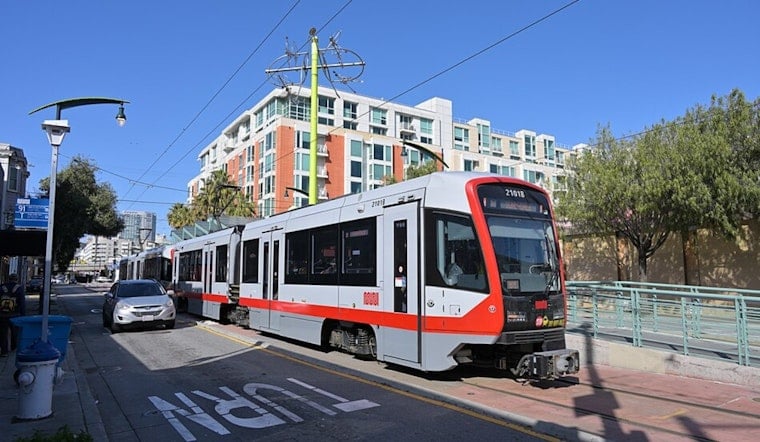
A San Francisco Muni operator fell asleep at the controls moments before their train slammed into the rear of another empty light rail vehicle near the San Francisco Zoo on July 31, according to the San Francisco Municipal Transportation Agency. The collision happened near the intersection of 47th Avenue and Wawona Street, part of the L Taraval line's terminal loop, and shattered window glass as the following train struck the stationary one. Both trains were empty of passengers at the time, and SFMTA said no one was injured.
Video shared with ABC7 News by NorCal Bodycam appears to show the operator asleep before the crash. SFMTA has said its investigation initially determined the crash was caused by operator error linked to fatigue, and the agency has ruled out vehicle or infrastructure problems as a cause. A formal investigation into the collision remains ongoing, and the agency called the incident unacceptable.
Separate reporting has indicated that the operator on the stationary front train, which was struck from behind, was treated on scene for minor injuries, though SFMTA's own account states no one was injured in the collision. That discrepancy has not been resolved publicly.
A Familiar Pattern on Muni's Surface Lines
This is not the first time a Muni operator has appeared to fall asleep on the job. On September 24, 2025, an N Judah operator fell asleep exiting the Sunset Tunnel, sending a train packed with morning commuters accelerating to nearly 50 mph through a sharp curve. Some passengers were thrown forward or out of their seats before the train overshot its stop at Duboce Avenue, as Hoodline reported at the time. SFMTA later determined operator fatigue caused that incident and reassigned the driver to non-driving duties.
The two incidents point to the same underlying vulnerability: Muni Metro trains run under an automated control system that manages speed and spacing while underground, but surface segments like the L Taraval rely entirely on manual driving and physical deadman control switches, according to SFMTA operating guidelines. When an operator loses alertness on a surface line, there is no automated backstop to slow or stop the train.
Regulators and the Agency Respond
State rules set by the California Public Utilities Commission cap light rail operators in safety-sensitive roles at 12 consecutive hours of work, or 12 hours within a 16-hour spread, and require at least 8 consecutive off-duty hours before a shift begins. After the September N Judah incident, the CPUC opened a formal review into SFMTA's fatigue management policies to determine whether scheduling issues were systemic across the agency.
In response to that scrutiny, SFMTA launched a fatigue-awareness education campaign and reported exploring technical safeguards, including working with train manufacturer Siemens on software modifications that would cap light rail speeds at specific curve locations. Whether such automated speed limits will be extended to surface segments like the L Taraval loop near the zoo remains an open question, and it is unclear whether CPUC regulators or SFMTA will ultimately mandate automated collision-avoidance backstops for surface tracks.
A 2013 municipal audit of SFMTA transit operations had already flagged chronic operator shortages and high absenteeism, which forced the agency to rely heavily on unscheduled overtime and raised internal concerns about fatigue among drivers. Surface-line collisions are not new to Muni: in November 2022, an inbound light rail vehicle rear-ended another train along The Embarcadero near Brannan Street, injuring seven passengers and hospitalizing five, though that crash involved passenger-carrying trains rather than empty ones.
The L Taraval line, which connects West Portal to the San Francisco Zoo and Ocean Beach, had only resumed full service in September 2024 after a five-year infrastructure overhaul of its tracks and overhead wires. The empty trains involved in the July 31 crash were laying over in the line's terminal loop, where outbound trains routinely turn around via Vicente Street, 47th Avenue, Wawona Street, and 46th Avenue between scheduled runs. SFMTA has not said whether the operator involved in the July 31 crash will face the same reassignment given to the N Judah driver, and the formal investigation into what happened near the zoo continues.





