

























































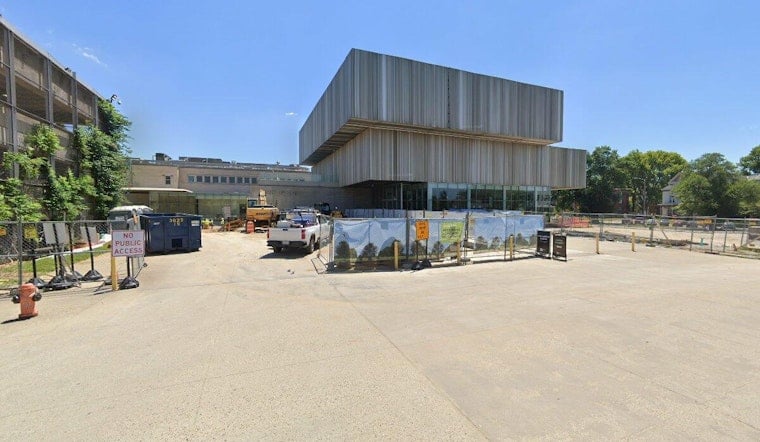
A cradleboard built to carry a newborn and passed from mother to mother for generations is heading home to the Southern Cheyenne and Arapaho Tribes, one of 24 sacred belongings the Speed Art Museum is returning in its first repatriation under federal law. The collection also includes beaded pouches and bags, and the items came to the Louisville museum as gifts.
The formal return became legally possible after the National Park Service published a Notice of Intended Repatriation in the Federal Register on May 12, 2026, authorizing the museum to transfer the items on or after June 11. As reported by The Courier-Journal, the federal filing itemizes the collection as three sacred objects and 21 objects of cultural patrimony, a legal category for items with ongoing traditional importance that cannot be given away by any single tribal member. The notice identifies a donation from Frederick Weygold, a Louisville artist, photographer and ethnographer who collected Plains Indian artifacts and studied the Lakota language before his death in 1941.
The Speed did not acquire the 24 items directly from the tribes; they came to the museum as gifts, and the institution formally connected with the Southern Cheyenne and Arapaho Tribes in 2023. Tribal representatives Chester Whiteman and Fred Mosqueda visited the Louisville museum in 2024, when representatives and museum staff reviewed roughly 100 artifacts to determine repatriation eligibility.
A Cradleboard Meant to Outlive Generations
Among the returning items, the cradleboard carries particular weight. It was created by a community of mothers and gifted to an expecting mother, and it includes a sacred turtle amulet containing a child's umbilical cord. The piece was intended to be used in perpetuity, passed from new mother to new mother rather than kept by any one family.
The beaded pouches and bags in the collection feature historic beading techniques, and the Southern Cheyenne and Arapaho communities can use the returned items to teach a new generation of bead workers, per The Courier-Journal's reporting. Some of the returned artifacts are human remains, which will need to be reinterred within their rightful community, a process that remains an open question for how the tribes will handle it going forward.
Why Federal Rules Forced the Issue
The Native American Graves Protection and Repatriation Act, enacted in 1990, governs the return of Native American remains, funerary objects, sacred objects and objects of cultural patrimony. But Department of the Interior regulations updating NAGPRA did not take effect until January 12, 2024, and they tightened consultation requirements, required museums to obtain tribal consent before displaying or researching certain sacred items, and eliminated the culturally unidentifiable label, according to the department. The 2024 overhaul also sought to speed repatriation. According to the U.S. Department of the Interior, revised NAGPRA regulations announced on December 6, 2023, were intended to streamline requirements for museums and federal agencies to inventory and identify Native American human remains and cultural items. According to the National Park Service, the federal repatriation program assists museums and federal agencies through inventories of human remains, summaries of cultural items and notices.
The Speed began its internal reckoning in April 2024, when it reopened its Native American art galleries after curator Dr. fari nzinga and curatorial intern Sirene Martin re-evaluated the collection for NAGPRA compliance and began consulting directly with Indigenous culture-bearers. Martin said the museum is doing healing and repair work through the event, and that the items deserve to be in their rightful communities, The Courier-Journal reported. She expects the Speed will return about 20 more belongings to their tribes, since this first repatriation covers only about 50% of the museum's sensitive items.
Kentucky's Broader Repatriation Backlog
The Speed's move lands amid mounting pressure on museums nationwide. In June, U.S. Sen. Brian Schatz of Hawaii sent demand letters to 15 major museums and university collections, as Hoodline previously reported, pressing institutions for concrete timelines on returning Native ancestral remains and sacred belongings. Statewide, the stakes are steep: ProPublica's repatriation database covers Native American human remains held by Kentucky institutions. Federal records analyzed by ProPublica also concern Native American remains in major Kentucky collections.
A Public Ceremony Marks the Handoff
The Speed is marking the transfer publicly on Wednesday, August 19, from 5 to 7 p.m., with a Speed Salon: Talks + Theory event at the museum, 2035 S. 3rd St. in Louisville, featuring Martin alongside Whiteman and Mosqueda. The evening includes a formal public recessional ceremony and aims to educate attendees about repatriation and the importance of returning Native American ancestors and cultural belongings. Tickets run $20 for non-member adults, $15 for Speed members and $5 for students.
The event follows the museum's broader effort to reframe its relationship with Indigenous communities after decades of holding items collected without direct tribal involvement. With roughly half of its sensitive holdings still awaiting return and human remains still needing reinterment, the Speed's first repatriation is a milestone rather than a conclusion, one that mirrors a slow but accelerating shift playing out at institutions across the country, including at the Penn Museum's own gallery overhaul.





