

























































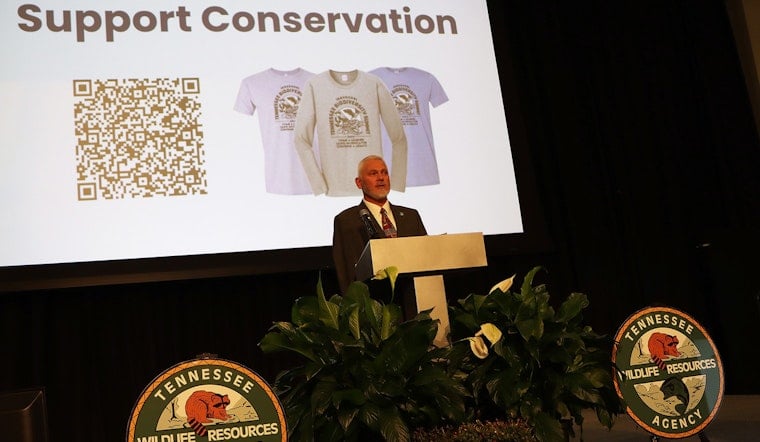
Tennessee's second annual Biodiversity Summit is set for October 21, 2026, at Middle Tennessee State University, and organizers say tickets are selling fast for a gathering that has already outgrown its debut year. The event will bring together conservationists, researchers, wildlife professionals and enthusiasts from across the state, according to the Tennessee Wildlife Resources Agency's announcement on Facebook.
This year's summit carries the theme “Moving the Needle, Wins in Conservation,” with eight main speakers scheduled to present on statewide wildlife conservation successes, according to the Tennessee Wildlife Resources Agency. Organizers have capped attendance at 900 participants this year, a jump prompted by strong public interest following the inaugural gathering. The Tennessee Wildlife Resources Agency's own announcement, shared via Facebook, confirms the summit will be held at Middle Tennessee State University for a second straight year, with tickets moving quickly ahead of the October date.
The inaugural Tennessee Biodiversity Summit, held on October 22, 2025, at the same campus, drew nearly 650 registered attendees from across Tennessee, per the agency's account. That turnout appears to be driving this year's expanded 900-person cap, as demand for the young event continues to build heading into its second run.
National eBird Director Headlines the Program
Chris Wood, program director at the Cornell Lab of Ornithology and director of eBird, has been named keynote speaker for the 2026 summit. Wood is expected to present on how community science and artificial intelligence are transforming conservation data, a subtopic the agency highlighted when announcing his selection. His appearance gives the summit a nationally recognized voice on the growing role of citizen-collected wildlife data in state-level conservation planning.
The summit doubles as the state's primary public venue for updates on the 2025 State Wildlife Action Plan, a federally mandated 10-year blueprint that the U.S. Fish and Wildlife Service officially approved. The plan was co-developed with The Nature Conservancy and is designed to prevent vulnerable species from sliding toward endangered status. Among the recovery efforts likely to draw attention is the multi-agency push to reintroduce the Red-cockaded Woodpecker, a species extirpated from Tennessee in 1994, with active habitat restoration currently underway at Savage Gulf State Natural Area.
Why Tennessee's Biodiversity Stakes Are So High
Tennessee ranks among the most biodiverse inland states in the country, supporting more than 350 fish species, 400 birds, 140 freshwater mussels, 97 crayfish, 85 amphibians, 75 mammals, 65 reptiles and 401 snail species, according to the Tennessee Wildlife Resources Agency. That ecological breadth sits in tension with the agency's own capacity: its Biodiversity Division operates with just 27 staff members tasked with overseeing roughly 1,600 non-game species statewide. That staffing gap helps explain why the summit leans so heavily on outside partners, from universities to federal agencies to community science platforms like eBird.
This year's event is sponsored by the Greg A. Vital Center for Natural Resources and Conservation at Cleveland State Community College, the Tennessee Valley Authority, and the Tennessee Department of Environment and Conservation. Pre-event field hikes are scheduled at two local sites for attendees who arrive early. The summit will also host 21 partner agency and organizational educational booths, with proceeds from ticket sales and merchandise going directly toward Tennessee wildlife conservation and education funds.
Hoodline first covered the summit's launch in 2025, before its debut drew nearly 650 attendees. Specific project milestones set to be unveiled during this year's presentations, along with how the state plans to track long-term biodiversity outcomes under the new 10-year action plan, remain open questions ahead of the October gathering.




