

























































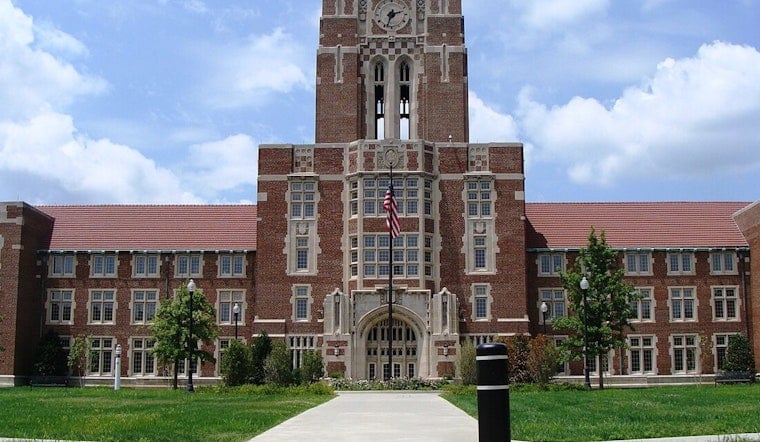
The University of Tennessee, Knoxville is bracing for another record-breaking enrollment year as classes begin Monday, with the university estimating that Fall 2026 headcount will exceed 41,000 students. The school expects to welcome more than 9,300 new first-year and transfer students combined, and students already moved into dorms on August 9 ahead of the semester's official start.
According to the Knoxville News Sentinel, the current enrollment estimate — which includes fully online students — actually runs lower than the more than 42,000 students projected at Chancellor Donde Plowman's advisory board meeting back in May. Even so, the university expects overall enrollment to grow by nearly 600 students compared with last year. UT received more than 74,000 total applications this cycle, including nearly 70,000 first-year applications and 5,668 transfer applications, the newspaper reports.
A Class Built Increasingly From Tennessee
Of the incoming first-year class, a record 60% hail from somewhere in Tennessee, drawing from 94 counties across the state, per the Knoxville News Sentinel's report. First-year applications from in-state students climbed 2.3%, while transfer applications from Tennessee residents jumped a steeper 18.8%. The broader first-year class also includes students from 45 states plus Washington, D.C., and 22 countries.
That in-state surge tracks with structural changes UT has made in recent years. In September 2023, the UT Board of Trustees approved a guaranteed admissions policy that grants automatic first-year acceptance to Tennessee high school seniors who rank in the top 10% of their class or hold a 4.0 core GPA or higher, according to Forbes. The policy was designed to curb out-of-state talent migration and widen college access for Tennessee graduates. UT also expanded its last-dollar UT Promise scholarship ahead of the 2024–25 academic year, raising the family income cap from $60,000 to $75,000 while guaranteeing at least $500 per semester, per the University of Tennessee System's own announcement — a shift that makes tuition free for roughly two-thirds of Tennessee households.
Transfers, Scholarships, and Pathway Programs
UT expects to enroll more than 7,200 first-year students and approximately 2,100 transfer students overall, with around 1,400 of the transfers coming from within Tennessee, the Knoxville News Sentinel reports. In-state first-year applicants were offered spots in UT's Education Pathways programs — which include UT Access Collaborative, Rocky Top Transfer and Verto Vols — at a rate of 95.5%. The university is also welcoming its second class of UT Promise on Rocky Top students and its fifth class of Distinguished Tennessean Scholars.
Nearly all incoming first-year students, 97.7%, are receiving some form of scholarship or financial aid, and more than 16.2% identify as first-generation college students, according to the same report. UT expects its retention rate to exceed last fall's record of 92.4%. University Honors is set to include a record 749 first-year students, and Plowman has said she plans to keep growing the total number of honors students, per the Knoxville News Sentinel.
Military programs are seeing records too: Army ROTC will bring in a record 80 first-year cadets, while Air Force ROTC will welcome a record 82. Final enrollment figures won't be official until the 14th day of classes, a standard benchmark the university and its student paper, The Daily Beacon, have both used to mark past enrollment milestones — including the official Fall 2024 headcount of 38,728 students, a 6.7% jump from the year before.
Years of Growth Are Straining Campus Capacity
This year's numbers extend a run that has lasted at least six consecutive years across the whole UT System, which grew 4.4% to 64,866 students system-wide as of Fall 2025, according to Our Tennessee. The system has set a goal of reaching 71,000 total enrolled students across all its campuses by 2030. That sustained demand has created real operational strain, particularly around housing, transportation and physical capacity on the Knoxville campus.
UT Knoxville was forced to temporarily lease a West Knoxville hotel as overflow student housing back in 2022, a stopgap the university has worked to avoid repeating. Since then it has executed a $220 million public-private partnership that delivered 1,954 new campus-core residence beds for Fall 2025, with another 1,028 beds slated to open this fall, according to Provident. In February, the UT Board of Trustees approved a further $253 million project to replace North Carrick, South Carrick and Reese Hall with new residence halls housing more than 1,300 students, as reported by WBIR; that project still needs state legislative sign-off as part of the budget process even though no state funds are being used.
Academic infrastructure has faced similar pressure. Undergraduate enrollment in the Haslam College of Business doubled over a decade, from 3,800 to 9,000 students, prompting a $227 million business school building that broke ground in August 2024. UT Knoxville has also moved to convert a vacant, 120,000-square-foot former Walmart at University Commons into a student recreation and fitness facility, after the UT Foundation acquired the property in December. The Board of Trustees had already approved a tuition increase of 2% for in-state students and 4% for out-of-state students for the 2024–25 year, the first such hike since 2019, as part of a broader $2.2 billion system budget covering technology and transportation costs.
As classes get underway Monday, the university's growth has also reshaped who fills its lecture halls over time. Between 2015 and 2025, Hispanic student enrollment at UT Knoxville grew from 3.4% to 6.5% and Asian student enrollment rose from 2.95% to 3.6%, while Black student enrollment fell from 6.63% to 4.33%, according to data compiled by College Tuition Compare. Total non-white student representation across the Knoxville campus reached 25% by Fall 2025.





