

























































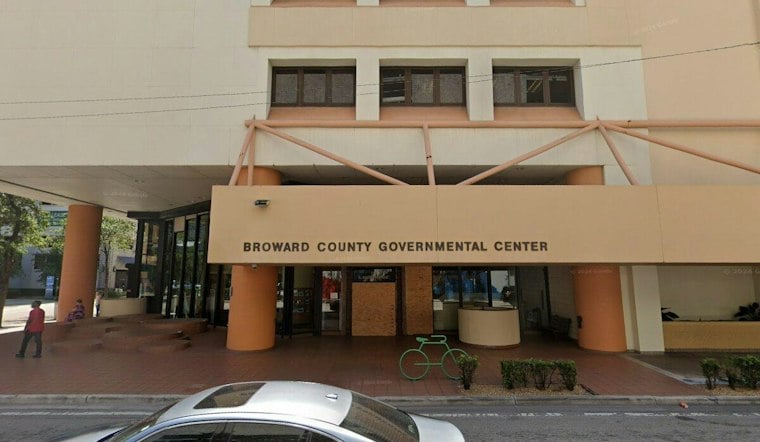
A vacant downtown Fort Lauderdale lot once used as a blacktop parking area for courthouse visitors is now covered in roughly 1,000 banana plants, and the property's owner wants Broward County to tax it like farmland instead of prime real estate. Broward County's property appraiser has said no, setting up a legal fight over whether a $33 million development site can also count as a working farm.
From Parking Lot to Banana Grove
The Benjamin Companies purchased the two-acre lot at Southeast 8th Street and Southwest 2nd Avenue for $33 million in 2022, according to CBS News Miami. At the time, the site functioned as a blacktop parking lot frequently used by courthouse visitors. The Fort Lauderdale City Commission approved plans in 2023 for two 30-story towers on the property, but by 2025 the developer had put the land back up for sale.
Rather than let the lot sit empty, the Benjamin Companies began renting it to a banana farmer in November 2025, per the same CBS News Miami report. The grower, who operates similar banana farms in Davie, planted about 1,000 banana plants across the site and has other locations throughout Broward County where bananas are grown. According to the report, the farmer said demand for the crop currently outstrips supply.
Leaves, Not Fruit, Drive the Business
Unlike a typical banana operation, the primary crop here is the leaves, not the fruit. The farmer sells banana leaves to decorators, party planners, hotels and zoos, with each leaf fetching $5 — a business the grower says could generate $50,000, the station's report notes. Fred Segal, president of the Broward Farm Bureau, told CBS News Miami that developers have used empty lots to plant crops or graze cattle on a small scale for tax breaks before, and he views the downtown banana operation as a legitimate commercial business. Segal added that the plantation could even become a positive tourist draw in downtown Fort Lauderdale.
Broward County Property Appraiser Marty Kiar's office rejected the Benjamin Companies' application to reclassify the property, according to The Real Deal, concluding the site was not being used for a bona fide agricultural purpose. County property records still classify the lots as vacant commercial land. The 2.4-acre site spans a full city block that includes eight vacant lots plus one lot with a six-story office building built in 1972 that was 85 percent occupied as of last year, The Real Deal reports.
The Greenbelt Law Behind the Fight
The dispute hinges on Florida's Greenbelt Law, formally Florida Statute 193.461, which Florida property owners must apply for by March 1 each year or forfeit the benefit for that year. Property appraisers judge applications against factors including the length and continuity of agricultural use, purchase price, acreage relative to the crop, lease terms and standard commercial farming practices, according to the Miami-Dade County Property Appraiser. An approved agricultural classification provides preferential assessment for qualifying land, per the University of Florida IFAS Extension.
The practice of placing crops or livestock on land awaiting construction to slash tax bills is common enough statewide to have earned its own nickname — the rent-a-cow or rent-a-crop loophole — a dynamic detailed by WUSF. That broader pattern has fueled calls for reform of the Greenbelt law even as individual counties like Broward weigh applications case by case.
What Happens Next
The Benjamin Companies has filed a Value Adjustment Board petition challenging the property appraiser's decision, and the board may still rule in favor of the appraiser's office. If that happens, attorney Mila Schwartzreich said the land's owner could file a lawsuit in response, CBS News Miami reported. Under Florida's administrative process, appraisers must issue written denials by July 1, after which landowners can petition their county's Value Adjustment Board before turning to circuit court, according to the University of Florida IFAS Extension.
The Benjamin Companies did not offer comment to CBS News Miami. Meanwhile, the broader stall behind the banana farm reflects a rough stretch for South Florida apartment construction: developers completed a record 18,600 multifamily units regionally in 2024 while net new leases reached only 15,000, according to The Real Deal, a mismatch that pushed rent growth to stall and left owners like the Benjamin Companies holding land rather than building towers.





