

























































Chicago is scheduled to replace its longtime 911 dispatch technology on September 22, but dispatchers and their union have raised concerns about the new system's reliability and complexity during testing. They say unresolved problems could affect call handling, information transfer and the safety of residents and first responders.
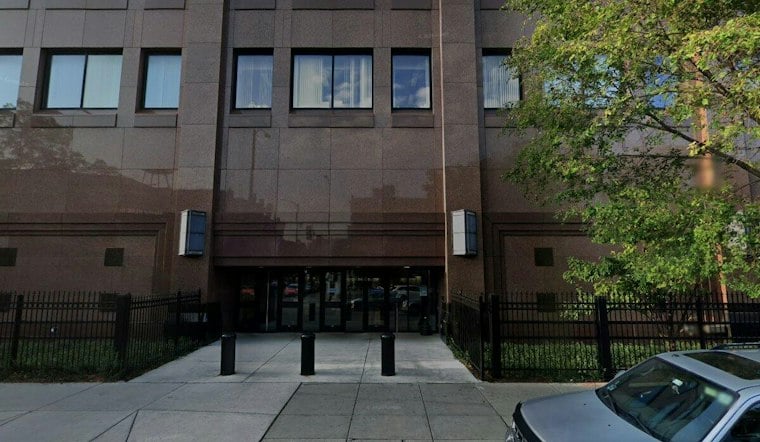
The city plans to roll out the new computerized dispatch system on September 22, replacing technology that has handled Chicago's emergency calls for more than 30 years, according to NBC 5 Chicago. The Chicago Office of Emergency Management and Communications handles the city's emergency calls from its facility on West Madison Street, where dispatchers field nearly 10,000 police, fire and ambulance calls by midnight on a typical Tuesday, per the same report. The city has a $75 million contract with CentralSquare for the new dispatch system, intended to replace aging software that the vendor says breaks down about once a month.
NBC 5 Chicago reported that Denise Maynard, a retired 911 dispatcher who spent 26 years handling Chicago 911 calls before retiring in June, considers the new system too complicated, requiring too many steps and screens, and said it was not ready for the September 22 rollout. The station also reported warnings from Gene Roy, a retired Chicago Police Department chief of detectives who is now its law enforcement analyst, that calls could be lost, dropped, misrouted to police or fire dispatch, missed or sent to the wrong address. Those concerns have not been independently established in the materials reviewed for this article.
Dispatchers Detail Failures During Testing
IBEW Local 21, the union representing the city's 911 dispatchers, has asked City Hall to delay the rollout after reporting serious problems during training and testing to Mayor Brandon Johnson and other city officials, the outlet's report notes. The union said the new Motorola and CentralSquare systems experienced serious problems during that testing, including calls stacking up while operators assisted other citizens and callers automatically being placed into recordings or queues. The union also reported that the system sometimes indicated a caller's phone was disconnected even after the caller had actually dialed 911.
The union further told the station that the system shut down during emergency calls at points in testing and that critical caller information did not always populate until an operator finished one call and moved to another. IBEW Local 21 said staff were spending roughly two hours a day self-training on an internet-dependent system and contended that the CentralSquare and Motorola systems were not compatible, potentially preventing emergency information from reaching responding officers on a 10-1, its term for an emergency requiring immediate assistance. The city has not said whether the rollout will be paused, according to the report.
Vendor Points to Nationwide Track Record
CentralSquare, which serves roughly 2,500 public-safety agencies nationwide according to NBC 5 Chicago, said training for the Chicago rollout began in October 2025 and that it has provided more than 4,600 classroom hours to OEMC, police and fire dispatchers and call takers. The company said nearly 500 agencies already use the computer-aided dispatch technology being implemented in Chicago, while the city and company have devoted thousands of hours to development and testing. CentralSquare described the platform as an improvement over Chicago's 30-year-old legacy system and said it would continue working with the city and dispatch personnel to address implementation issues before, during and after the switch.
The company, formed in 2018 through a four-way public-safety software merger and backed by private equity firms Bain Capital and Vista Equity Partners, has renovated OEMC technology for several years under the current contract. Chicago's West Madison Street communications hub was unveiled in fall 1995, and the facility's prior major renovation took place in 1961, according to the Chicago Police Department. That legacy system now handles a staggering workload: Chicago police officers respond to approximately 1.3 million dispatched 911 calls per year, averaging about 3,500 dispatched emergency calls every day, according to WTTW News.
High Stakes for Priority Calls
Between January and May 2026 alone, OEMC dispatchers handled 377,098 calls dispatched for police service, including 42,891 categorized as Priority Level 2 “Rapid Dispatch,” according to the Chicago Office of Inspector General. Those rapid-dispatch calls involve situations in which immediate public-safety action affects life-safety outcomes, illustrating why delays or queueing problems would matter during a system transition. National standards set by the National Emergency Number Association call for 90 percent of incoming emergency calls to be answered within 15 seconds, leaving little margin for the freezes and disconnected-call glitches the union described during testing.
What the records show about capacity and oversight
Chicago's budget records provide additional context but do not establish a cause for the rollout concerns. According to the City of Chicago's 2026 Budget Overview, OEMC is budgeted for 971 full-time equivalent positions, down from 984 in 2025. The Emergency Communication Fund allocation rises from $63,564,819 to $73,644,125, while recommended overall OEMC funding rises from $97,691,008 in 2025 to $99,935,952 in 2026. Separately from the CAD rollout, a Chicago Office of Inspector General follow-up found that CPD recorded on-scene arrival times in only 49.3% of 6.5 million dispatched police-service 911 calls from 2017 through 2021. The follow-up said CPD had not implemented recommendations to review its response-time policy or audit response-time data for completeness. Those findings concern data collection and oversight, not proof that the new dispatch system has failed.
Chicago isn't the only city to run into trouble during a CAD transition. After the system switched in October 2023, a CentralSquare system change in Chatham County, Georgia, produced address-mapping discrepancies involving approximately 2,260 locations, forcing dispatchers to manually cross-reference locations using Google Maps, according to The Current; CentralSquare attributed that mapping issue to partner-agency address formatting rather than core software code. On August 28, 2026, Fremont and Union City in California rolled back a new dispatch platform and returned to CentralSquare's Tiburon system after instability during a critical emergency response. Baltimore faced its own reckoning in April over a CAD failure that prompted an official investigation.
Why fallback planning matters
Federal guidance identifies continuity planning as a recurring risk in emergency-communications transitions. A report from the Federal Communications Commission Task Force on Optimal Public Safety Answering Point Architecture said emergency communications could be interrupted if system designs do not adequately address redundancy and fallback planning. The guidance underscores the importance of those safeguards during a transition without establishing that Chicago lacks them.
The city has not announced a change to the September 22 launch date. The dispute now centers on whether the reported testing problems can be resolved and whether adequate safeguards will be in place when the new system takes over Chicago's emergency lines.



