

























































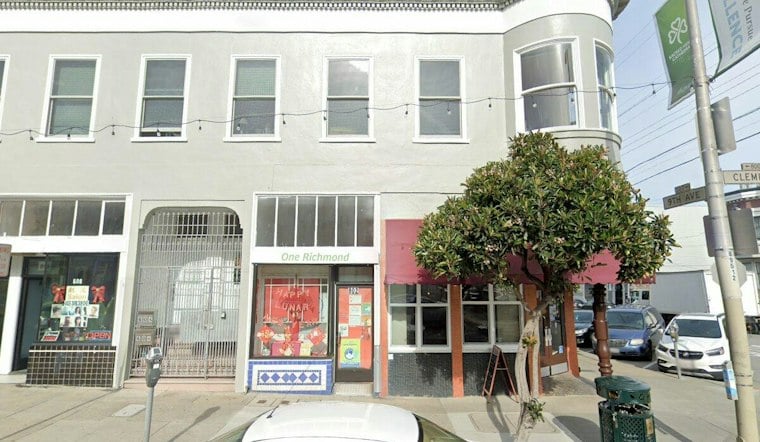
San Francisco's Planning Commission has approved a gift shop chain's bid to open its 11th location on Clement Street, capping months of feuding between the Inner Richmond corridor's merchants association and a homegrown retailer that grew big enough to trigger the city's formula retail law. The vote clears Therapy Stores to move into 32 Clement St., a storefront that had sat empty for two years, but it has left neighbors sharply divided over whether the business still counts as a scrappy local success story or the kind of chain the corridor has fought off before.
Therapy Stores began in San Francisco in 1994 as a shop selling apparel and accessories, art and stationery, according to Berkeleyside. Over three decades it grew from that one shop into a small regional chain, and as reported by the San Francisco Chronicle, Chen expanded the business into the Inner Sunset and Bernal Heights before it grew to seven more stores scattered around the Bay Area. Chen purchased the 32 Clement St. property for nearly $2 million in December 2025 and registered the business at the address before filing a formal conditional use application with the city in May 2026, according to Mission Local.
The Clement Street outlet would be the chain's 11th, a number that matters enormously under San Francisco law. Under Section 303.1 of the city's Planning Code, a business is defined as formula retail if it operates 11 or more other retail sales establishments anywhere in the world and shares two or more standardized features, such as merchandise, facade, decor, uniform apparel, or signage, per the San Francisco Planning Department. In specified zoning districts, including neighborhood commercial districts, businesses meeting that threshold require conditional-use authorization. The Chronicle's reporting says the process typically takes four to six months and costs tens of thousands of dollars, a burden that helps explain why crossing the line from ten stores to eleven becomes such a flashpoint.
A Merchants Association Digs In
The Clement Street Merchants Association opposed the opening, posting fliers that read “no formula retail on Clement Street” and gathering about 400 signatures against the store, per the Chronicle's reporting. The association filed a complaint with the city Planning Department claiming Therapy qualified as a formula retail chain, and the department agreed that Therapy's 11 outlets triggered the conditional use requirement. Therapy Stores, for its part, gathered 720 signatures in support of the opening, according to the Planning Department.
Association president Chris Squire raised what the Chronicle describes as major concerns about the project and the company's interactions with the community. Those concerns sharpened after Therapy Stores built out the Clement Street space without permits; the company held a neighborhood meeting only after receiving a notice of violation. Chen admitted she built out the retail space without the proper permit, saying she stopped work and took appropriate action once the issue was raised, the Chronicle reported.
Not every merchant on the street sided with the association. Lindsay Hanson, who owns the Future Past vintage clothing and alterations shop, opposed Therapy Stores joining the Clement Street retail community, while Agnes Leong, a retired SFUSD teacher who now works at Schubert's Bakery, supported the opening. Seana Boehm, a jewelry maker at Amano Studio who has a full-time staff of eight, has had her designs sold by Therapy Stores for 30 years, illustrating how some independent makers already depend on the chain as a retail partner.
Planning Commissioners Weigh the Threshold
The debate played out inside the Planning Commission's own vote. Commissioner Lydia Soo called Therapy's history a local business success story, while Commissioner Mike Chen said the 11-store threshold seems arbitrary, questioning whether an 11th store carried any different impact than a 9th or 10th. Chen herself has framed the company's ownership structure as the opposite of a corporate chain: “If there is a chain, I am the chain,” she said, adding that Therapy Stores has no executive team or outside investors and that she runs it with her daughter and two managers, per the Chronicle.
Clement Street has been here before. In 2007, local merchants successfully blocked a Starbucks from opening on the corridor by invoking San Francisco's then-newly enacted neighborhood chain store law, a fight Hoodline documented in earlier coverage of the corridor's merchant activism. Therapy Stores has run into similar resistance outside San Francisco, too — in Placerville, California, residents organized petitions and public comments against the chain opening on Main Street in 2020, according to the City of Placerville.
A Citywide Debate Over Chain Store Rules
San Francisco's formula retail regulation dates back more than 25 years to an original ordinance in North Beach, and voters expanded it citywide in 2007 through Proposition G, which required conditional use authorization for chain stores across every Neighborhood Commercial District, according to the San Francisco Planning Department. Roughly 1,250 formula retail establishments operate in the city today, representing about 12% of all city retailers, with half belonging to parent corporations with more than 1,000 global locations, per the Retail Workers Bill of Rights — a statistic that underscores how unusual it is for an 11-store local chain like Therapy to face the same scrutiny as national corporations.
That scrutiny is now facing political headwinds. Two San Francisco supervisors announced plans this month to loosen some chain store rules, and the Board of Supervisors has already rolled back formula retail requirements on Van Ness Avenue, the Chronicle noted. Separately, Supervisor Bilal Mahmood proposed legislation in September that would let grocery and pharmacy chains bypass conditional use approvals when moving into spaces previously occupied by chain stores, according to GrowSF, part of a broader push by city leaders to streamline commercial permitting amid persistent storefront vacancies. Clement Street itself has a vacancy rate of less than 5%, according to the Chronicle, even as Therapy's approved permit can still be appealed to the Board of Supervisors.
Therapy Stores' expansion into the Inner Richmond followed a similar move earlier this year, when the chain opened its third San Francisco boutique — and what was then its 11th Bay Area location — at 724 Irving Street in the Inner Sunset, filling a vacant hardware store space, according to Mission Local. Whether Clement Street's merchants association pursues an appeal to the Board of Supervisors remains to be seen, but the fight has already become a test case for how San Francisco balances neighborhood character against a shrinking pool of ground-floor tenants willing to fill its empty storefronts.




