

























































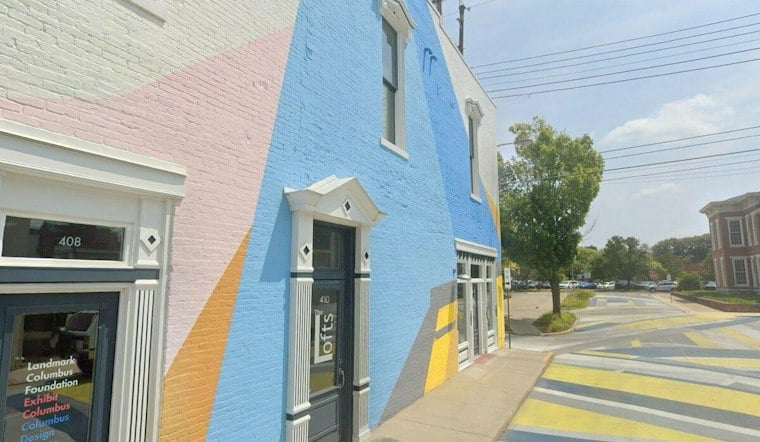
Columbus is about to host a three-day experiment in civic accountability. From October 8 to 10, 2026, The Commons in downtown Columbus will fill with civic leaders, designers, researchers, funders and policymakers for Prove It: A National Summit on Design Excellence as Civic Practice, an event built around a deceptively simple question: can good design actually be defined, measured and practiced as a discipline of government rather than a matter of taste?
The summit is organized by the Civic Design Institute, which according to Landmark Columbus Foundation serves as the foundation's intellectual platform for defining, measuring and sharing the civic conditions that make design excellence possible. The foundation says the October gathering will be the first public test of that framework, which its board adopted in March 2026 as its governing strategic approach. Landmark Columbus also notes its endowment surpassed a $3 million goal by 2025, giving the young institute financial footing as it launches its first major public event.
As reported by The Republic News, the Prove It summit will also launch the Indiana Quality of Place Learning Partnership, a collaboration involving Gov. Mike Braun, the state of Indiana, the Indiana Economic Development Corp. and the Indiana Arts Commission. The founding cohort of that partnership includes Columbus, Michigan City, Muncie, Rushville and Terre Haute, and on October 9 those five communities are set to walk through active design challenges from their own downtowns and public spaces, per the same report.
A Free Keynote and a Packed Agenda
The public can attend the October 8 keynote conversation for free by registering through Eventbrite, according to The Republic News. The lineup includes Emma Bloomberg, professor in residence of urban planning and design at the Harvard Graduate School of Design, and Maurice Cox, both taking part in the keynote discussion alongside Courtney Spearman, who leads Fieldwork at Building Common Ground and previously directed rural design programs at the National Endowment for the Arts. Daniel Luis Martinez, program director of Indiana University's J. Irwin Miller Architecture Program in Columbus, will moderate the conversation, with speakers discussing design excellence and taking questions from the audience.
Sen. Todd Young is expected to offer remarks at the summit, and Mary Ferdon will welcome attendees, the outlet reports. Two representatives from each of Indiana's 15 READI regions have been invited to attend, giving the event a genuinely statewide reach beyond the five founding cohort communities. Ferdon said Columbus can serve as the gathering place for the statewide and national conversation, according to The Republic News.
Following the Money Behind Quality of Place
The stakes go well beyond a single conference. Indiana has committed $1.25 billion to local quality of place initiatives since 2021, per the article, with Lilly Endowment Inc. contributing part of that total through the Regional Economic Acceleration and Development Initiative, a program that requires communities to match state dollars with local and private money. Lilly Endowment separately allocated nearly $400 million for a statewide community parks initiative, the outlet notes. One thread of the summit will have five Indiana communities discussing which of those investments will still be paying off a decade from now, in 2036.
That state-level spending sits alongside other public investment in design work around Indiana. The READI 2.0 Arts & Culture Initiative is a $65 million state investment led by the Indiana Economic Development Corporation in partnership with the Indiana Arts Commission, according to Indiana University's Eskenazi School. That fund recently gave Indiana University's Rural Placemaking Studio a $158,413 grant to expand its public design work in rural parts of the state, where current projects span 13 counties and include public art, interpretive signage, gathering spaces and trail improvements, the university reports. Separately, Indiana's brownfields program has projected READI could attract at least $2 billion in local public, private and philanthropic match funding, though that figure comes from a low-confidence snippet on the state's own site.
Tied to Exhibit Columbus's Tenth Year
The summit is not a standalone event. Exhibit Columbus is folding the inaugural Prove It Summit into its 2026 Fieldwork public programming, marking the organization's tenth year with a season centered on stewardship, research and inquiry rather than new installations. Exhibit Columbus's legacy already includes five permanent works in downtown Columbus along with numerous installations reinstalled elsewhere in the city and around Indiana, and organizers say they are now analyzing ten years of participant, visitor and community data to gauge the program's actual impact. The next full Exhibit Columbus cycle is set to begin in spring 2027.
Tracy Haddad, board chair of Landmark Columbus Foundation, framed the summit's ambitions in terms of patience rather than quick wins. “Meaningful results come from sustained collaboration, thoughtful decision-making and long-term investment,” Haddad said, according to The Republic News. That philosophy will be tested directly after the summit closes: the Civic Design Institute plans to publish a summary memo shortly after the event, along with a draft framework featuring starter indicators for measuring quality of place. Those indicators, organizers say, will be revised by the founding cohort over the next two years as the Indiana Quality of Place Learning Partnership moves from talk to practice.





