

























































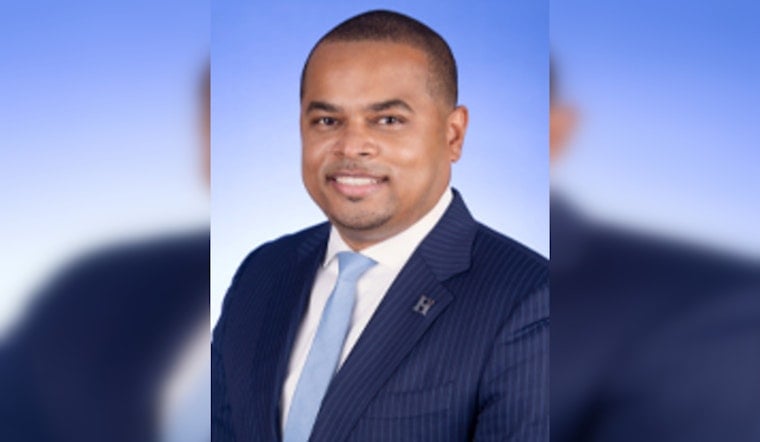
Miami-Dade County Commissioner Keon Hardemon is heading to Hollywood, Florida next Wednesday to join a panel confronting a problem his own District 3 constituents in Liberty City, Overtown and Brownsville know all too well: the widening gap between a paycheck and a livable life. Hardemon will take part in the “From Legislation to Livelihoods: How Public Policy Shapes Economic Mobility” panel discussion at the 2026 OIC of South Florida Middle Class Summit, set to kick off September 9 at 10:25 a.m. at the Seminole Hard Rock Hotel & Casino.
The two-day summit, themed “Imagine. Innovate. Elevate.,” is expected to draw more than 500 business executives, policymakers, workforce innovators, educators and national thought leaders, according to Miami's Community Newspapers. Hardemon's panel is designed to explore how legislation can strengthen talent pipelines, support employers and expand access to economic mobility, and organizers say the broader discussion aims to move beyond talk and into actionable solutions with measurable impact. The gathering also marks 25 years of workforce development in South Florida for host organization OIC of South Florida, according to Miami Living Magazine, which reports the summit will feature keynotes from regional leaders including U.S. Representative Debbie Wasserman Schultz and Broward County Mayor Mark Bogen.
A Workforce Nonprofit With Deep Roots in District 3
OIC of South Florida expanded its services into Miami-Dade County in 2021, opening a location in Brownsville — squarely inside the district Hardemon now represents. The nonprofit, founded in 2001 by President and CEO Newton B. Sanon, has grown from a two-person operation into a $15 million workforce development organization employing more than 200 staff members, according to Community-Based Connections.
The organization says it has helped more than 60,000 residents transition into stable careers and runs a nationally recognized reentry program that received the White House “Honor of Hope” award, per the same outlet's reporting. OIC's core services — workforce training and career development — are aimed at building pathways to employment and economic advancement for underemployed residents and returning citizens.
The Numbers Behind the Urgency
The stakes for Hardemon's district are laid bare in United Way Miami's 2026 ALICE Report, which found that 56% of Miami-Dade County households live below the ALICE threshold — a measure of families who are Asset Limited, Income Constrained, Employed. Of those, 15% fall below the federal poverty line, while 39% are working but still unable to afford basic necessities, according to United Way of Miami-Dade.
The math is stark: the annual Household Survival Budget for a family of four in Miami-Dade County now reaches $89,844, exceeding the county's median household income of $72,311, per United Way's ALICE simulation data. Housing and transportation account for more than half of those basic household expenses, underscoring why the summit's panel on turning policy into livelihoods carries particular weight for working families in Hardemon's district.
Hardemon's Record on Jobs and Housing
Hardemon previously served on the Miami City Commission representing District 5 from 2013 until his election to the Miami-Dade County Commission's District 3 seat in November 2020, according to Ballotpedia. He was re-elected in 2024 to represent District 3 through 2028, a district that spans Liberty City, Little Haiti, Overtown, Wynwood, Edgewater and Brownsville, as reported by Florida Politics.
During his tenure on the county commission, Hardemon has backed anti-poverty and workforce initiatives, including funding for Miami-Dade's $90 million Peace and Prosperity Plan, which aims to reduce gun violence while providing youth job opportunities, Florida Politics notes. That record tracks closely with Hoodline's prior coverage of Hardemon's Brownsville push for transit-oriented affordable housing, part of a broader pattern of pairing housing investment with job access in his district.
Four Pressures on the Agenda
Beyond Hardemon's panel, the 2026 Middle Class Summit is built around four major pressures facing working families: artificial intelligence and the evolving workforce, affordable housing, healthcare access, and systemic economic mobility, according to Roadblock Radio. The event has drawn institutional backing from major employers and financial institutions, including sponsors JPMorgan Chase, Amazon, TD Bank, Uber and CareerSource South Florida, the outlet reports.
That cross-sector sponsorship reflects OIC's model of partnering with regional employers to place program graduates directly into high-demand jobs. For a district where more than half of households are struggling to keep pace with the cost of living, the summit's organizers are betting that connecting policymakers like Hardemon directly with employers and workforce trainers can turn panel talk into paychecks.





