

























































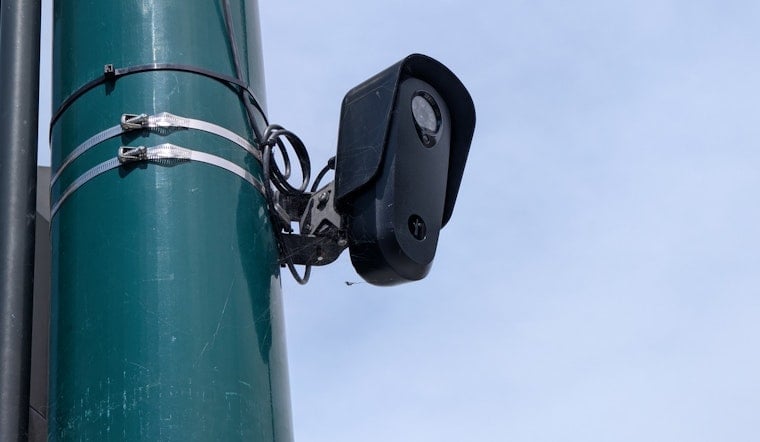
The Dumfries Town Council voted 4-2 on Tuesday to remove eight Flock Safety license plate reader cameras from throughout the community, ordering the cameras taken down before they ever became operational. The reversal comes less than three months after the same council unanimously approved a policy governing the automated cameras, a sharp turnaround for a program local police had pursued to help track vehicles tied to crimes and missing persons cases.
According to DC News Now, the council directed the town to remove the cameras and suspended further implementation of the program while officials evaluate next steps. Mayor Derrick R. Wood said the vote highlights the importance of balancing public safety and public trust, adding that residents asked for a greater voice in how the technology is used and that the council listened. The town said it still recognizes the Dumfries Police Department's pursuit of outside grant funding and its exploration of technology intended to support public safety.
The council's about-face followed a wave of public discussion about the cameras touching on privacy protections, data retention and public safety, per the same account. As reported by WUSA9, the vote came after Dumfries Police Chief Vernon Galyen Jr. presented an updated policy at Tuesday's meeting, but council members ultimately concluded residents had not been given a real seat at the table. Wood's motion directed the town manager to conduct community outreach before any future vote on reactivating the system.
From Unanimous Support to a Sudden Reversal
The turnaround is notable given how recently the council was fully behind the program. Potomac Local News notes that the Dumfries Town Council voted unanimously on June 16 to approve an automated license plate reader policy for the police department, governing operation, access and auditing of the eight cameras — a policy local leaders initially backed to help law enforcement watch heavily traveled corridors near the town.
The $35,000 camera project was financed entirely through a grant from the Virginia State Police Help Eliminate Auto Theft program rather than local tax dollars, according to Fox 5 DC. Town officials had sought the technology in part to coordinate with neighboring jurisdictions along Route 1 and Interstate 95. The Flock cameras are solar-powered, automated license plate reading systems that collect data as they record and allow law enforcement to search a database for plate numbers, car makes and models, and other visible vehicle characteristics, though they do not use facial recognition technology.
A Statewide Pattern of Pulled Contracts
Dumfries is not acting in isolation. WMRA reports that a growing list of Virginia localities have rejected or canceled Flock contracts in 2026 amid resident pushback, including Harrisonburg and Elkton in July, Goochland County in August, and Staunton and Charlottesville in late 2025 — a trend spanning both Democratic- and Republican-leaning communities where activist groups such as DeFlock have organized local campaigns.
The debate is also playing out at the state level. State Senator Glen Sturtevant announced plans, per a report cited by The Richmonder, to introduce legislation during the 2027 General Assembly session that would make Flock and similar automatic license plate reader cameras illegal statewide, arguing the systems track everybody rather than just suspects. His proposal follows Goochland County's decision to end its own Flock contract.
Legal Backdrop and Compliance Questions
Virginia already imposes limits on how long agencies can hold this data. Effective July 1, 2025, Virginia Code § 2.2-5517 caps ALPR data retention at 21 days unless tied to an ongoing criminal investigation and restricts system queries to specific criminal cases, missing persons alerts, or stolen vehicle tracking, according to the Virginia State Crime Commission. The commission's 2025/2026 report found that some Virginia law enforcement agencies were failing to adhere to that 21-day purging requirement, and nearly one-third of surveyed agencies failed to respond to state oversight inquiries at all.
Federal courts, meanwhile, are still sorting out the constitutional questions. U.S. District Judge Mark S. Davis ruled in January in Schmidt v. City of Norfolk that Norfolk's 176-camera Flock network did not violate Fourth Amendment privacy rights because fixed cameras record discrete public-road images, a decision now on appeal before the U.S. Court of Appeals for the Fourth Circuit, per an analysis from Munger, Tolles & Olson LLP. Civil rights advocates argue that dense camera networks amount to unconstitutional location tracking, even as Prince William County Police continue operating 28 active Flock cameras outside Dumfries town limits, complementing vehicle-mounted plate readers county cruisers have used for over a decade, per Prince William County's own description of its program.
Vendor Under Pressure Nationally
The scrutiny isn't confined to Virginia. Flock Safety, the Atlanta-based company behind the cameras, announced policy changes in August shortening its recommended default data retention period from 30 days to seven and requiring mandatory criminal case numbers for officer searches, as Hoodline has reported. The company operates more than 80,000 cameras across 49 states, and the changes followed rising scrutiny nationwide and documented cases of officer misuse.
For now, Dumfries' eight cameras will stay dark. The council left the door open to a future vote, but only after the town manager completes the community outreach that residents said was missing the first time around.





.jpg)