

























































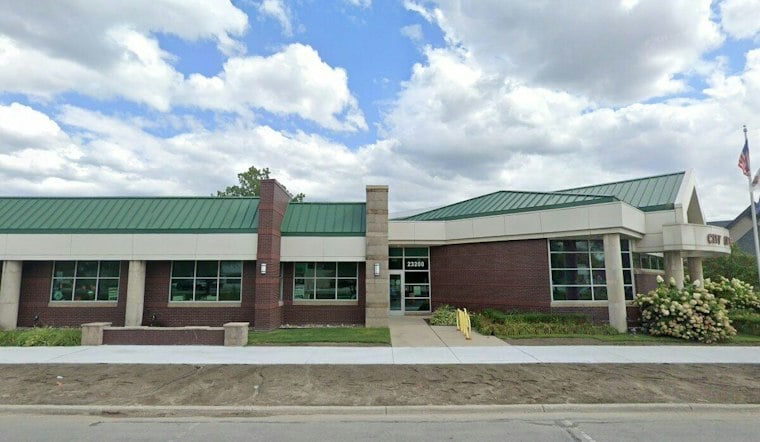
Eastpointe’s City Council voted 4-1 to end the city’s agreement with Flock Safety, raising questions about what happens next to the cameras, stored license-plate data and ongoing investigations. The decision ends a contract that had been in place since 2024 and places Eastpointe among a growing number of Michigan communities reconsidering how automated license-plate readers should be governed.
A Mayor Who Once Backed the Cameras Now Wants Them Gone
The vote marks a reversal for Mayor Michael Klinefelt, who supported installing the 18 Flock cameras across Eastpointe just over two years ago and personally brought the motion to terminate the contract, according to The Detroit News. Klinefelt said the cameras are a valuable tool but come with a lot of surrounding issues, and he argued the city currently lacks the infrastructure to ensure the technology is used appropriately. He recommended pausing the cameras until that infrastructure is in place, rather than continuing under the existing terms.
The termination also interrupts an arrangement under which Eastpointe’s police department had access to Flock’s database-search tools for several years, including before the city’s cameras were installed. The council approved the camera purchase in 2024. The original 24-month contract, signed in March 2024, carried an annual $56,500 subscription fee for search-tool access plus $14,100 for camera installation, putting the two-year deal at $127,100. The agreement had auto-renewed for two more years after expiring in March, so the vote ended a contract that otherwise would have continued beyond this year. The available reporting does not specify whether Eastpointe’s termination documents require camera removal, refund prepaid fees, delete license-plate data or end access to Flock’s broader network.
Police Chief Warns of Wasted Money and Lost Cases
Not everyone on the dais or in the department welcomed the decision. Eastpointe Police Chief Corey K. Haines said terminating the contract could waste taxpayer money already invested in the system, and he pointed to a running tally of cases the department says depended on Flock access: 39 crimes solved in 2024, 54 in 2025, and 46 so far this year. Haines said those cases, including stolen-car, retail-fraud, hit-and-run, and drive-by-shooting investigations, would not have been solved without the technology, per the same Detroit News report. The department had used the cameras to search full, partial, and temporary license plates by time and location, and to filter footage by vehicle type, make, color, and license-plate state across cameras linked to statewide and nationwide Flock networks.
Even so, Haines acknowledged the flip side that fueled the council's vote: Flock technology can be abused. That admission echoes national findings cited in the same report, where a USA Today investigation uncovered at least 19 previously undetected instances of improper or illegal use of the Flock network involving police or sheriff's office employees across five states, resulting in arrests and firings.
Part of a Widening Regional Reckoning
Eastpointe's move slots into a fast-growing list of Metro Detroit communities backing away from Flock, including Ferndale, which terminated its contract in November 2025, and Clawson, Sumpter Township, Westland, and Milford, which have canceled theirs since May 2026, the Detroit News report notes. Westland's break was especially large in scale: Police Chief Kyle Dawley did not bring a renewal contract to the City Council amid deep division over camera use, a decision that triggered the scheduled removal of all ten Flock cameras across that city, according to ClickOnDetroit.
On September 8, 2026, approximately one week before Eastpointe's vote, Independence Township's board of trustees unanimously ended its own Flock agreement and went further, demanding that Flock certify through affidavit that all township data collected since 2024 has been permanently purged, while authorizing legal action to force physical camera removal if necessary — a story Hoodline covered in Independence Township yanks cameras. Monroe County commissioners voted 8-1 on September 1 to terminate a countywide contract covering 40 Flock cameras, according to Axios Detroit, while St. Clair Shores is weighing whether to restrict or ban its 12 cameras after residents urged tighter controls, a debate Hoodline detailed in its report on St. Clair Shores council weighing curbs.
What a cancellation does—and does not—settle
Michigan communities have attached different conditions to ending Flock agreements. In Independence Township, trustees voted Sept. 8 to terminate the contract and remove all eight cameras, while directing staff to seek an affidavit confirming that township-related data had been eliminated, according to WXYZ-TV. Eastpointe’s vote, by contrast, does not by itself establish what will happen to its installed equipment, previously collected data, prepaid fees or access to Flock’s network; those questions depend on the contract and any termination documents.
Oversight is also emerging as an alternative to outright cancellation. CBS Detroit reported that 15 Michigan Democratic lawmakers asked the Michigan Department of Transportation to end contracts allowing federal agencies to install surveillance technology, including Flock cameras, on state property; MDOT said it was reviewing the request. In Grand Rapids, the city placed automated license-plate readers under its Surveillance Technology Policy, requiring future purchases, renewals or expansions to receive Public Safety Committee and City Commission review, according to city records. These measures address approval and oversight, while the Eastpointe record described here does not identify specific rules for searches, audits, user access or disclosure of misuse.
State Lawmakers Move to Set Statewide Rules
The local contract cancellations are unfolding alongside a parallel push in Lansing. State Representatives Jimmie Wilson Jr. and Doug Wozniak introduced bipartisan House Bills 5492 and 5493 earlier this year that would cap license plate reader data retention at 14 days and mandate warrants for non-emergency criminal investigations, according to Michigan Public. State Senator Jim Runestad followed with his own bill in July proposing the same 14-day deletion limit and requiring warrants before police could pull historical plate data for non-active investigations, arguing that continuous, round-the-clock recording of daily commutes exceeds what public safety actually requires.
Policy strategists with the ACLU of Michigan have warned that unregulated automated license plate readers build non-stop tracking databases capable of revealing sensitive details about a driver's life — visits to medical facilities, political rallies, or places of worship — without any judicial oversight, according to the same Michigan Public report. Flock itself has responded to the mounting pressure nationally: the Atlanta-based company has shortened its recommended default data retention period from 30 days down to seven and introduced criminal case-code requirements for police search queries.
More than 180 law enforcement agencies across Michigan currently use Flock license plate readers, representing roughly one in every three agencies statewide, per the Detroit News report. Flock has said its technology helped locate more than 10,000 missing people in 2025 and assisted in roughly 20% of closed criminal cases in jurisdictions that use it. Proponents continue to argue the cameras help police catch criminals and find missing persons, even as critics nationwide call the network invasive and easy to abuse — a tension Eastpointe's council resolved, for now, by shutting its cameras down.



