

























































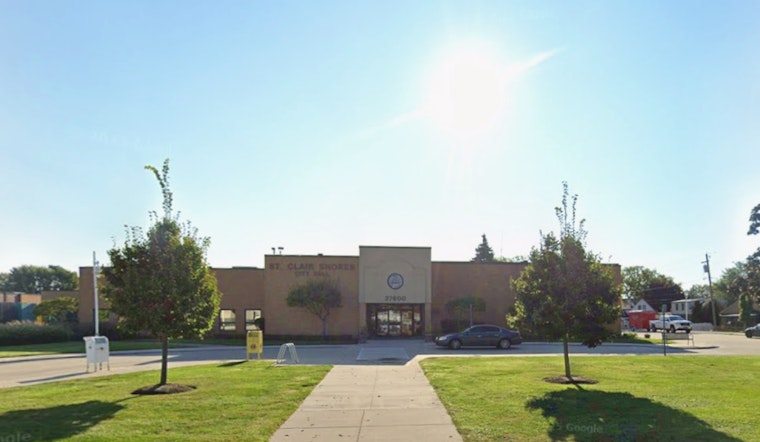
St. Clair Shores officials are weighing new legislation that could restrict or even ban the city's use of AI-enabled Flock Safety license plate cameras after more than a dozen residents spoke out at a recent city council meeting demanding tighter controls. The pushback puts the Macomb County suburb squarely in the middle of a fast-moving statewide fight over how much surveillance drivers should tolerate on their daily commutes.
The debate comes roughly a year and a half after the St. Clair Shores City Council voted 5-0 to approve a five-year contract for 12 Flock Safety cameras, a deal funded through drug forfeiture money that carried a $7,800 installation cost and a $36,000 annual subscription fee, according to The Detroit News. At the time, Police Chief Jason Allen told the council that still photos captured by the cameras are stored for 30 days before being automatically purged, according to C & G Newspapers. Now residents are asking whether that policy goes far enough.
St. Clair Shores is hardly alone in confronting this question. More than 180 law enforcement agencies across Michigan now deploy automated license plate readers, up sharply from roughly 125 cities and counties documented at the start of the year, per the Gander Newsroom. Atlanta-based Flock Safety operates the vast majority of these municipal systems, and the company logs over 20 billion plate reads monthly across thousands of law enforcement agencies nationwide, the same reporting notes.
State Lawmakers Move to Set Guardrails
The local debate is unfolding as Michigan lawmakers try to fill what one bill's backers call a regulatory void. State Senator Jim Runestad introduced Senate Bill 1131 in July, which would mandate a 14-day data deletion limit and require police to secure a search warrant before querying license plate reader databases outside active cases, according to WTVB. A companion effort in the state House, Bills 5492 and 5493, would similarly require warrants for data requests, cap retention at 14 days, and create a $1,000 civil remedy for people whose data is unlawfully accessed, the Mackinac Center reports. HB 5493 would also force local governments to publish public policies spelling out how cameras are used and when data gets deleted.
Those proposals reflect a wider reckoning playing out across Metro Detroit. Data compiled by the crowdsourced surveillance database DeFlock shows at least 47 local government jurisdictions across 23 states had canceled, rejected, or deactivated Flock camera contracts as of August, as Hoodline previously reported on internal abuse risks.
Neighboring Communities Split on Cameras
Nearby jurisdictions have responded to the same pressures in strikingly different ways. The Monroe County Board of Commissioners voted 8-1 on September 1 to stop funding the sheriff department's network of 40 Flock cameras, according to CBS Detroit, while Sterling Heights took a more cautious path in July, with its city council demanding a full year of audit logs for its 24 Flock units before an October vote on whether to renew its contract, per ClickOnDetroit. Sterling Heights police have defended the technology as a primary crime-fighting tool even as council members raise privacy concerns.
Other communities have faced physical resistance to the hardware itself. Livingston County Sheriff Mike Murphy temporarily removed all 25 of the county's Flock cameras this month after a series of targeted vandalism incidents left multiple units inoperable, Patch reported, with the sheriff saying the removal was meant to prevent further felony property damage while longer-term security measures are reviewed. Ferndale terminated its Flock contract in November 2025 following resident outcry over data privacy, switching to an alternative vendor that requires manual verification before traffic stops, while Sumpter Township ended its 11-camera trial in August to protect community trust after voters rejected a local police millage, as Hoodline detailed. Waterford, by contrast, has continued defending its 16 cameras even as neighboring towns cut back, a divide Hoodline examined in its report on regional camera pushback.
Cameras Become a Campaign Issue
The fight has also reached the 2026 governor's race. Democratic candidate Jocelyn Benson called this month for mandatory statewide rules governing Flock camera data retention and sharing, arguing that drivers currently lack clear knowledge about who views or stores their vehicle location data, according to Michigan Advance. Her Republican opponent, John James, has said constitutional privacy rights must be balanced against public safety needs, the same outlet reported.
For now, St. Clair Shores has not announced a decision on what, if any, restrictions it will place on its camera network. But with more than a dozen residents already on record pushing for limits, and with state lawmakers and gubernatorial candidates weighing in on the same questions, the city council's next moves will be closely watched by neighbors across Macomb County who are wrestling with the same tradeoffs.



