

























































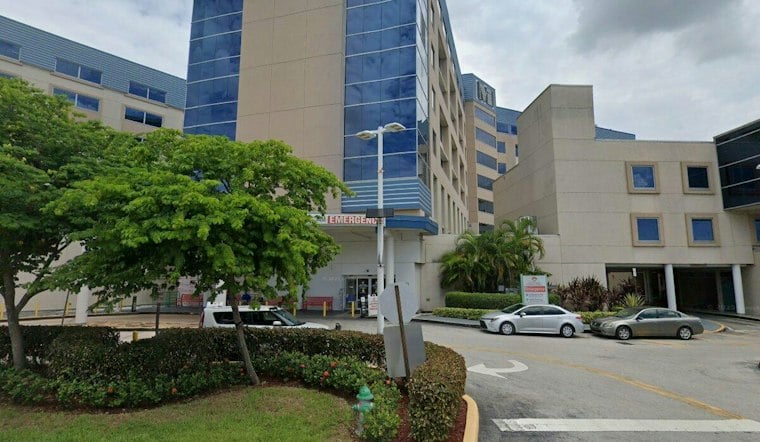
Jessenia Acosta boarded a flight from California to Florida this year not for vacation, but to give her identical twin sister Jennefer a kidney. The surgery took place at Memorial Regional Hospital in Hollywood, where the hospital considered the transplant special because the donor and recipient were identical twins.
Jennefer Acosta has dealt with kidney complications since childhood, stemming from her lifelong diagnoses of spina bifida and hydrocephalus, according to WSVN 7News. Doctors told her parents early on that only half of her kidneys were functioning, and the station reports her kidney function kept declining at successive appointments until a transplant became inevitable. Spina bifida can disrupt the nerve signals that control the bladder, and the American Kidney Fund has found that roughly 26% of adults with the condition develop progressive kidney damage from that neurogenic bladder dysfunction, sometimes advancing to end-stage renal disease, per the American Kidney Fund.
A Childhood Diagnosis That Foreshadowed Kidney Failure
That trajectory tracks with broader findings in pediatric medicine. A cohort study of people with spina bifida found that pediatric patients with the condition develop chronic kidney disease at a median age of just 5 years old, progressing to end-stage renal disease far earlier than the general population, according to Medical Dialogues. For Jennefer, whose kidneys were never removed during the September procedure, the toll built over years before her sister's kidney was placed in a different location in her pelvis to take over the work.
Dr. Linda Chen, chief kidney transplant surgeon at Memorial Transplant Institute, oversaw the case, which the hospital considered special given that donor and recipient were identical twins. Identical twins originate from the same fertilized egg splitting in utero, meaning they carry the same genetic code — a fact that eliminates the biological mismatch responsible for organ rejection in most transplants.
Why Twin Genetics Change Everything After Surgery
Because Jessenia and Jennefer are identical twins and share the same genetic code, Jennefer does not need long-term anti-rejection medication, avoiding the infection risks and drug toxicity that come with standard immunosuppressive therapy, according to Stanford Medicine. Non-twin kidney recipients typically require those drugs for life to prevent their bodies from attacking the new organ. It is the same medical principle that made history more than seven decades ago: the world's first successful organ transplant was a kidney transplant between 23-year-old identical twins Ronald and Richard Herrick, performed in December 1954 at Boston's Peter Bent Brigham Hospital, according to a Harvard Medical School account of surgeon Dr. Joseph Murray, who was later co-awarded the 1990 Nobel Prize in Physiology or Medicine for leading that breakthrough.
Jessenia told the station she never hesitated to go through with the operation, and said she felt happy to help her sister recover. Jennefer, for her part, described feeling better and full of life since receiving her sister's kidney, per the report from WSVN 7News.
Broward's Only Dual Pediatric-Adult Kidney Program
The sisters' surgery happened at Memorial Transplant Institute, the only center in Broward County — and one of just two in South Florida — offering both pediatric and adult kidney transplants, according to Memorial Healthcare System. Established in 2017, the institute integrates adult transplant care at Memorial Regional Hospital with pediatric services at Joe DiMaggio Children's Hospital. Dr. Chen is listed as an adult and pediatric kidney transplant physician, according to Joe DiMaggio Children's Hospital.
Since its kidney program launched in 2018, the institute has completed more than 800 kidney transplants and expanded its Hollywood clinical center to 16 specialized exam rooms with centralized lab facilities, per the Florida Hospital News and Healthcare Report. Yet living donations like Jessenia's remain uncommon there: as of April 2023, they made up less than 15% of all kidney transplants at Memorial Healthcare System, with just 41 living donations recorded out of 309 total surgeries since the program began, according to a PRWeb release detailing the institute's outreach efforts to recruit more living donors.
A Rarer, Safer Path Than the National Waitlist
National data underscores why that rarity matters. Living donor kidney transplants carry a 5-year graft survival rate of 89.9% among recipients aged 18 to 34, compared to 82.5% for kidneys from deceased donors, according to research published in PubMed in June 2026. Living donor kidneys also tend to begin functioning immediately after transplant, lowering the risk of delayed graft function that can complicate recovery.
Most patients in kidney failure do not have an identical twin ready to step in. In 2024, 22,916 kidney transplants were performed among people on dialysis and more than 30,000 people on dialysis were added to the kidney transplant waitlist, according to the United States Renal Data System. Patients seeking a deceased-donor organ may face a wait. Jennefer Acosta received a kidney directly from her twin sister.



