

























































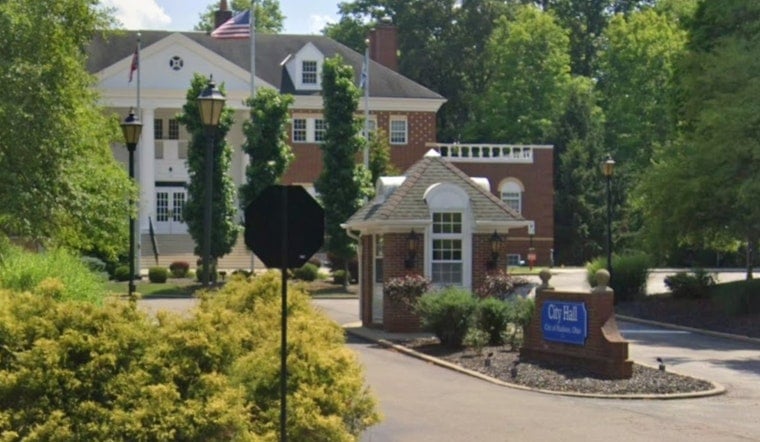
Hudson City Council is sorting through a $56 million wish list of sidewalks, bike paths and trails and has landed on $10.7 million worth of projects it says will come first, with construction stretching from next year through 2030. The priority list leans heavily on connecting neighborhoods that currently have no direct access to the city's sidewalk network, along with pushing forward a long-discussed rail-trail link toward Akron.
According to Cleveland.com, the city identified 33 proposed projects carrying a combined estimated cost of roughly $56 million, and council ultimately trimmed about $20 million in lower-priority projects to arrive at the $10.7 million priority slate for the next five years. That reporting, by Destiniee Jaram, notes that city staff and council ranked projects based on their connections to regional trails, parks, major streets, existing paths and schools.
The spending is spread out year by year. Hudson plans to spend about $3 million in 2027, according to the same report, with construction that year on Barlow Road between Lincoln Boulevard and Nicholson Drive, sidewalks on Norton Road, and design work on the Barlow Road East corridor. The following year, 2028, carries a $2.45 million price tag that includes construction of the Barlow Road East project and design of sidewalk improvements in the Heather Lane and Bridgewater neighborhoods.
Ogilby and LaScala Drives Get Their Turn in 2029 and 2030
Design work worth nearly $2 million is planned for 2029 along the Ogilby Drive and LaScala Drive corridors, per the outlet's account, with actual construction projected for 2030 at a cost of about $2.2 million. Those corridor projects are among the highest-priority items on the list, alongside a Norton Road sidewalk extension, a Stow Road connection to Pine Trails in Twinsburg Township, and the Barlow Road connection from the Lincoln Boulevard Trail to Nicholson Drive.
The first construction phase includes the Stow Road segment, while early work also covers design for the Barlow and Norton road projects, the report states. Council gave additional weight throughout the ranking process to projects serving neighborhoods that lack direct access to Hudson's existing sidewalk network, a factor that shaped which streets landed near the top of the list.
More Than 200 Resident Suggestions Shaped the List
Residents submitted more than 200 ideas and comments during the planning process, and their requests ran the gamut from safety fixes to entirely new connections. Suggestions included completing Barlow Road from Nicholson Drive to Terex Road to link with the Bike & Hike Trail, creating paths physically separated from vehicle traffic, improving biking conditions along Hudson-Aurora Road, and building better connections to Cuyahoga Valley National Park. Residents also asked for more sidewalks on connecting streets and improved safety on major roads.
Council member Michael Bird said the funding gap between the full $56 million wish list and the $10.7 million now prioritized could frustrate residents whose projects fall farther down the queue. That tension sits at the center of the debate: Hudson has already invested heavily in walking and biking infrastructure in recent years, yet the identified need still outstrips what the city can fund in any single five-year cycle.
A Rail Corridor Becomes the Veterans Trail
The current priority list unfolds against the backdrop of Hudson's rails-to-trails project, which involves part of an inactive Norfolk Southern rail corridor the city has been pursuing for the Veterans Trail. In late 2024, City Council approved paying $540,000 to purchase a 1.1-mile section of that corridor from Norfolk Southern Railway Company to serve as the trail's northern terminus, according to Scriptype Publishing. Contractor crews began physically removing the old railroad tracks along that corridor this summer, clearing the right-of-way for paved trail construction, the outlet later reported.
Hudson plans to construct paved trails along that inactive Norfolk Southern corridor as part of the broader effort. The full Veterans Trail is envisioned as a 12.5-mile route across northern Summit County along the former Akron Secondary rail line, intended to connect Hudson, Stow, Silver Lake, Cuyahoga Falls and Akron, and it stands as a potential major link tying Hudson into a broader regional network that also includes Cuyahoga Valley National Park.
Regional money is already flowing toward that vision. The Akron Metropolitan Area Transportation Study approved nearly $29 million in regional transportation grants in February for projects running through 2032, according to Wadsworth Community Radio, with dedicated funding slots earmarked for Hudson's Veterans Rails-to-Trails path.
Why Separated Paths Keep Coming Up
The resident push for paths physically separated from traffic traces back to hard local data. A municipal traffic study evaluating downtown Hudson from 2011 to 2021 recorded 10 pedestrian crashes and 10 bicycle crashes, with 40% of all incidents involving children, according to a report presented on the city's Let's Talk Hudson engagement platform. That figure helps explain why safe routes to schools and separated bike infrastructure carry so much weight in how projects get ranked.
Hudson's current effort follows an unusually large recent investment. Under the city's previous 2021–2025 Connectivity Plan, City Council put $20 million into constructing sidewalks and trails across the municipality, according to the Official Website of Hudson, OH, before pausing full implementation of the newly adopted 2026–2030 plan to balance other budget priorities. Council formally adopted that 2026–2030 Walk & Bike Plan update in October 2024 after months of community engagement and resident surveys, and it now guides the city's pedestrian and bicycle infrastructure investment for the current five-year budget cycle.
The city's cycling credentials have also drawn outside recognition. The League of American Bicyclists recertified Hudson as a Bronze-level Bicycle Friendly Community in January, a distinction the city has held since 2016. Zoomed out further, total traffic crashes across the broader Greater Akron planning region fell from 16,563 in 2022 to 14,968 in 2024, the first time regional crashes dropped below 15,000 since 2020, per the city's own tracking — a trend Hudson's local infrastructure push is meant to reinforce even as council works through which of its own 33 remaining projects get built next.





