

























































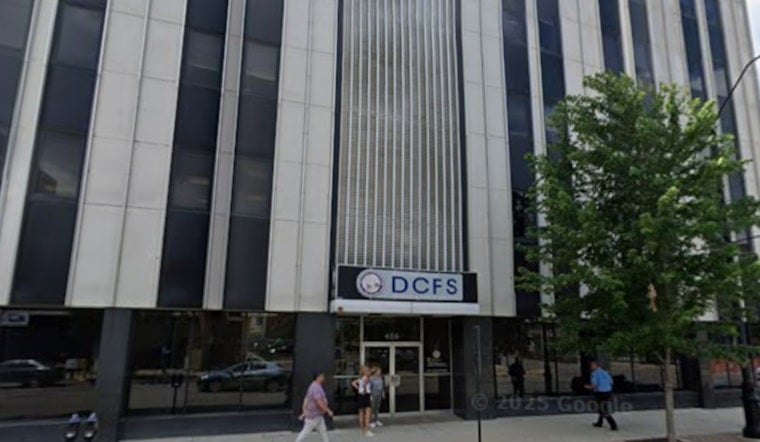
Illinois child welfare regulators are still failing to complete the vast majority of home safety checks required before and after a child is reunited with their family, according to a new state audit released this week that found the Department of Children and Family Services could not produce 329 of 399 required checklists in a sample of 50 cases. The 106-page report, covering 2023 and 2024, marks the second review of the agency's compliance with a 2020 law passed after the 2019 death of two-year-old Ta'Naja Barnes of Decatur, who died of dehydration, malnourishment, cold exposure and physical neglect about six months after DCFS returned her to her mother's custody.
The audit, from Illinois Auditor General Christopher Meister's office, found an 82% deficiency rate for the home safety checklists, which are meant to ensure a child's living environment is safe and that a parent or guardian understands proper child care, as reported by the Chicago Tribune. The law, known as Ta'Naja's Law, requires those checklists to be completed within 24 hours before a child returns home, again within five working days afterward, and then monthly until a case is closed. Auditors said the missing paperwork increases the risk that caseworkers could fail to identify an unsafe living environment before sending a child back into it.
A Grim Baseline, A Modest Improvement
The findings represent an improvement, at least on paper, from the first audit of the law's implementation in 2022, when the newspaper's report notes DCFS provided just 3 of 195 required home safety checklists in its sample — a completion rate of roughly 2%. That original review, detailed by Capitol News Illinois, found the agency could not produce 98% of required checklists and had delayed updating its aftercare procedures until December 2020, a year after the law took effect, as the agency struggled with outdated data systems and severe staffing shortages.
Beyond housing checks, the new audit uncovered gaps across several categories of mandated child health care. DCFS failed to document 52 of 82 required hearing tests, a 63% deficiency rate, and lacked documentation for 33 of 114 mandated vision screenings, a 29% deficiency rate. The agency also could not document 31 of 196 mandated physical exams in its 50 sampled cases, a 16% deficiency rate, and lacked records for 171 of 336 required dental exams and cleanings.
Vacancies Concentrated in Permanency Division
Auditors pointed to staffing shortages as a persistent obstacle, particularly within the agency's permanency division, which addresses children's safety goals by working toward the least restrictive, most home-like placement — options that can range from independent living to, in some cases, psychiatric hospitalization. The division had 113 vacant positions out of 412, a 27% vacancy rate, and 35 vacant supervisor positions out of 123, a 28% vacancy rate. Overall, the agency reported staffing vacancies across child protection, intact family services and permanency.
That is despite broader workforce growth agencywide. Statewide staffing data released in May 2025 showed overall DCFS headcount grew 44% between 2019 and 2025, rising from 2,686 to 3,886 employees, with frontline caseworker roles reaching a 96% fill rate, according to Capitol Fax. The same data showed the state cut its average hiring timeline from 269 days in 2019 to 111 days in 2025. Auditors nonetheless recommended DCFS maintain sufficient staffing to meet caseload demands and provide adequate supervision to review employee work performance.
Agency Response and Recommendations
DCFS agreed with Meister's office's recommendations, the Tribune reported. DCFS spokesperson Lindsay Record said the department is committed to continuous improvement for children in its care and said the agency has continued to make progress since the audit period covered by the report. Record added that DCFS will provide feedback to the casework team after each review and will continue monthly reviews of sampled cases using a quality indicator tool.
The department also acknowledged the importance of accurate immunization tracking and timely preventive health care, saying it will enhance immunization tracking through evaluation of data sources, reporting mechanisms and system capabilities. Auditors recommended that every child in DCFS care receive age-appropriate immunizations, that home safety checklists be completed as required, and that children returning home receive at least six months of aftercare services. A checklist may be recertified when there are no environmental barriers or hazards found in the home.
An Agency Under Long-Running Scrutiny
Current DCFS Director Heidi Mueller took over the department in February 2024 after Governor J.B. Pritzker replaced former Director Marc Smith, who had led the agency since Pritzker appointed him in 2019 and who was, by the time of his departure, DCFS's 15th leader in 16 years. Pritzker's administration has now overseen DCFS for nearly eight years. Smith's tenure was marked by repeated legal battles — Cook County juvenile court judges cited him for contempt of court at least 12 times in 2022 alone over the agency's failure to move state wards out of psychiatric hospitals and into foster or group care, per Kelley Kronenberg.
An Illinois appellate court later overturned several of those contempt citations, ruling that while DCFS's placement efforts fell short of expectations, Smith had not willfully disobeyed court orders because the state lacked sufficient group home and residential beds, a decision Cook County Public Guardian Charles Golbert appealed to the state Supreme Court. A separate compliance audit covering July 2022 through June 2024 and released in August 2025 found 34 total violations at DCFS, 29 of them repeat findings, including late law enforcement notifications in 17 of 40 sampled abuse cases, according to WAND-TV. State law requires DCFS to report allegations of serious child abuse to police within 24 hours.
Stakes Beyond the Paperwork
The persistent documentation gaps land against a backdrop of continued high-profile tragedies that have kept pressure on the agency. In March, Hoodline reported that internal DCFS records showed the agency had prior unaddressed reports regarding the family of an 8-year-old Round Lake Beach boy before his death from starvation and abuse, a case that prompted prosecutors to charge the child's mother and her boyfriend with murder and triggered fresh legislative demands for administrative transparency.
DCFS's scale of operation helps explain, though does not excuse, the strain on its systems. During Fiscal Year 2025, the agency fielded 227,126 hotline calls, conducted 78,097 abuse and neglect investigations, and held 17,589 children and youth in state custody as of the end of last year, according to Illinois CASA. DCFS had also requested a $2.47 billion operating budget for Fiscal Year 2026 to fund staff hiring, caseworker retention and expanded family preservation services, a request detailed by the same WAND-TV report on the compliance audit. Whether that funding translates into fully staffed permanency teams and complete paperwork remains an open question the next audit will help answer.





