

























































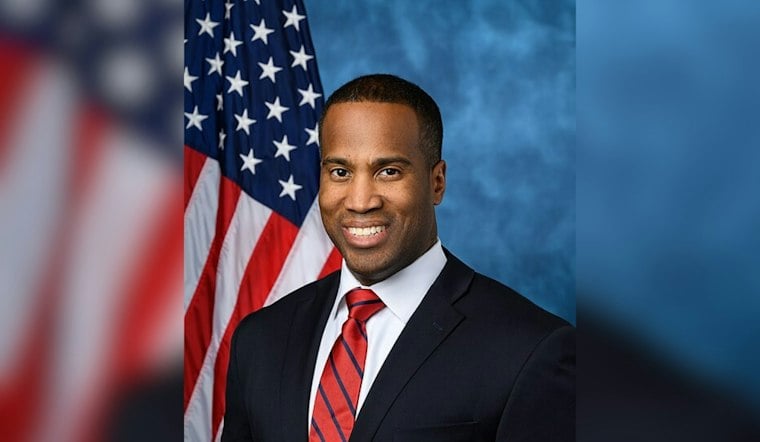
Michigan Republican gubernatorial nominee John James is promising to repeal or sharply reduce the state's new 24% wholesale marijuana tax, a pledge that has cannabis industry donors opening their wallets for his campaign even as he has not said how he would replace the road funding revenue the tax was designed to generate. James, who won the GOP nomination in August, has made the tax a centerpiece of his pitch to an industry that says it was blindsided by the levy.
The tax was signed into law by Governor Gretchen Whitmer on October 7, 2025, as House Bill 4951, the Comprehensive Road Funding Tax Act, after clearing the Senate 19-17 and the House 78-21, according to Bridge Michigan. The measure was part of a bipartisan road funding deal negotiated behind closed doors by Whitmer, Senate Majority Leader Winnie Brinks, and House Speaker Matt Hall, and it was projected by the nonpartisan House Fiscal Agency to generate $420 million annually for Michigan roads as part of a broader $2 billion annual infusion promised under the plan. Brinks supported the wholesale tax in the legislature, while Hall's spokesperson did not respond to requests for comment on the repeal push.
A Tax That Missed Its Target
The wholesale tax generated $73.4 million in its first six months, and state Treasury reports released in June showed Michigan had collected nearly $34 million through April 30 — far below the House Fiscal Agency's quarterly target of $105 million, per MJBizDaily. Robin Schneider, of the Michigan Cannabis Industry Association, has said many marijuana business owners are simply not paying the wholesale tax, and the association argues the levy violates the will of voters who legalized marijuana for recreational purposes in 2018.
The financial strain has already produced casualties. Ann Arbor-based C3 Industries filed a state WARN notice in December citing the tax and market oversupply, permanently closing its 35,000-square-foot Webberville cultivation facility and laying off 62 workers, according to MITechNews. Adult-use and medical marijuana sales dropped 15.89%, or roughly $43 million, between December and January — the largest single-month decline since adult-use sales began, per the Michigan Cannabis Regulatory Agency. Financial advisory firm BDO USA has noted that because the wholesale tax is calculated on gross wholesale prices before being passed to dispensaries, stacking it atop Michigan's 10% retail excise tax and 6% sales tax creates an effective total cannabis tax burden of between 34% and 42%.
Courting Cannabis Cash
Jars Cannabis executives hosted a fundraiser for James, drawing about 100 attendees, according to Tim Beck, who reported the event netted the campaign nearly $90,000 from the marijuana industry. The Michigan Cannabis Industry Association itself donated $1,000 to James, a notable shift given the group previously supported Chris Swanson, who had also pledged to repeal the wholesale tax. Beck said marijuana business owners are pretty united around James, and that James wants to get rid of the 24% tax.
Schneider said the James campaign made clear it supports the industry, and the campaign had approached her about the tax issue before the fundraiser took place. James has said the tax drives up marijuana prices and gives illegal operators a competitive edge, framing repeal as a matter of respecting the voter-approved 2018 law — even though James himself said he would have voted against legalization back in 2018. James vowed in mid-August to repeal or reduce the wholesale tax, arguing that state government has a responsibility to respect the law voters approved. His campaign raised nearly $1.2 million from donors since late July, according to Bridge Michigan's reporting, though the James campaign did not respond to requests for comment on the record for this story.
Legal Fights Still Pending
The tax also faces two active constitutional lawsuits from the Michigan Cannabis Industry Association. The first, filed in October 2025, claims the tax unconstitutionally amended the voter-approved 2018 ballot initiative without the three-fourths legislative supermajority required for such changes; the Michigan Supreme Court ordered an expedited appellate review in April, setting up a trial for this month, according to Detroit Legal News. A second lawsuit, filed against the Michigan Department of Treasury in March, alleges the tax causes unconstitutional tax pyramiding that pushes effective consumer sales taxes above the state's 6% constitutional limit, as reported by Michigan Public.
Net revenues from the wholesale tax are dedicated primarily to the state's newly created Neighborhood Road Fund, which supports local road, bridge, and street repairs, according to the Michigan Department of Treasury. That funding stream is what James's repeal proposal would put at risk, and his campaign has not said how it would replace that revenue if the tax is eliminated. Separately, a Michigan Senate Democrats' proposal to cap marijuana production and distribution statewide, backed by the Michigan Cannabis Industry Association, has remained stalled in committee.
Benson Holds Off on a Position
Democratic nominee Jocelyn Benson has not taken a stance on the 24% wholesale tax, calling it a new and emerging issue and saying more data is needed about its revenue and industry impact before she weighs in. She has said any tax-code changes should not increase costs for Michiganders. The Michigan Cannabis Industry Association has reached out to Benson repeatedly, but she has not responded to the group, even as it donated to James and previously backed Swanson.
The dispute plays out against a backdrop of an industry already under pressure. Michigan's active adult-use cannabis licenses declined from 2,256 in 2024 to 2,171 by late 2025, with more than 900 licenses having gone inactive since adult-use sales launched in 2019, according to Bridge Michigan. The industry saw meteoric growth after recreational sales began in 2020, followed by rapid expansion and aggressive consolidation that left many operators with razor-thin margins and cutthroat competition; the sector employed about 41,000 people as of July 31, in a state with roughly 4.5 million jobs overall.
James's push for cannabis industry support also comes amid a broader fundraising gap in the governor's race. Campaign finance reports filed in early September showed Benson holding $5.9 million in campaign cash compared to James's $1.5 million, a disparity Hoodline previously reported is driving James to seek support from new industry donor groups. Whether repeal ultimately reaches the ballot or the legislature, lawmakers would still need to find another way to fund the hundreds of millions in municipal road repairs the wholesale tax was built to support.



