

























































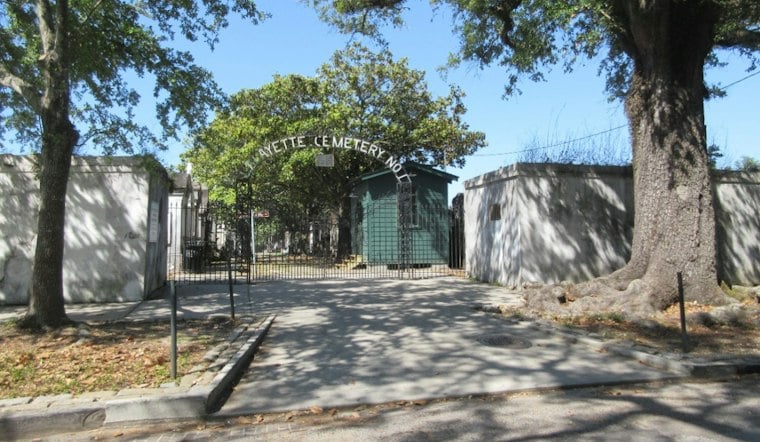
Lafayette Cemetery No. 1 in New Orleans is set to reopen to the public on October 1, ending a seven-year closure — but visitors will no longer be able to wander in on their own, and theatrical ghost tours are banned entirely. The Garden District landmark, final resting place for thousands of New Orleanians, has sat off-limits to non-family visitors since 2019, when the city closed it partly for repairs and partly to address family concerns.
According to NOLA.com, the city has selected the Preservation Resource Center as the sole operator allowed to run tours inside the cemetery walls, following a request for proposals issued in May. New Orleans Mayor Helena Moreno said reopening the cemetery will let residents and visitors experience and learn from its history, per the same report. Family members of those interred there will still be allowed to visit on their own, but everyone else will need to join a PRC-led group.
The new operating rules mirror details reported by WWL-TV, which confirmed that the Preservation Resource Center will run tours, while family members of those interred may visit on their own. Tour groups will be capped at 16 people, running as 75-minute or 90-minute historical walks scheduled in the mornings, according to the NOLA.com report. The cemetery will close on All Saints' Day, Mother's Day, and Father's Day.
No More Ghost Tours, No More Circus
Jessica Strawn, describing conditions before the closure, said the cemetery had become a bit of a circus out there, according to the NOLA.com report. That kind of unmanaged tourism and lack of security drew international attention: the World Monuments Fund placed Lafayette Cemetery No. 1 on its endangered World Monuments Watch list in 1996, citing deterioration and identifying vandalism, lack of maintenance, and unmanaged tourism as threats. The cemetery was placed on the Watch again in 2006 after Hurricane Katrina caused considerable damage to its walls and tombs, per the World Monuments Fund.
Ghost tours specifically will be prohibited going forward, the NOLA.com report notes, and a Tomb and Coping Owners' Association formed in 2019 after a tourist reportedly broke off a piece of a tomb. The city has since replaced broken asphalt pathways with gravel walkways that include an underlying drainage lining, removed some dead magnolia trees, and reviewed the cemetery wall's foundation with a structural engineer, per the same NOLA.com account. Burials continued at the site throughout the closure.
This is not the first time a historic New Orleans burial ground has swapped open access for guided-only entry. The Archdiocese of New Orleans took a similar step in 2015 at St. Louis Cemetery No. 1 — the city's oldest operating cemetery, established in 1789 — ending open public entry there and requiring all non-family visitors to enter with registered, licensed guides after severe tomb vandalism, according to FindLaw.
A History That Predates the City's Annexation
Laid out in 1832 by city surveyor Benjamin Buisson, Lafayette Cemetery No. 1 was New Orleans' first planned cemetery, built with a distinct cruciform pattern and wide intersecting drives designed for funeral processions, according to The Cultural Landscape Foundation. It was established on the former Livaudais Sugar Plantation before the City of Lafayette was annexed by New Orleans in 1852; the NOLA.com report dates the cemetery's founding to 1833. The site was added to the U.S. National Register of Historic Places on February 1, 1972, and the single city-block cemetery contains approximately 1,100 family tombs and nearly 500 wall vaults, per the same foundation.
Unlike many 19th-century New Orleans cemeteries that were segregated by race or religion, Lafayette Cemetery No. 1 was established as non-segregated and non-denominational, with interments representing natives of 26 U.S. states and immigrants from more than 25 countries, notably early German and Irish settlers, the Cultural Landscape Foundation reports. The grounds also contain family tombs and wall vaults.
The cemetery's tombs sit above ground because of flooding, and the NOLA.com report notes those tombs are privately owned and maintained, while the city maintains walkways, walls, gates and lights. Notable burials include John Howard Ferguson and Harry T. Hays, per the same report. The site's Gothic and moss-draped atmosphere has also drawn Hollywood: Lafayette Cemetery No. 1 was featured in Anne Rice's Interview with the Vampire, Tom Cruise was filmed there, and Rice herself once held a mock funeral on the grounds, according to NOLA.com. That same visibility came at a cost — the Los Angeles Times reported in 2005 that the cemetery had become a heavily defaced filming location.
Tourism Dollars Tied to Tomb Repairs
The financial arrangement behind the reopening links tourism directly to preservation funding. New Orleans will receive 20% of tour revenue up to $150,000 and 27.5% of revenue over $350,000, with that money earmarked for cemetery maintenance costs, the NOLA.com report states. The Preservation Resource Center will separately allocate 5% of its own tour revenue to a preservation fund.
The Preservation Resource Center, founded in 1974, named former New Orleans City Councilmember Kristin Gisleson Palmer as its executive director in September 2025, according to the Preservation Resource Center of New Orleans; Palmer previously led post-Katrina housing recovery programs before her council service. Save Our Cemeteries, founded in 1974 by preservationist Mary Lou Christovich, merged into the Preservation Resource Center in 2025. The organization restored more than 100 tombs overall. The organization completed renovation of the German Presbyterian Society tomb in 2026, a Gothic Revival structure built in 1866 that holds 20 vaults, per the NOLA.com report. Paul Pastorek said the proposed handling will respect that the cemetery is still an active cemetery, according to the same account.
Lafayette Cemetery No. 1 sits across Washington Avenue from Commander's Palace in the Garden District.





