

























































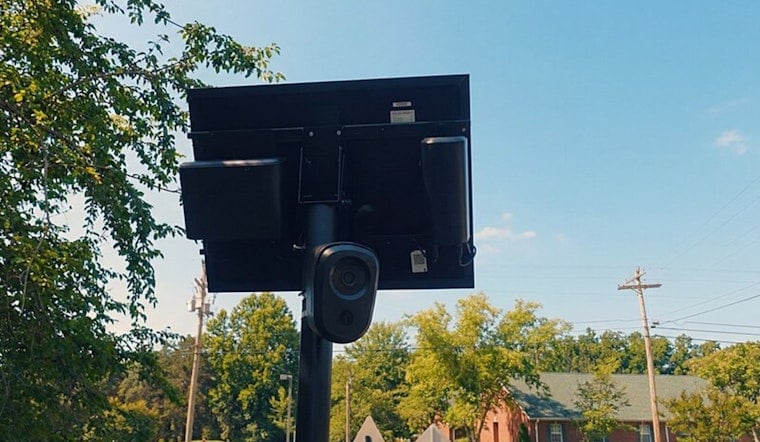
Maplewood City Council members spent much of a recent meeting pressing police officials on exactly who can see the footage from the city's Flock Safety license plate cameras, and what happens if that data ends up in the wrong hands. Police told the council the cameras have assisted at least 30 investigations so far in 2026, but that hasn't stopped members from asking whether the system is worth the privacy tradeoffs residents are worried about.
The council has been discussing Flock camera use since February, according to First Alert 4. Ward 3 Councilmember Nick Homa first requested information from Maplewood police that month, and the conversation has continued as members question whether the cameras are actually useful to the city and what would happen if Maplewood discontinued using them. Police have said doing so would not affect department staffing, though it could reduce the department's capacity to investigate crimes, per the outlet's reporting.
What the Cameras Have Caught So Far
Maplewood police say Flock data is only used for major crimes and critical incidents. The cameras, which record license plates and vehicles passing through their view, assisted 32 Maplewood police investigations in 2024, 19 in 2025, and 26 so far in 2026, according to figures cited in the same First Alert 4 report. The system also helped other agencies with 22 investigations in 2024, five in 2025, and four so far this year, bringing the total assisted investigations to 54 in 2024, 24 in 2025, and 30 in 2026 year-to-date.
Access to the system is limited. The Maplewood Police Department has assigned administrative rights to three members — two lieutenants and one corporal — and the department says it is trying to limit access to Flock data and ensure it's used properly. Flock system administrators conduct a manual monthly audit of all search records and are trained to identify search patterns that don't match department policy.
Residents Worry About Where Data Ends Up
Despite those internal checks, Maplewood residents remain uneasy about what else the cameras might record and who could eventually access it. Resident Joyce Wilson said the public doesn't know what other data Flock may derive or who might buy it, according to First Alert 4's account of the meeting. Flock camera data may also be accessible to other agencies, including U.S. Immigration and Customs Enforcement, a concern that has surfaced repeatedly in council discussions.
Mayor Barry Greenberg said Maplewood does not want jurisdictions partnered with ICE to weaponize its Flock cameras. Homa echoed that worry, saying he lacks control over how shared data is used once it leaves city hands and has less faith in agencies at higher state and federal levels. Flock remains one of many tools Maplewood police use to build investigations, officials noted, but council members want more certainty that the tool won't be turned against the community it's meant to protect.
A Regional Reckoning Over Surveillance Cameras
Maplewood's debate is unfolding alongside a wave of similar reconsiderations across Missouri. St. Charles County Police discontinued its Flock cameras entirely, covering all 28 units, after an internal audit found a civilian employee had misused the system to look up license plate data for personal reasons, as reported by St. Louis Public Radio. The employee admitted to non-law-enforcement searches and resigned after being served notice of termination. In the wake of that decision, the county has relied on its Genetec license plate reader network instead, which requires an investigator to sign off on every search with a specific case number before data is released — a two-person safeguard that contrasts with the single-user access flagged in the St. Charles case.
Physical backlash has followed the privacy concerns. Law enforcement agencies across the St. Louis region reported a rise in attacks on license plate reading cameras in late August and September, including one incident in which a De Soto police camera pole was sawed down and its solar panel shot multiple times, according to the St. Louis Post-Dispatch. In south St. Louis, the Dutchtown Community Improvement District voted in March to cancel its contract for eight Flock cameras and requested a $7,000 refund, citing fears that data could be accessed by federal agencies like ICE — a decision Hoodline previously reported came despite officials saying no data had actually been shared.
Lawmakers Weigh Statewide Limits
The scrutiny extends beyond Missouri's borders. U.S. Sen. Josh Hawley, who chairs the Senate Judiciary Subcommittee on Crime and Counterterrorism, launched an investigation into Flock Safety in late August and expanded it in early September to include competitors Axon, Motorola Solutions, and Verkada, examining how the companies collect, retain, and share license plate data with third parties.
At the state level, proposed Missouri House Bill 3192 would require law enforcement to delete license plate reader data after 30 days unless it's tied to an active investigation, ban its use for immigration enforcement or general surveillance, and create misdemeanor and felony penalties for misuse. Missouri Sheriffs' Association President Matt Oller said in August that law enforcement leaders support strict statewide limits on data retention, telling Missourinet that agencies should push for vendor storage caps as short as 10 days and that law enforcement — not private companies — should own the data they collect. Several other Missouri communities, including Pulaski County and the municipalities of Weston, Seneca, Louisiana, and Bolivar, have also moved to cancel their Flock contracts amid resident privacy concerns, according to the Show-Me Institute.
For now, Maplewood's Flock cameras remain in operation while the council continues weighing the department's investigative gains against residents' unresolved questions about data access. No vote to discontinue the program has been reported.





