

























































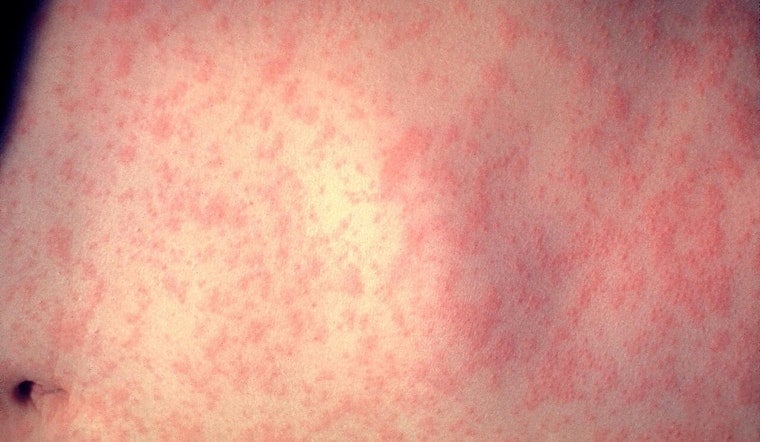
Four measles cases in Douglas County, Illinois have been officially classified as an outbreak, and state health officials are urging residents across the state to make sure their MMR vaccines are current. The county, located south of Champaign and Vermilion counties, is now at the center of a cluster that health officials say traces back to a common exposure source.
As reported by NBC 5 Chicago, the Illinois Department of Public Health is working closely with local public health and health care partners to contain the spread. Illinois Department of Public Health Director Sameer Vohra said the state overall has high vaccination rates that protect most residents, but noted that some areas of Illinois have lower vaccination rates, leaving residents there at higher risk. The outbreak's index case was confirmed on August 27 in an unvaccinated Central Illinois resident, according to the Illinois Health and Hospital Association, which noted the patient was one of two unrelated measles cases confirmed by state officials in late August.
Nine Cases Statewide, Nearly 3,000 Nationally
Illinois has reported nine measles cases so far this year, per state data cited by NBC 5 Chicago, as the state works to keep pace with a surge playing out nationally. Vohra pointed to almost 3,000 cases reported across the country so far this year. That figure aligns with CDC data reported through late August showing U.S. cases reached 2,903 across 47 jurisdictions, according to CIDRAP, making 2026 the highest year for national measles activity since 1991. Ninety-four percent of those national cases occurred among people who were unvaccinated or had an unknown vaccination status, per the same outlet's reporting.
The Douglas County cluster followed close on the heels of another Illinois case. Five days before the Douglas County outbreak was confirmed, state health officials identified a measles case on August 22 in an unvaccinated Kane County resident who had traveled internationally, according to the Daily Herald. That case led to exposure warnings at Kaneland High School, which held a remote learning day on August 25 as a precaution. Hoodline previously reported on that Kane County case as it emerged.
How the Virus Spreads and What Symptoms Look Like
Measles spreads through direct contact with nose or throat secretions and through the air when an infected person coughs or sneezes, per the CDC. Symptoms include a fever of 101 degrees or higher, cough, runny nose, and red eyes. A rash typically starts on the head before moving down the body and can last three days or more.
The virus's transmissibility is a major reason local health departments move quickly on contact tracing. According to state health guidance relayed by the Rock Island County Health Department, the measles virus can remain airborne and infectious for up to two hours after an infected person leaves a room, and non-immune close contacts face up to a 90% chance of infection. Infectious individuals can transmit the virus starting four days before their rash appears until four days after it emerges, the health department noted.
Strict Rules Govern Unvaccinated Contacts
Illinois administrative regulations require unvaccinated individuals exposed to measles to receive an MMR vaccine within 72 hours or immune globulin within six days, according to Cornell Law School's compiled regulations. Those who remain unvaccinated or who receive immune globulin instead of the vaccine must isolate and stay excluded from school, work, and daycare for at least 21 days, and local health authorities can extend that exclusion period up to 28 days if needed to prevent further transmission.
Two doses of the MMR vaccine are about 97% effective at preventing measles infection, per NBC 5 Chicago's reporting. Measles was declared eliminated in the United States in 2000, a status the ongoing national resurgence has put under strain as case counts continue climbing.
Rising Exemptions Create Vulnerable Pockets
The Douglas County outbreak comes as Illinois grapples with a steady climb in school vaccine exemptions. Religious exemptions from required school vaccines among Illinois students reached 22,994 for the 2025–2026 school year, up from 18,577 the year before and 14,644 two years prior, Hoodline previously reported on rising exemptions. State epidemiologists noted the trend has pushed Illinois' kindergarten vaccine exemption rate to 4.2%.
That local trend mirrors a national one. Federal CDC data for the 2025–2026 school year shows national kindergarten MMR vaccine coverage dropped to 92.4%, leaving roughly 280,000 children without a documented completed MMR series, according to the Public Health Collaborative. That coverage rate falls below the 95% threshold public health experts recommend to maintain herd immunity.
A Pattern of Outbreaks in Recent Years
Illinois has managed several localized outbreaks in recent years. The state recorded 14 total measles cases in 2025, including an eight-case linked outbreak in Southern Illinois that officials declared officially contained in July 2025 after 42 days passed with no new infections, according to the Illinois Department of Public Health. In 2024, Illinois experienced its largest measles outbreak since 1990, with 67 confirmed cases, 57 of them concentrated among residents at a migrant shelter in Chicago's Pilsen neighborhood, per CBS News.
Earlier this year, state health officials identified Illinois' first measles case of 2026 in mid-February, in an adult in the Metro East area who had traveled out of state, issuing an exposure warning for a Sunday service at a church in Collinsville, according to the Illinois Department of Public Health. Whether the Douglas County outbreak will expand beyond its initial four linked cases, and how officials are coordinating outreach in rural central Illinois communities where vaccine hesitancy may run higher, remain open questions state health officials have not yet resolved.
For now, the Illinois Department of Public Health continues urging residents statewide to confirm their MMR vaccination status, particularly in areas Vohra identified as having lower vaccination coverage and higher risk.





