

























































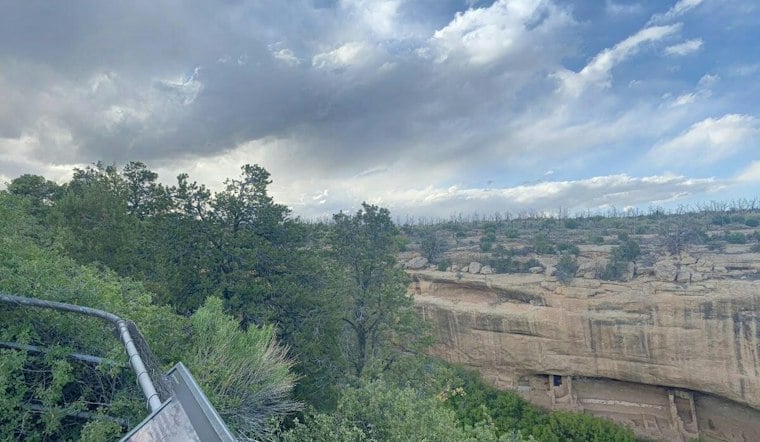
Mesa Verde National Park has completed a two-year inventory identifying the remains of 85 Indigenous people and 4,304 objects tied to death rites and ceremonies, setting up what officials describe as the largest potential repatriation in the park's recorded history. The collection includes ceramic bowls and jars, animal bones, feather boxes, crystals, turquoise, buckskin bags, and sandals, mattings, and ropes made of human hair.
According to a Notice of Inventory Completion the National Park Service published in the Federal Register on July 31, as reported by The Denver Post. Tribal members or tribes can now submit formal repatriation requests for the ancestors and objects, which may be connected to tribes in Arizona, New Mexico, and Colorado. Mesa Verde, established by Theodore Roosevelt in 1906, sits nearly 400 miles from Denver in the far southwest corner of the state and contains nearly 5,000 documented Ancestral Puebloan sites.
The park's push falls under the 1990 federal law known as NAGPRA, which requires federal agencies and federally funded institutions to return Native American human remains and cultural items to tribal nations. Excavations carried out by the University of Colorado at Mesa Verde during the 1950s and 1960s contributed to the collection now slated for return, and at least one individual found at the park ended up in the custody of New York University's College of Dentistry, per the same Denver Post account.
A Regulatory Overhaul Reshapes the Backlog
The Mesa Verde effort comes amid a sweeping federal regulatory change. Revised NAGPRA regulations that took effect January 12, 2024, eliminated the “culturally unidentifiable” classification that institutions had long used to avoid returning remains, according to the Federal Register. The updated rule also requires institutions to obtain tribal consent before displaying or researching Native American remains or cultural objects, and mandates that institutions complete revised inventories within five years while deferring to Indigenous traditional knowledge.
That overhaul followed a stark national reckoning over extensive unrepatriated Native American, Native Hawaiian, and Alaska Native remains. ProPublica built a nationwide database tracking progress across roughly 600 institutions, as detailed by ProPublica. Colorado institutions have made available for return 88% of more than 4,100 Native American remains taken from the state, per ProPublica data cited in the Denver Post's reporting.
Other Colorado Institutions Move in Parallel
Western Colorado University, which received a federal grant in 2023 to carry out its disposition process, has hosted western tribes for repatriation consultations in Gunnison and plans to return the remains of 43 Native Americans along with 155 funerary objects this year. History Colorado intends to repatriate 20 cultural objects to the Cheyenne River Sioux Tribe in South Dakota and return a beaded cradleboard to the Northern Cheyenne Tribe in Montana. Chance Ward of History Colorado said the museum regularly opens its collection to tribes for review and does not push tribal delegations to come on a particular day, according to the Denver Post's reporting.
The Denver Art Museum said in August 2026 it would return a beaded umbilical cord amulet and will make five ceramic vessels available for repatriation. Andy Sinclair of the museum said it is prepared to return the items once an affiliated tribe is ready. Two Colorado institutions, the Denver Museum of Nature & Science and the University of Colorado's Museum of Natural History, were among the first in the country to repatriate their entire Native American collections.
Congressional Pressure and a National Pattern
The federal push extends well beyond Colorado. On June 8, 2026, U.S. Senator Brian Schatz sent inquiry letters to 15 major universities and museums—including Harvard, UC Berkeley, Indiana University, and the Illinois State Museum—demanding 30-day updates and concrete timelines for returning Native ancestral remains and sacred belongings, Hoodline previously reported. In Louisville, the Speed Art Museum announced in August that it would return 24 sacred belongings to the Cheyenne and Arapaho Tribes, representing roughly half of its sensitive Native American collection, after initiating internal review in April 2024 following consultations with Indigenous culture-bearers.
Separately, Mesa Verde's repatriation effort also concerns additional funerary objects. Federal protections extend to enforcement as well: under the Archaeological Resources Protection Act of 1979, unauthorized excavation, removal, or trafficking of Native cultural items older than 100 years from public lands is a federal felony carrying penalties of up to five years in prison and $100,000 in fines for repeat offenses, as Hoodline has reported. That statute recently underpinned a separate case in which federal prosecutors used civil forfeiture law to return ancient Scallorn arrowheads looted from a Missouri reservoir site to the Osage Nation.
Mesa Verde is known for its human-made cultural heritage. It remains the first national park established specifically to preserve human-made cultural heritage, a legacy now intertwined with the tribal nations working to bring their ancestors and sacred belongings home.





