

























































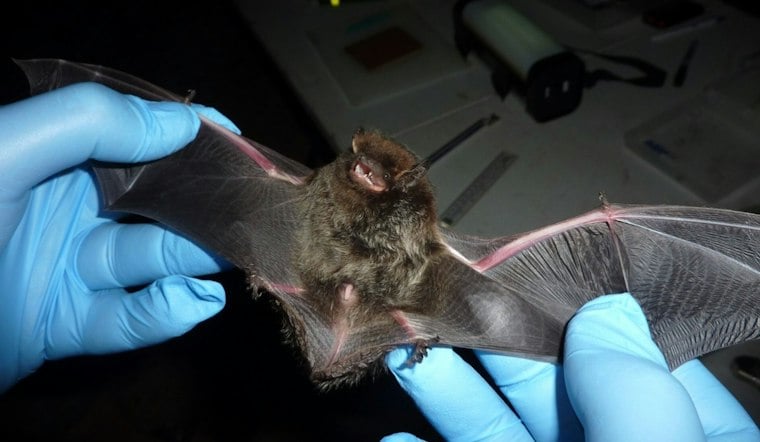
Minnesota health officials are urging anyone who hired ASAP Wildlife Services MN over the past year and had a bat or other wild mammal submitted for testing on their behalf to pick up the phone, warning that the Twin Cities pest control company may have handed out fabricated negative rabies test results after removing bats from customers' homes. The state says the business has gone quiet when officials tried to reach it, leaving open the question of just how many people may have had unrecognized contact with a rabid animal.
The Minnesota Department of Health issued the public appeal on Wednesday, asking consumers who used ASAP Wildlife Services MN between September 2025 and this week and had a bat or other wild mammal submitted for testing on their behalf to call 651-201-5368, according to the Minnesota Department of Health. The department said it is trying to determine how many customers may have been exposed and whether the risk is greater than currently known, as reported by FOX 9 Minneapolis-St. Paul. The 12-month window matters because rabies incubation in humans can stretch on for extended periods, meaning cases from as far back as last September still need to be tracked down.
At the center of the alert is ASAP Wildlife Services, a company owned by Louis Monette. FOX 9's reporting states that the company told at least one customer their bat received a negative rabies result. The station also reports that the lab cited in that result does not actually perform animal rabies testing at all.
Only One Lab Can Issue a Valid Result
Under Minnesota public health protocols, the Minnesota Department of Health Public Health Laboratory is the only facility in the state authorized to issue official animal rabies test results, receiving brain tissue extracted by the University of Minnesota Veterinary Diagnostic Laboratory. That's because animal rabies diagnosis requires fluorescent antibody testing of fresh brain stem tissue, something general clinical labs cannot perform, per the department. State rules also require that when a Minnesota animal is sent to an out-of-state lab for testing, both negative and positive results must be reported to the Minnesota Department of Health and the Minnesota Board of Animal Health — a safeguard meant to prevent gaps in tracking when animals cross state lines.
Legitimate testing isn't complicated or expensive. Submitting a whole head or undamaged brain tissue to the University of Minnesota Veterinary Diagnostic Laboratory costs $33 total — a $23 testing charge plus a $10 accession fee — as Hoodline reported in its earlier coverage of a rabid attic bat found in Golden Valley. Proper refrigeration of the specimen is mandatory, since decomposed brain tissue cannot yield a valid result.
Company Owner Calls It a Misunderstanding
Monette has pushed back on the state's framing. According to FOX 9's reporting, he described the report of a negative result from a lab that doesn't test animals for rabies as a misunderstanding, and said he tested bats when customers asked or when a bat showed signs of rabies or contamination. The outlet also reports that Monette has since closed his Facebook page, where he had introduced the business in August 2024 as a licensed and insured Minnesota wildlife management operation.
Ron Moen, a biologist with the Natural Resources Research Institute who has studied Minnesota's eight bat species for decades, told the station that a bat cannot be definitively known to have rabies unless it is actually submitted for testing. Moen said people should be concerned about potential physical contact with a bat because of the disease, and noted that Minnesota's bat peak season — when young bats typically start flying in late July and early August — is now wrapping up for the year.
Why a Small Infection Rate Still Means High Stakes
Only around 4 percent of captured bats submitted for testing in Minnesota actually carry rabies, a figure that reflects animals caught after human or pet contact rather than the wild bat population at large, according to the Minnesota Department of Health. But rabies is fatal without a painful series of shots once symptoms begin, and the state's own numbers show why officials aren't taking chances: confirmed rabies cases statewide climbed from 24 in 2022 to 48 in 2023 and 68 in 2024, with bats accounting for 63 percent of all rabid animals identified that year.
The danger became tragically real in September 2024, when a Minnesota resident died of rabies after an unrecognized bat encounter inside her own home, according to the Centers for Disease Control and Prevention. That single case triggered exposure investigations for 384 people and required post-exposure prophylaxis for 45 individuals across three states — a reminder that bat bites can be small and painless enough that victims don't realize they've been exposed until it's too late. The CDC-recommended treatment for unvaccinated people exposed to a rabid animal involves wound cleansing, one dose of human rabies immune globulin, and four vaccine doses spread across days 0, 3, 7 and 14, a regimen the agency says is nearly 100 percent effective at preventing the disease if given before symptoms appear.
For now, the Minnesota Department of Health says it is still working to determine how many ASAP Wildlife Services customers who had a bat or other wild mammal submitted for testing on their behalf might need that treatment. Anyone who used the company's services in the past year, had a bat or other wild mammal submitted for testing on their behalf, and hasn't yet spoken with the state is being urged to call before the window on their own potential exposure closes any further.



