

























































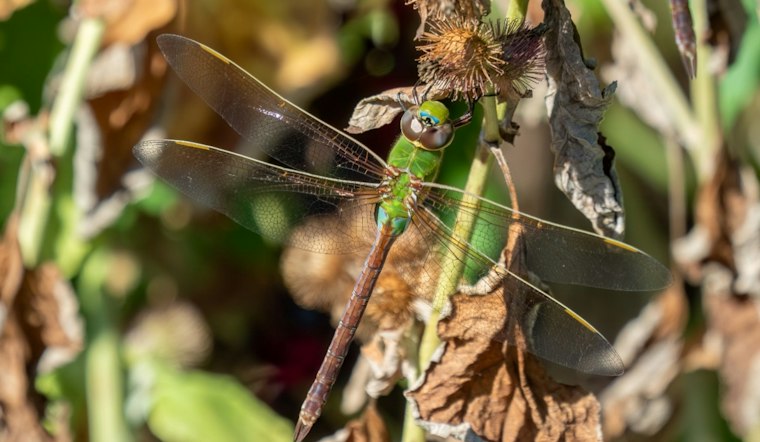
Missouri residents have been noticing a lot more dragonflies buzzing around porches, ponds, and parking lots this September, and it's not a fluke of nature. The insects are migrating, following a well-worn aerial highway that runs along the Mississippi River between Missouri and Illinois on their way south for the winter.
The uptick was first flagged by 100.9 The Eagle, which reported that Missouri is seeing a large increase in dragonfly appearances this time of year, driven largely by species like the black saddlebags dragonfly making their seasonal exit south before colder weather sets in. That local sighting fits into a much bigger picture: a 2026 global scientific review cited by the Farmers' Almanac identified 100 confirmed migratory species of dragonflies and damselflies worldwide, with North American monitoring efforts concentrated on five species, including the common green darner and the black saddlebags, both important migratory species.
These aren't just a handful of stray bugs wandering off course. The Mississippi River corridor functions as one of the primary southbound flight paths for migrating dragonflies. Autumn insect departures from Missouri and Illinois typically peak in September before tapering off as cold weather arrives.
A Three-Generation Journey South
What makes this migration especially remarkable is that the dragonflies flying over Missouri right now will never make the return trip. Research published by the Vermont Center for Ecostudies in 2019 found that the common green darner completes its annual migration across three distinct generations, with individual dragonflies traveling an average of more than 373 miles, and some covering upward of 1,550 miles.
The timing of these mass movements isn't random either. A radio-telemetry study published in Proceedings of the Royal Society B, detailed on PMC, found that green darners migrate exclusively during daylight hours when wind speeds stay under 15 mph, and typically launch their southward flights after two consecutive nights of dropping temperatures — meaning falling temperatures can coincide with visible migration.
Built for Speed and Precision Hunting
Part of why these insects are so noticeable is sheer athleticism. Common green darners can reach speeds up to 35 mph while hunting prey mid-air, ambushing them in flight. Black saddlebags, meanwhile, sport distinctive dark blotches at the base of their hindwings.
Adult dragonflies also do communities a favor while they're passing through. The Missouri Department of Conservation notes that these insects serve as natural pest controllers, consuming large quantities of mosquitoes, flies, and midges through an airborne hunting technique known as hawking.
Missouri's Broader Dragonfly Picture
The migratory swarms are only part of the state's dragonfly story. Missouri is home to many species of Odonata overall, ranging from gray petaltails to the far more common whitetail skimmer.
That diversity comes with real vulnerability, though. Some Missouri dragonfly species, including the Hine's emerald dragonfly, face conservation concerns. Unlike the migratory green darners and black saddlebags currently passing through, these resident species depend on stable local habitat year-round, and their nymphs spend one to three years developing underwater before ever taking flight, while dragonflies rank somewhere in the middle regarding pollution sensitivity.
Missourians can expect the current wave of black saddlebags to move on by October, coinciding with the arrival of colder weather, per 100.9 The Eagle's estimate. Some common green darners remain farther north and survive winter underwater as nymphs, so this month's swarms are a seasonal window rather than a permanent guest. Mid-Missouri has already had migration on its mind this fall — volunteers in Columbia and Boonville are scheduled to tag monarch butterflies on September 19, 21, 26, and 28, as Hoodline reported in Columbia's monarch tagging effort.





