

























































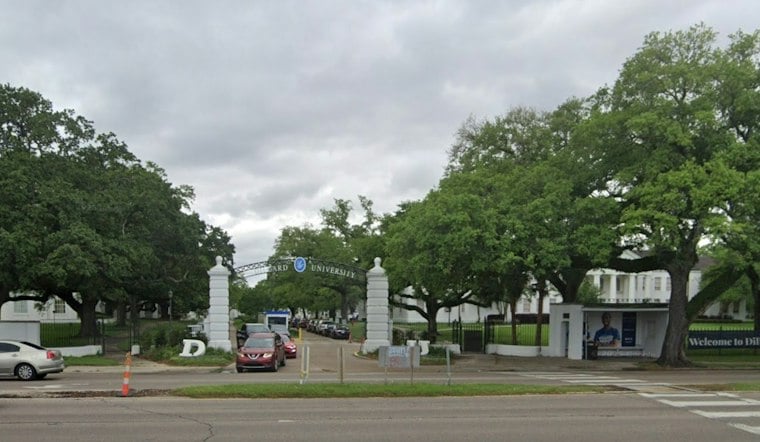
More than 300 people packed New Orleans's Georges Auditorium to protest a U.S. Supreme Court ruling that dismantled one of Louisiana's two majority-Black congressional districts, a decision that has upended the state's political map and delayed its congressional primary. The rally reflected mounting frustration among Louisiana Democrats and civil rights advocates who argue the ruling strips Black voters of hard-won representation just months before the 2026 midterms.
The demonstration, reported by the Detroit Free Press, came months after the high court's ruling in Louisiana v. Callais, which found the state relied too heavily on race when it drew a second majority-Black congressional district. As abc3340.com reported, the justices struck down the map, finding lawmakers had redrawn it into an unconstitutional racial gerrymander. The district in question, represented by Democrat Cleo Fields, was a sprawling “snake” stretching more than 200 miles to link parts of the Shreveport, Alexandria, Lafayette and Baton Rouge areas, according to wgntv.com.
A Historic Map Undone
The map at the center of the case had marked a milestone for Louisiana politics. According to the Campaign Legal Center, the state's adoption of two opportunity districts resulted in the election of two Black Louisianians to Congress for the first time in the state's history. The organization said the ruling would particularly impact Black and brown voters who have long fought for fair representation.
In the ruling's immediate aftermath, Louisiana lawmakers, already in session, began looking at how to redraw their congressional districts, the report noted. Gov. Jeff Landry then postponed the state's May 16 congressional primary to give legislators time to approve new district lines, even though more than 41,000 completed absentee ballots had already been submitted, per the same account.
Legal Challenges Followed Fast
The postponement itself became a flashpoint. Democrats and civil rights groups filed several lawsuits challenging the suspension of the primary, arguing it disrupted an election already underway with tens of thousands of ballots cast. At the New Orleans rally, city leaders called on the standing-room-only crowd to rally behind Democratic candidates and officials rather than give up hope, according to the Louisiana Illuminator.
The Callais decision has reverberated well beyond Louisiana's borders. It significantly altered a decades-old understanding of the Voting Rights Act, according to newsday.com, giving Republican-led states new grounds to challenge or eliminate majority-Black districts elsewhere. Louisiana and other states will likely need to consider another round of redistricting ahead of the 2026 midterms, per abc3340.com's reporting.
Ripple Effects Across Other States
The Supreme Court's Section 2 ruling set off what one report described as a groundswell in redistricting across the country. In Alabama, the high court separately allowed the state to use a congressional map that a lower court had found intentionally discriminated against Black voters, according to nprillinois.org. Election law expert Nicholas Stephanopoulos has noted that nearly 70 of the nation's 435 congressional districts are protected under Section 2, underscoring how much is potentially at stake nationwide.
Options for state lawmakers hoping to preserve minority voting power appear limited. Around a dozen states have passed their own voting rights laws to bolster protections, but nprillinois.org reported that no state with a unified Republican government, or even a divided one, has done so. That leaves the fight in Louisiana centered largely on the courts, the legislature and rallies like the one in New Orleans, where organizers are urging supporters to stay engaged rather than concede ground ahead of the state's rescheduled elections.





