

























































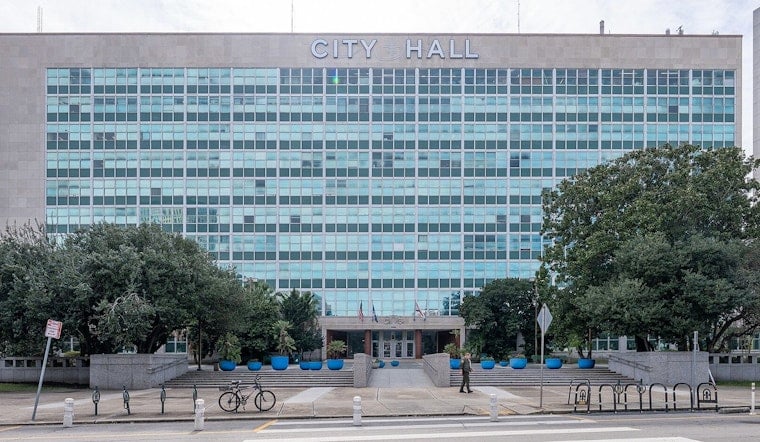
New Orleans will not apply for a nearly $300 million federal grant from the Trump administration's Model Cities Initiative, city officials announced, walking away from a pool of money the city had hoped could fund crime lab upgrades, cold-case investigations and behavioral health programs. Deputy Mayor of Public Safety Michael Harrison said the city could not responsibly commit taxpayers to an unknown future financial obligation without understanding its triggers or potential cost.
The decision, confirmed in a statement Monday, comes after months of work in which New Orleans identified about $135 million in potential public safety investments it hoped to fund through the program, according to WWL-TV. Those proposed investments ranged from expanded DNA and ballistics testing and modernization of the city crime lab to youth violence prevention, reentry support for people leaving incarceration, victim services and homelessness response. Harrison said the city took a serious look at the program but ultimately could not responsibly make the commitments it required.
A Cooperative Agreement, Not a Traditional Grant
The Model Cities Initiative is structured as a cooperative agreement rather than a standard federal grant, meaning the U.S. Department of Justice would review and approve parts of New Orleans' plan and budget and would retain a significant role in how the money gets used. Certification required the mayor or another senior official to attest, under penalty of perjury, that the city and its participating agencies — some of which sit outside the mayor's direct control — comply with all program requirements.
Guidance published by the Justice Department in June 2026 laid out those requirements in detail, mandating that Model Cities recipients assist federal immigration enforcement and enforce local bans on urban camping, loitering, squatting and open drug use. Separate application guidelines from the same month required submissions to carry signatures from six distinct local officials, including the mayor, city council, local prosecutor and parish sheriff — a level of consensus across independent entities that proved difficult to secure before the deadline.
Perhaps the biggest sticking point was financial exposure. Under the cooperative agreement's terms, recipient cities face potential clawback provisions that could require repaying millions of dollars in federal funds if violent crime or civil unrest spikes during the grant period, according to The Guardian. The agreement could also make New Orleans responsible for costs tied to a future federal law enforcement deployment, with that potential price tag left undefined.
Pressure From Advocates and Tight Timeline
The ACLU of Louisiana and local housing advocates publicly urged the Moreno administration in August not to apply, warning that participation would compromise municipal independence and force compliance with federal anti-homelessness and immigration policies, Verite News reported. City officials ultimately said there simply was not enough time before the September 1 deadline to resolve the legal questions, complete the necessary review and secure the required approvals across so many independent agencies.
In his statement confirming the decision, Harrison noted that New Orleans shared legal oversight concerns previously flagged by the National League of Cities, and he said none of the application work is going to waste. City officials cited unresolved legal, financial and federal oversight concerns as the deciding factors, and they plan to use the completed application work to pursue other government, philanthropic and grant funding instead.
New Orleans Joins Other Cities Passing on the Money
New Orleans is not alone in stepping back. Montgomery, Alabama Mayor Steven Reed said in August that he passed on applying because the initiative prioritized political conditions over root-cause violent crime prevention, per the Guardian's reporting. The pattern contrasts with Dallas, where the city council voted 9-5 in August to authorize an application for the $300 million grant despite strong opposition from five council members worried about local police involvement in federal immigration enforcement, as Hoodline previously reported.
The Justice Department launched the Model Cities Initiative in June, citing federal surges in Washington, D.C., and Memphis, Tennessee, as operational templates and claiming overall violent crime in Memphis dropped 42% following a September 2025 deployment. The department plans to award funding to just two to four cities nationwide and expects to announce the first Model Cities awards later this year.
Part of a Broader Legal Fight Over Grant Strings
New Orleans' hesitation echoes a larger, multi-state legal battle over federal funding conditions. In August, 23 state attorneys general joined a federal lawsuit challenging the Trump administration's attempt to attach ICE cooperation requirements to Edward Byrne Memorial Justice Assistance Grants, a fight Hoodline has tracked closely. That challenge underscores how immigration-enforcement mandates attached to federal public safety money have become a recurring flashpoint for city and state governments across the country.
New Orleans' decision also lands amid a tight municipal budget picture under Mayor Helena Moreno, who took office in January 2026 facing a significant deficit and appointed Harrison, the former NOPD chief, to lead public safety policy at City Hall. For now, the roughly $135 million in identified needs — from the crime lab to victim services — remains unfunded through this particular federal channel, with city officials betting that other funding sources will prove less risky than a blank check with undefined strings attached.





