

























































Two bright blue and yellow wooden benches showed up at CTA bus stops in Ukrainian Village the week before, built and installed without a single city permit. They're not bolted down, they're technically illegal, and the group behind them says they're prepared to keep building more anyway — unless Chicago tells them to stop.
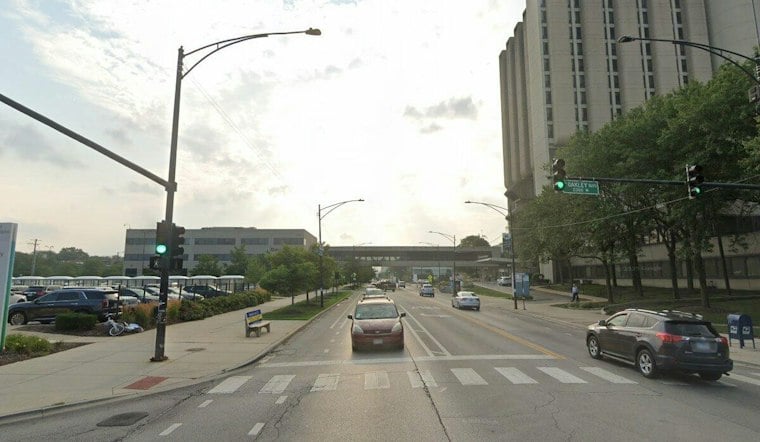
The Northwest Neighborhood Alliance placed one bench at Division Street and Oakley Boulevard, where it now serves riders waiting for the No. 70 bus, and another at Damen Avenue and Thomas Street. As reported by WBEZ, the group installed the benches without city permission and is now simply waiting for Chicago's next move. City agencies have not decided whether the homemade seating will be allowed to remain.
Sam Kovnar, the 25-year-old software worker who founded the alliance, said public transit agencies often fall short on quality-of-life issues most riders take for granted. He told WBEZ he was inspired by his time living in Milwaukee, where he helped advocates build and place similar homemade benches at bus stops. Kovnar said he'll stop building if the city sends an angry letter, but for now the group plans to keep going.
A Neighborhood Group Fills a Gap CTA Hasn't
CTA operates nearly 11,000 bus stops across Chicago. Per the Medill Reports Chicago reporting, many bus stops lack enclosures. The city also has a long-term Coordinated Street Furniture Program contract with advertising firm JCDecaux Chicago LLC, which manages Chicago's roughly 2,175 bus shelters in exchange for advertising rights, according to a World Bank public-private partnership record.
Eddie Lehwald, a 43-year-old alliance member who lives in Logan Square, built one of the two benches a couple of years ago but hesitated to place it at a bus stop. He eventually put it in public after getting community support, telling WBEZ that having a place to sit while waiting for a bus is a matter of dignity. Lehwald said parents with little children and people whose bodies are not functioning fully need somewhere to sit, and he wants the city to acknowledge that need rather than remove what his group has built.
The bench design itself has roots in an earlier Strong Towns Chicago tactical urbanism session. During a January 2025 online meeting led by Lehwald, the group unveiled a custom bus bench prototype designed by architectural designer Caleb Schemmel that cost about $60 per unit to build, according to Streetsblog Chicago.
Legal Gray Area for a Homemade Fix
Under City of Chicago rules, placing unpermitted objects or benches on a public sidewalk requires a Public Way Use permit from the Department of Business Affairs and Consumer Protection, per the City of Chicago BACP. Unauthorized right-of-way encroachments are subject to removal by city agencies. Neither CTA nor the Chicago Department of Transportation responded to WBEZ's requests for comment on the Ukrainian Village benches.
Chicago has a history of moving the opposite direction on bench access. Reporting from 2013 documented that city and transit officials had previously removed existing bus stop benches in neighborhoods like Uptown specifically to deter loitering, and news reports indicate benches have continued disappearing from Chicago bus stops over the past decade. Lehwald argued that tearing out the new benches would squander a chance to positively engage communities, and he suggested the city could simply bolt them down instead of ripping them up.
A Bigger Movement, and a Legal Off-Ramp
The Ukrainian Village benches fit into a wider pattern of grassroots seating activism nationwide. Groups like the Bay Area Bench Collective in Oakland have installed more than 100 DIY bus stop benches, while LAist also mentions unpermitted public benches in Kansas City, according to LAist.
Reddit users have praised the new Damen Avenue bench, with one commenter thanking whoever built it. Kovnar said the positive feedback showed how much difference a simple bench can make. Discussion threads on the platform also noted that residents can petition their local alderman to work directly with CTA on official, permanent bench placement — a path that sidesteps the permit fight entirely.
The alliance's basic pitch is that benches make waiting easier. CTA has shown some recent appetite for seating upgrades elsewhere: accessibility upgrades have been completed at some non-compliant bus stops. Just weeks before the Ukrainian Village benches appeared, CTA also announced new child-sized benches across 10 rail stations under Acting President Nora Leerhsen, aimed at making the system more family-friendly — a rail-focused push that has so far left most bus stops untouched.
For now, the Northwest Neighborhood Alliance, which counts several dozen members, says it's simply waiting to see what Chicago decides. Bus-stop benches can turn a five-, 10- or 15-minute wait into something manageable for older riders, the group argues, and until the city acts, its blue and yellow benches remain at two Ukrainian Village stops.





