

























































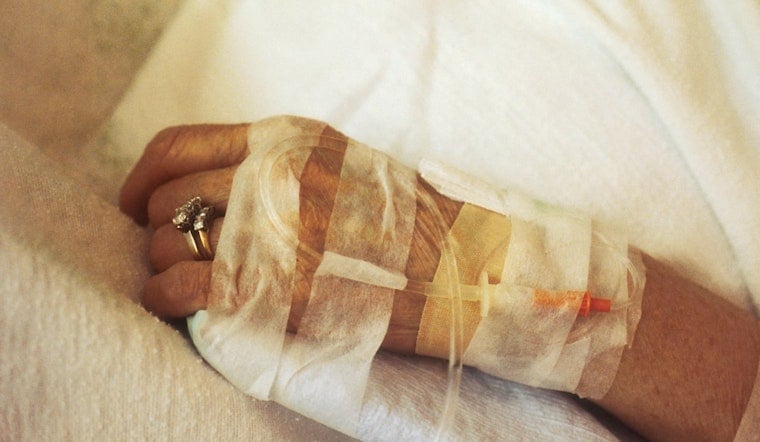
Megan Mulvey was diagnosed with acute lymphoblastic leukemia in October 2023 after a growth beneath her right eye turned out to be a tumor, with additional tumors later found around her heart, lungs, and chest. The Peachtree City woman went on to endure 51 rounds of chemotherapy and a bone marrow transplant before beating the disease in 2024 — and she has since turned that survival into a nonprofit built to help other metro Atlanta families facing the same fight.
Mulvey founded Box of Hope, a nonprofit that supports local pediatric cancer patients and their families, according to Fox 5 Atlanta. She said she wanted to create something to give back after coming through her own diagnosis, and described feeling led to help children and families navigating pediatric cancer. Her illness first presented as the facial growth and chest-area tumors detailed by The Citizen, which also reported that Mulvey had been practicing CrossFit for 18 months before her diagnosis.
A Rare Donor Match and a Hard-Won Transplant
During her search for a bone marrow donor, doctors identified 14 potential fully matched donors — an unusually high number in registry searches — before selecting a 19-year-old woman in Germany as her donor for the April 2024 procedure, per the same account from The Citizen. National Marrow Donor Program registry data shows that White patients searching for an unrelated stem cell donor have roughly a 67% chance of finding even one fully matched 10/10 HLA donor, which underscores how rare it was for Mulvey to have 14 complete matches to choose from.
Mulvey's oncologist credited her functional fitness and CrossFit training with helping prepare her body to survive treatment, according to Fox 5 Atlanta. That assessment lines up with clinical research published on PubMed showing that prehabilitation and structured exercise before and during stem cell transplantation can improve muscle strength, walking endurance, and overall functional recovery — a meaningful factor given that transplant conditioning regimens often cause severe muscular deconditioning and fatigue.
Bringing the CrossFit Community Together
Mulvey brought together the CrossFit community to build support around Box of Hope, and she uses workouts at CrossFit PTC in Peachtree City as reminders of her medical battle. The CrossFit community now hosts fundraising workouts for pediatric cancer patients and their families, part of a broader pattern of community-based athletic fundraising in metro Atlanta that echoes national campaigns like St. Baldrick's head-shaving events, which have raised more than $380 million for pediatric cancer research and patient support, as Hoodline has previously reported.
One of those fundraisers, a workout called 51 for Aubrey, is scheduled for October 24 at CrossFit PTC in Peachtree City, according to Voyage ATL and an event listing on Eventbrite. Box of Hope's focus on financial relief was motivated in part by the fact that Mulvey's husband lost his job twice during her treatment, a strain that Voyage ATL reports shaped the nonprofit's mission from the start. Fox 5 Atlanta did not detail specific dates or locations for other upcoming Box of Hope events beyond what Mulvey shared about her own story.
Why Financial Support Matters as Much as Medical Care
Studies highlighted by the National Cancer Institute show that non-medical expenses — lodging, transportation, household bills, and lost parental income — create severe financial toxicity for families during long-term pediatric cancer treatment, often forcing one parent out of work during extended hospital stays. According to the National Cancer Institute, cancer patients and survivors can experience increased financial distress, a burden that extends beyond the medical treatment itself. A study published through the National Institutes of Health found that families affected by pediatric cancer need medical and social support on an ongoing basis, even after primary therapy ends. In metro Atlanta, children fighting leukemia are primarily treated at Children's Healthcare of Atlanta's Aflac Cancer and Blood Disorders Center, which sees more than 500 newly diagnosed pediatric cancer patients annually and houses the region's only High-Risk Leukemia and Lymphoma Program, according to Children's Healthcare of Atlanta. According to Children's Healthcare of Atlanta's Community Health Needs Assessment, approximately one in three children must travel 40 miles or more to receive pediatric subspecialty care.
Acute lymphoblastic leukemia is a rapidly progressing blood cancer that accounts for roughly 28% to 30% of all childhood cancer cases nationwide, even as five-year pediatric cancer survival rates have climbed to nearly 85% in 2026, up from about 58% in the 1970s. The American Cancer Society projects 67,790 new leukemia cases will be diagnosed across the country this year. Against that backdrop, Mulvey's own recovery and the nonprofit she built out of it reflect a wider push in metro Atlanta to pair medical treatment with the community and financial support families need to get through it.





