

























































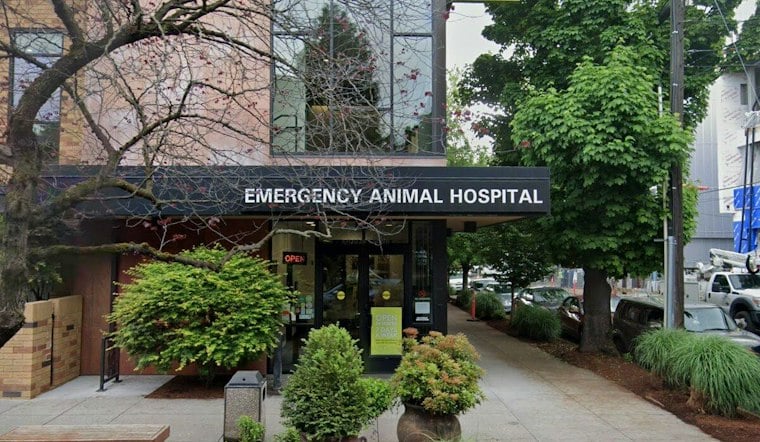
An 11-year-old Portland cat named Benny is back on his feet after veterinarians used a cage-like contraption nicknamed “Wolverine pins” to repair three broken bones in his paw. His family first noticed something was wrong not because Benny was limping dramatically, but because of subtle shifts in his behavior — the kind of quiet change that often signals pain in cats who instinctively hide their discomfort.
Benny’s family brought him to DoveLewis Emergency Animal Hospital after those behavioral changes raised concern, according to KOIN. Veterinary experts note that subtle behavioral changes — such as altered vocalization, hiding, or mood shifts — are often the primary indicator of pain in cats, since felines naturally mask physical distress, according to the Animal Surgical Center of Michigan. That instinct traces back to wild ancestors who needed to hide vulnerability from predators.
Once at DoveLewis, doctors determined Benny had three broken bones in one paw. Metacarpal fractures — injuries to the forelimb paw bones connecting the wrist to the toes — account for approximately 3.3% of all bone fractures documented in feline patients, per the CABI Digital Library. These injuries often stem from high-impact falls, crush trauma, or outdoor accidents.
Why Multiple Broken Bones Meant Surgery
Feline paws contain five metacarpal bones, with the central third and fourth bearing the vast majority of a cat’s body weight while walking and jumping, according to Veterian Key. Single-bone fractures can sometimes heal with a splint, but multiple broken bones typically call for rigid surgical fixation to support weight-bearing. That combination is likely why Benny’s case required more than just a cast.
An orthopedic surgeon inserted the pins directly into Benny’s paw, and DoveLewis said the pins emerged through his skin and were bent into a hardened epoxy resin frame that sat on top of the paw, the station’s report notes. Free-form external skeletal fixators use transfixation pins anchored into broken bones and connected to a moldable external epoxy or acrylic resin bar above the skin, according to AVMA Journals, while preserving the fracture hematoma and local blood supply. Free-form constructs allow more flexibility and are used in appropriately sized patients.
The Cage-Like ‘Spider Fixator’ Explained
Veterinarians used a cage-like structure called a spider fixator to hold Benny’s paw treatment in place, per the same account. In Benny’s case, the pins were nicknamed “Wolverine pins.”
Benny went home after just one night in the hospital, and he reportedly remained affectionate and talkative during his follow-up appointments — a good sign, given how much cats tend to mask discomfort. Benny’s protective equipment was removed after eight weeks; external skeletal fixators are typically left in place for three to four months before staged removal. Post-operative recovery may involve activity restriction, as recommended by the Animal Surgical Center of Michigan, and follow-up checks for pin-tract complications.
A ‘Ready to Run’ Certificate and an Ongoing Recovery
Benny’s veterinarians issued him what they called a “ready to run” certificate, indicating he’s cleared to return to normal activity. He is still recovering, but vets reported he was bouncing back fast, the station’s report adds.
Benny’s case also highlights the broader mission of the hospital that treated him. Founded in 1973, DoveLewis is a nonprofit facility and a Level 1 emergency and critical care hospital certified by the Veterinary Emergency and Critical Care Society, according to the DoveLewis Emergency Animal Hospital. The hospital treats nearly 30,000 animal patients annually across the Pacific Northwest with a team of more than 200 staff members, including board-certified specialists.
DoveLewis also holds accreditation from the American Animal Hospital Association.





