

























































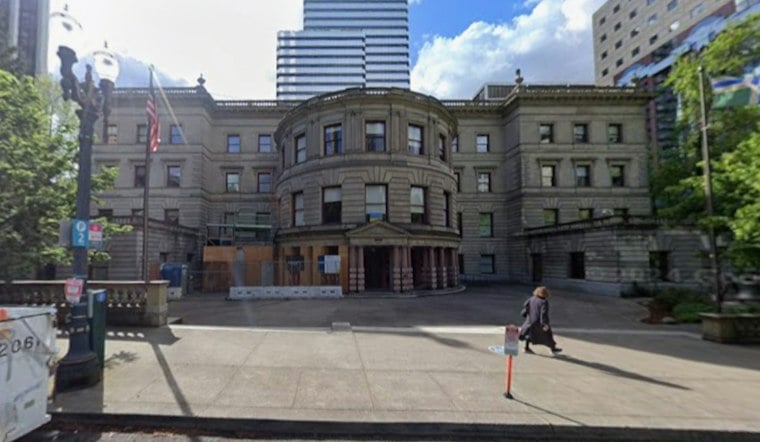
Portland City Council is set to vote Tuesday on a proposal that would let the city ban people from public parks for up to 90 days over drug use, weapons possession or violence — and, for the first time, extend those bans to the sidewalks and city-owned rights-of-way just outside park boundaries.
The proposed Safe Parks Ordinance, as reported by KATU, would expand the city's existing exclusion powers to cover nearby city-owned property, meaning someone barred from a park could no longer simply move a drug transaction or a fight to the adjacent curb. Oregon Park in Northeast Portland and Dawson Park in North Portland are both named among the sites affected by the proposed changes, according to the station's reporting.
An official legislative summary published on Portland.gov spells out how far the rewrite goes: it amends Portland City Code Chapter 20.12 to expand the definition of controlled substances subject to exclusion, adding what the ordinance calls “counterfeit substances” as defined under Oregon Revised Statutes 475.005 — a category covering illicitly manufactured lookalike drugs that could otherwise slip past standard controlled-substance definitions, according to Portland.gov.
Closing the Appeal Loophole
One of the more consequential changes involves what happens after someone is banned. City ordinance documents note that the current system includes an automatic stay of exclusion, which lets a person appealing a ban return to the park immediately while the City Hearings Office reviews their case. The proposed ordinance would eliminate that automatic stay, per the same Portland.gov filing, leaving the City Hearings Officer sole discretion over whether to grant one based on the specifics of each case.
City officials describe the change as closing a loophole that has rendered exclusions ineffective in practice. The city's civil administrative authority to eject and exclude people from parks for illegal conduct dates back 22 years, to 2004, according to background documentation released alongside the ordinance. Officials drafted the update after determining those original 2004 rules were too narrow and the exclusion periods too short to curb persistent crime, the filing states.
Dawson Park's Troubled Recent History
Dawson Park has repeatedly surfaced as a flashpoint in North Portland's drug enforcement efforts. In June, Portland Police Bureau officers seized eight pounds of bulk and packaged fentanyl along with cash and cell phones after a suspect pursuit that began near the park, according to a Portland Police Bureau operational update. The operation involved the Focused Intervention Team and the Air Support Unit, which disengaged its ground pursuit and used spike strips to stop the suspect, the bureau reported.
The park has also sat across the street from what law enforcement identified as a major catalyst for open-air drug sales in the area. The former owner of a convenience store facing Dawson Park was sentenced to 13 months in prison in July after pleading guilty to selling heroin and fentanyl out of the shop, KGW-TV reported, with residents and civic groups having repeatedly complained that drug sales from the storefront spilled directly into the park. Hoodline previously covered a Dawson Park drug sting in May that netted crack cocaine and cash.
Community Voices on the Proposal
Portland resident Archie Barnes has voiced support for the ordinance, telling KATU he avoids some parks around the city because of safety concerns and that he backs efforts to remove drugs and weapons from park spaces. Eric Zimmerman has also advocated for the Safe Parks Ordinance, according to the station's reporting.
Portland Parks & Recreation officials have said the extended exclusions are meant to prevent people from simply moving illegal activity from inside a park to a nearby sidewalk, closing a gap that has frustrated enforcement efforts, per KATU. The Portland Police Bureau has said it responds to calls for service in parks the same way it does elsewhere in the city, with officers addressing violations of law when appropriate and taking enforcement or other action as circumstances and resources allow, while continuing to coordinate with Portland Parks & Recreation and other city partners.
Who Enforces the Rules
Enforcement wouldn't fall to sworn police alone. Portland Parks & Recreation administrative rules updated in December 2024 clarify that non-sworn Portland Park Rangers, who patrol more than 12,000 acres across more than 280 municipal parks, hold delegated legal authority alongside police officers to issue ejections, exclusions and civil citations under City Code Title 20. Rangers are described in the same policy update as non-sworn safety staff trained in de-escalation who prioritize civil violations and educational compliance before resorting to exclusions.
The ordinance also builds in oversight. Council filing materials require the Portland Police Bureau and Portland Parks & Recreation to submit a progress report to City Council one year after enactment, tracking exclusion totals, locations, violation types and trespass enforcement actions — including cases where officers observed a qualifying violation but chose not to issue an exclusion, according to the filing.
Part of a Broader Statewide Shift
The proposal lands amid a wider regional pivot on drug policy. Oregon House Bill 4002 took effect statewide in September 2024, re-establishing small-scale drug possession as a criminal misdemeanor and reversing key decriminalization provisions from 2020's Ballot Measure 110, Oregon Public Broadcasting reported. That law also created framework funding for county “deflection programs” meant to connect people found with drugs to treatment instead of jail.
Portland voters, meanwhile, showed they were willing to pay for park safety directly. In November 2025, they passed Measure 26-260, a five-year local option levy setting property taxes at $1.40 per $1,000 of assessed value to fund park safety, maintenance and operations starting this fiscal year, according to election records compiled by Ballotpedia. The measure replaced an expiring 2020 levy of $0.80 per $1,000 assessed value and passed with 56% approval.
Portland's use of geographic exclusion as a crime-fighting tool is not new. Research from the University of Michigan's Ford School of Public Policy documents that the city first enacted 90-day geographic exclusion zones in 1992 through municipal “Drug Free Zones,” which barred people arrested on drug charges from specific high-crime neighborhoods. Those 1990s ordinances triggered repeated legal challenges and debates over due process and disproportionate impacts on certain neighborhoods, the research notes.
City Council is scheduled to take up the Safe Parks Ordinance Tuesday.




